Almost nobody remembers their first paycheck, but almost everyone remembers their first share of stock. Ownership changes how a person looks at money. A paycheck gets spent, but a share gets watched and argued over at the dinner table, and that habit tends to stick for life.
For most American kids, that first share has always depended on luck. A grandparent who opened a custodial account, or a birthday check that made it into a brokerage instead of a sneaker fund. Kids born into families that don’t invest usually grow into adults who don’t either, and Federal Reserve data has long shown stock ownership thins out sharply at the bottom of the income ladder.
Washington took a swing at that problem on July 4, when the government began seeding new tax-advantaged investment accounts for children with $1,000 apiece. Two days later, on July 6, those accounts opened to outside contributions, and corporate America lined up with pledges.
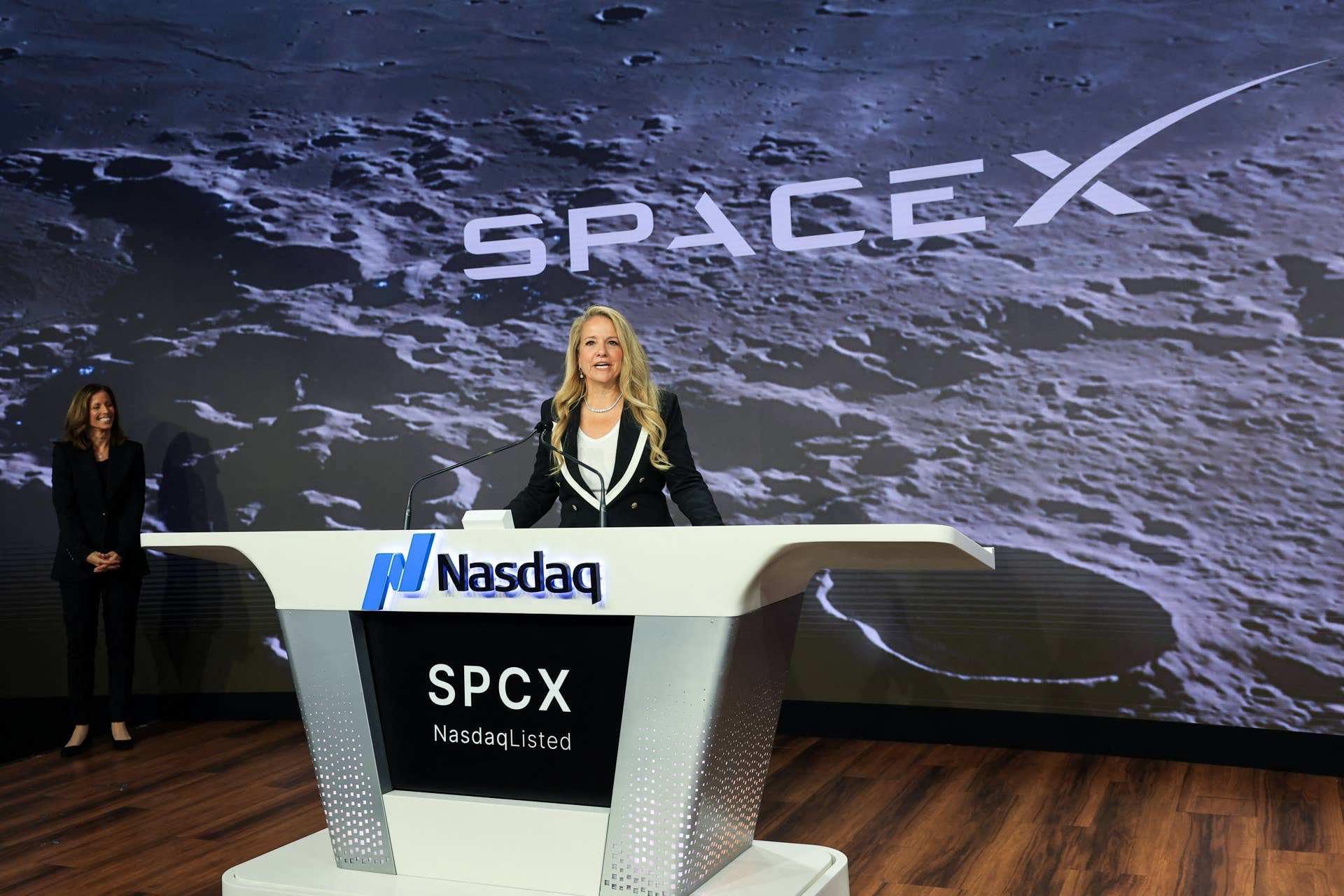
Then one executive went further than anyone expected. SpaceX (SPCX) President Gwynne Shotwell said she and her husband will put one share of the rocket maker’s stock into the new Trump Accounts of more than 2 million American children.
How Trump Accounts work and who gets $1,000
Trump Accounts were created by the One Big Beautiful Bill Act, the tax law Republicans passed in 2025, and launched on the country’s 250th birthday. Children born between Jan. 1, 2025, and Dec. 31, 2028, receive a $1,000 deposit from the Treasury Department, and any child under 18 with a Social Security number can have an account opened in their name.
More Personal Finance:
- Should you open a Trump Account?
- Trump accounts hide Roth IRA strategy worth a fortune
- Bessent says a $1,000 seed can build generational wealth
The money is invested in low-cost funds that track the S&P 500, and the balance stays locked until the child turns 18, when the account converts into an IRA-style retirement vehicle, according to NBC News. Families and friends can add up to $5,000 per year, with employers allowed to contribute $2,500 of that pre-tax.
More than 6 million children were registered before launch, and about 1.4 million of them qualify for the $1,000 seed money, according to Treasury Department data reported by CNN. The accounts belong to the child, with parents serving as custodians until adulthood, according to TrumpAccounts.gov. About 86% of accounts opened so far belong to families earning less than $200,000 a year, and parents can sign up through Internal Revenue Service (IRS) Form 4547 with no money required from the family.
The government’s own projection says the $1,000 deposit alone could grow to “an estimated half a million dollars or more” by retirement age, per NBC News.
One more decision set the stage for what happened next. Last week, the Treasury said gifts of stock could flow into the accounts. That opened a door no government savings program had opened before
SpaceX stock is headed to 2 million kids
Shotwell announced the gift in a July 6 post on X, saying the shares will go to children ages 11 to 17 who live in areas with lower average household incomes, with extra weight given to kids near the couple’s home in central Texas, according to CNBC.
The couple said they hope the gift encourages the next generation to keep “enabling humanity to live and fly amongst the stars,” Shotwell wrote in the post.
The numbers are big even by Musk-world standards. SpaceX traded near $165 on July 6, which values the pledge at roughly $320 million, about one-fifth of the Class A shares Shotwell owns or has options to buy, according to Semafor. Her full stake was worth around $2.4 billion after the rocket maker raised $75 billion in the largest initial public offering (IPO) in Wall Street history on June 12, according to Nasdaq.
Related: Trump Accounts could deepen the wealth divide
The gift also fits a pattern Shotwell set a month ago. SpaceX reserved 30% of its offering for everyday investors, according to the company’s IPO filing, and she spent debut day talking up retail ownership. Handing shares to kids who could never afford the $165 entry price takes that idea one step further.
The politics are hard to miss, too. President Donald Trump said he expected SpaceX CEO Elon Musk to donate company stock to the program during a July 2 interview, and Musk has stayed quiet since. Asked on July 6 whether he had spoken with other executives about donating, Trump said, “I’m like a cheerleader for geniuses,” per Semafor.
Shotwell joins a pledge list that was already long:
- Michael and Susan Dell pledged $6.25 billion, worth an extra $250 apiece for 25 million children, according to NBC News.
- Ray and Barbara Dalio committed $250 each for about 300,000 kids in Connecticut, also per NBC News.
- Micron pledged a one-time $250 million seed deposit for children in communities where it operates, according to CNBC.
- Employers including BlackRock, Robinhood and Charles Schwab will match the government’s $1,000 for workers’ kids, according to Forbes.
What one share of SpaceX could be worth at 65
I ran the numbers on what this actually means for the kid who gets one. A single $165 share handed to a 12-year-old, compounding at the stock market’s long-run average of about 10% a year, grows to roughly $26,000 by age 65. That is real retirement money from a share the child never asked for, and it sits on top of anything else the account earns.
One share of one company is not a diversified plan, of course. SpaceX could beat that average or badly trail it, and the stock has already traded as low as $135 and as high as about $225 in under a month as a public company.
There is also a wrinkle I flagged when reading the fine print. The law behind the accounts requires the money to track indexes, and it is not yet clear exactly how single-stock gifts will be handled, according to Semafor. SpaceX is set to join the Nasdaq-100 on July 7, so index funds inside the accounts will end up holding the company either way.
The bigger story is who gets to feel like an owner. Two million kids in lower-income neighborhoods now hold a piece of the most valuable company ever to go public, years before their first paycheck. Some will cash out at 18 and cover textbooks or a car repair. A few will keep watching the stock, then buy another one, and that habit is what this whole experiment is betting on.
The next test comes fast. Trump has already said publicly whom he expects to donate next, and Musk owns far more SpaceX than Shotwell does. If her boss follows her lead, this week’s gift will look like a warm-up act.
Related: Trump Accounts go live today; experts explain what they are