While working from home might be a dream for employees, for downtown restaurant operators it’s a financial gut punch.
As more workers move to a hybrid schedule, coffee shops, fast-food spots, and casual dining chains lose the customer base that previously justified five-day downtown leases.
“For businesses, it’s death by a thousand paper cuts. It’s not the loss of any one customer, but thousands of them visiting less often,” points out TheStreet’s co-editor in chief, Daniel Kline.
Nearly 28% of workdays remained remote in September 2024, suggesting lunch spending partly moves out of financial centers and into suburban strip centers, according to research from Stanford’s WFH Research project.
The latest restaurant victim of this new trend is a popular fast-casual chain, Boloco.
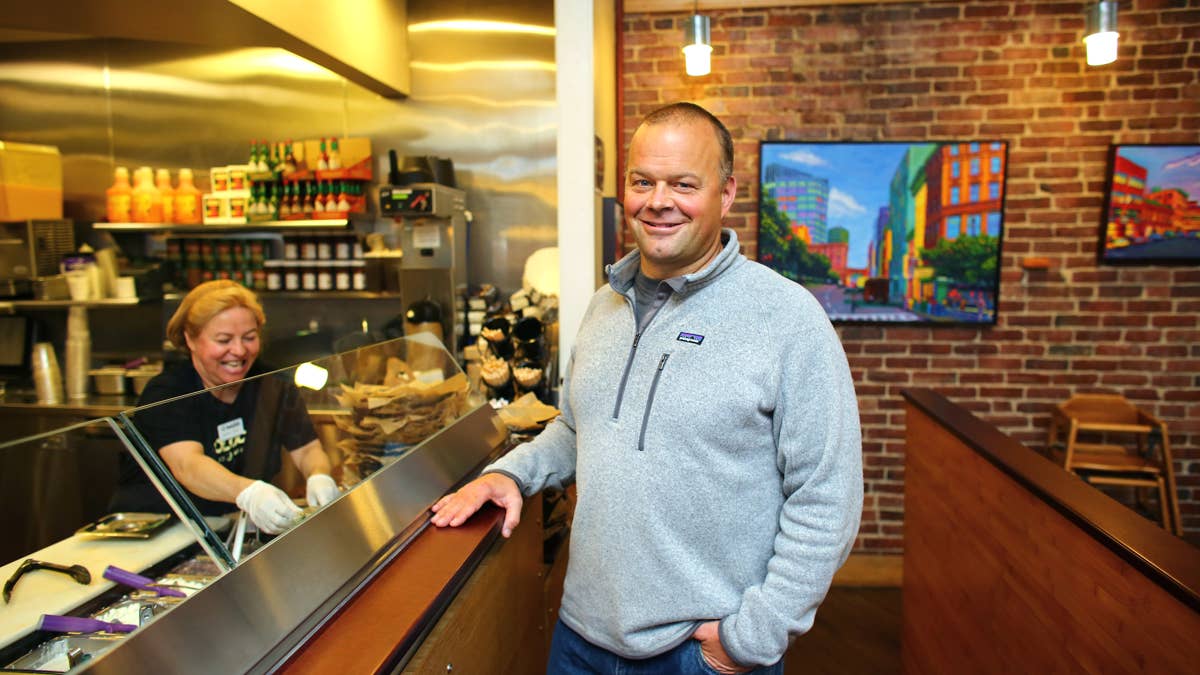
Boloco closes last location as building converts to residential
Boloco, a fast-casual restaurant famous for its classic and modern burritos, bowls, salads, and snacks, is set to close its final location on September 25, 2026, marking the end for the chain.
“It’s been a hell of a ride,” the restaurant management said in a Facebook post announcing the closure.
Boloco explained that its last location at 50 Congress St., Boston is closing for good because the building is converting to residential.
“10,746 days down. 60 more to go,” the post continued. “Every day until then – open or closed – you can expect any number of not-so-clever reasons to come back one more time… a story you can’t make up, an old favorite makes a final appearance, free burrito day, and special request.”
This is the end of the chain that once had close to two dozen locations, spreading across Rhode Island, Maryland, Washington, D.C., Massachusetts, New Hampshire, and Vermont, at its peak in the 2010s.
Boloco’s CEO, John Pepper, said he has been expecting this for years.
“I personally am at peace if this is the end. I mean, it would have been nice to say we made it 30 years, but 29 years and six months is fine,” Pepper told the Boston Globe.
While the final location is closing to make way for luxury apartments, Boloco’s decline began years earlier as its footprint steadily shrank.
Boloco narrowly escaped bankruptcy
Boloco was founded in 1997 as a fast-casual restaurant chain called Under Wraps. Over the years, it expanded to 22 locations and was renamed Boloco, which is short for Boston Local Company.
In 2007, Boloco sold a controlling stake to private equity firm Winona Capital to drive expansion. In 2013, co-founder Pepper left the company and came back two years later, acquiring it with the goal of leading it to profitability, writes Boston.com.
By 2020, the chain closed around 14 locations, and in 2025 it closed its second-to-last restaurant near Boston Children’s Hospital.
In a blog post from February 2026, Pepper opened up about post-pandemic struggles to keep restaurants running as leases came to an end.
Pepper highlighted that what keeps him engaged are “the passionate team members who want to be there, who have convinced me more than once to extend a long-ago expired lease even for short time frames.”
During its biggest challenges, Boloco “narrowly escaped bankruptcy due to a combination of federal aid and renegotiated leases,” according to The Boston Globe.
Employees first strategy and B Corporation status
Over the 29 years of its existence, Boloco earned a reputation as a restaurant chain deploying an employee-first strategy under Pepper’s leadership.
Instead of concentrating solely on profit margins, Pepper focused on people, raising wages and adding benefits, such as health insurance, retirement accounts, professional development programs and even English as a second language tutoring, according to Tuck School Of Business feature on Boloco’s legacy.
“I saw our mission as using our advantages to build a business that would build great lives for others,” said Pepper.
In 2016, the company became one of only 12 restaurants in the United States to earn B Corporation status.
Related: Popular mall retailer is quietly shifting away from traditional malls
Remote work disrupts restaurant operations
Boston offers developers an average 75% property tax abatement for up to 29 years to incentivize property owners in the Financial District (like 50 Congress Street) to convert underutilized commercial towers into housing, according to the City of Boston.
However, Boston is not the only city in the United States with these initiatives that are disrupting various businesses, and Boloco is not the only restaurant to feel the consequences.
As more workers adapt new hybrid or work-from-home routines, they are also changing their dining-out habits.
As many as 52% of workers who have remote-capable jobs are working in hybrid office/work-from-home environments, and 27% are working fully remote, as per a Gallup Poll. This compares with 32% who were working in hybrid environments and 8% who were fully remote in 2019.
“The shift has created tremendous challenges for office landlords and other businesses in urban centers and downtown areas that have long depended on the spending of these workers. Among the most heavily impacted have been the restaurants where workers grabbed their morning coffee, ordered lunch, and sometimes met with friends and coworkers after hours for dinner and/or cocktails,” according to the US Chamber.
This is why some restaurant chains, such as DIG, for example, have shifted their focus from a city footprint, primarily New York City, toward suburban areas. For Boloco, which struggled to survive for years, expensive relocation was not an option.