During the Covid pandemic, self-serve and buffet restaurants suffered because they weren’t compatible with social distancing. When you’re trying to not interact with your fellow customers, sharing a serving utensil goes against the basic practice.
In some cases, restaurants pivoted away from self-serve models. Many Chinese self-serve buffets, for example became seafood boil restaurants.
“If the 1990s were the golden age of the buffet..the 2020s may be the decade of their decline. Based on both a raft of recent reporting and my own experience, it seems likely that the Chinese buffet as a concept in the restaurant world is edging towards extinction,” The Bulwark’s Addison Del Mastro wrote.
During the pandemic, she wrote many buffets embraced the “seafood boil” concept, an adaptation of American southeastern crawfish boils with an East Asian touch.
Chains, including BD’s Mongolian Grill, a self-serve build-your–own-bowl concept, has suffered along with many buffet brands. It has been steadily shrinking with recent closures bringing the chain to only seven locations nationwide.
BD’s Mongolian Grill fights for survival
BD’s Mongolian Grill peaked at roughly 30 locations nationwide, according to historical company and industry reporting.
The chain has not announced the closures or shared a restructuring plan. Instead, they have happened like the most-recent shutdown in Columbus, Ohio.
“BD Mongolian Grill in Dublin is closing its doors June 14,” wrote The Columbus Dispatch. “The Asian fusion restaurant, which has been at 6242 Sawmill Road for 27 years, originally expected to be open until June 16.”
It shut its doors early due to lack of inventory, according to the paper.
That followed the shutdown of its final location in Michigan earlier this year.
“The closure marks the end. BD’s Mongolian Grill had operated 10 locations across Michigan when it peaked,” local news station WRIF reported.
BD’s Mongolian Grill was founded in Michigan.
Mongolian Management and Investment Company, LLC began offering BD’s Mongolian Grill franchises in December 1995, according to its franchise disclosure document.
“Customers flocked to these restaurants for make-your-own stir-fry bowls and an interactive, flat-top grill concept where diners picked their ingredients and watched as cooks prepared meals on large grills right before their eyes,” the radio station added.
The chain’s website lists just seven remaining locations spread out across seven states.
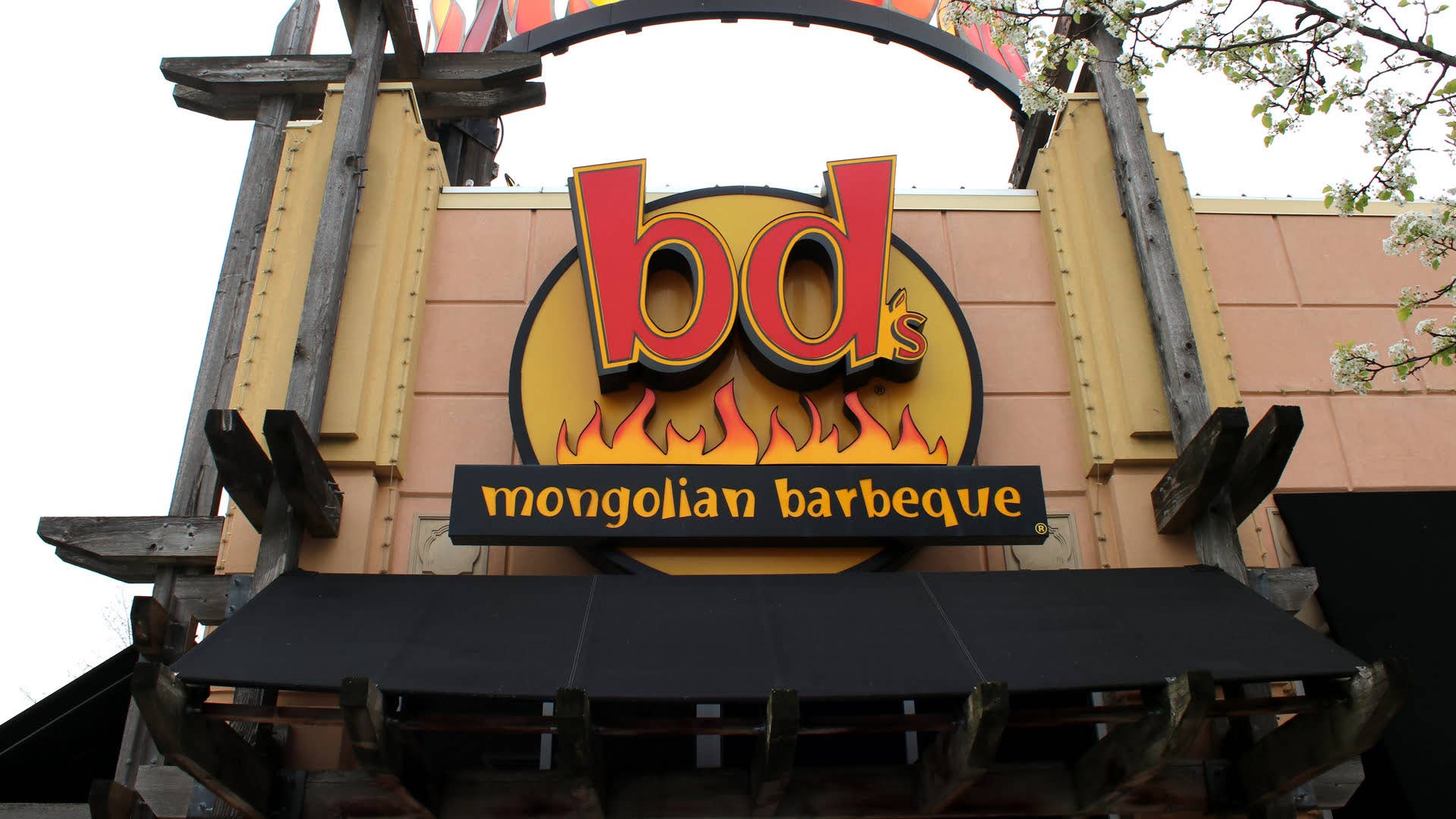
Shutterstock
Buffets may never fully come back
Kirstie Jones, an environmental health expert at Navitas Safety, speaking during the pandemic, sounded a death knell for the traditional buffet in comments made to Food Service Equipment Journal.
“When life returns to a level of normality, gone will be the days of self-serving buffets,” she said.
There are financial reasons for that beyond the health-related ones.
“Standard sit-down restaurant, you could sit down, you can portion control it, but at an all-you-can-eat buffet with a high-cost item such as meat, you’re running a very high risk at that point, especially in this economy where people maybe now are not going on a regular and limiting themselves,” RTMNexus CEO Dominique Miserandino told TheStreet.
Buffets, at least the ones that still exist, have become more of an event, he explained, and that makes them financially less viable.
“But if they ever go to a place like that, they’re going when it’s a special treat and going all out,” he added.
Buffets, it should be noted, were struggling before the pandemic.
“From 1998 to 2017, the number of buffet restaurants decreased by 26% while the number of overall restaurants grew by 22%,” Business Insider reported.
Not every analyst, however, believes that buffets and self-serve restaurants are doomed.
“The core benefit offered by buffets is still extremely relevant,” Joe Jackman, CEO of Jackman Reinvents told Fox News. “There will always be customers that want that sweet-spot combination of value (take as much as you want), variety (huge selection), personalization (each plate is unique), and sensory appeal (visually compelling format).”
Related: 38-year-old steakhouse chain closed 21 restaurants, more planned