When a company that moves the bulk of its products to store shelves runs out of cash, there’s likely to be a serious disruption to business. Bottles stall in warehouses, orders turn unpredictable, and sales can vanish.
MGP Ingredients (MGPI) saw that risk coming, moved quickly, and is starting to see the payoff.
The Atchison, Kansas distiller owns Penelope Bourbon, Remus, Yellowstone, and El Mayortequila under its Luxco arm. For years, part of its retail route ran through one of the largest wine-and-spirits distributors in the country: Republic National Distributing Company.
That distributor is now bankrupt.
What MGP did in the months before the filing to minimize losses is important.
MGP Ingredients turned a distributor’s collapse into a head start
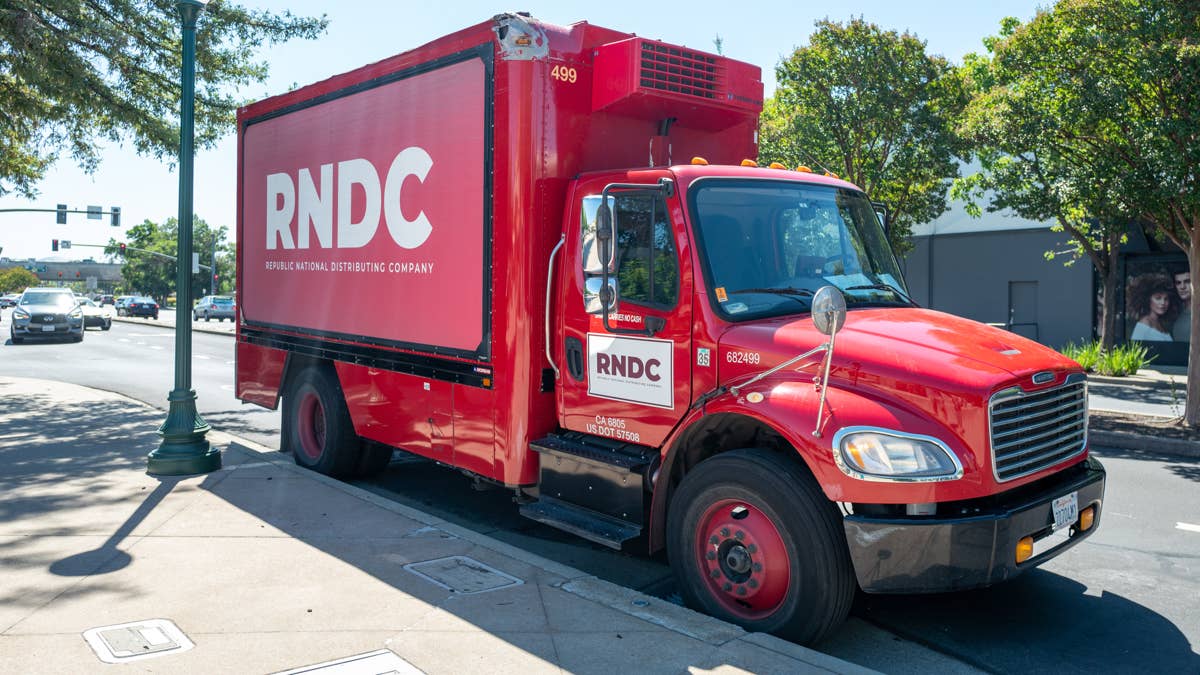
Republic National Distributing Company was once the second-largest wine and spirits distributor in the United States.
For years, RNDC handled part of MGP’s distribution.
RNDC filed for Chapter 11 bankruptcy on July 26 in the Southern District of Texas. The filing listed liabilities between $1 billion and $10 billion and more than 100,000 creditors.
More Beverage Stocks:
- Analysts reboot Corona Beer owner stock price target in face of market pressures
- Coca-Cola keeps beating its rivals, and Wall Street noticed
- Bank of America says Coca-Cola, dividend giant, is on sale
MGP did not wait to find out how that would end.
In June, the company shifted 10 markets to Reyes Beverage Group, the largest beer and beverage distributor in the country.
Management said the handoff caused little disruption for customers, and the early read was positive.
Why moving 10 markets to Reyes Beverage Group matters for MGPI
The switch was not just about avoiding a bad partner. It was about landing with a better one.
During the first month working with Reyes, depletions of MGP’s premium-plus brands rose 7%, Investing.com reported.
Depletions measure how fast distributors sell product through to retailers, so a rise there signals real demand, not just shipments piling up.
Related: National beer and wine leader files Chapter 11 bankruptcy
Mid-tier brands rose 4% in that first month.
MGP is still moving some open and control-state markets to healthy distributors, with more changes expected to take effect later in the year.
For a smaller company competing against Diageo (DEO) and Brown-Forman (BF.B), a reliable distribution path is one of the few things fully within its control.
What the RNDC bankruptcy is costing MGP right now
The split was not completely free.
MGP recorded a $2.1 million provision for credit loss in the second quarter tied to the RNDC bankruptcy, its earnings release shows. That covers money the distributor is unlikely to repay.
MGP’s Luxco arm holds a $3.59 million unsecured claim in the case, The Spirits Business reported, placing it among dozens of drinks makers waiting in line.
Proximo Spirits, the Jose Cuervo maker, holds the largest claim at about $93.9 million.
Related: Coca-Cola looks set to bring back new take on giant failure
Unsecured creditors rarely recover the full amount.
Court filings reviewed by the Lexington Herald put the total RNDC owed to unsecured creditors above $400 million, and how much of that gets paid back is still an open question.
By booking the loss now, MGP has cleared the RNDC exposure off its books before the case drags on.
MGP still faces a brutal whiskey market
The American whiskey business is working through a heavy oversupply, with distillers cutting production to draw down old inventory.
CFO Brandon Gall said production is running at its lowest level since 2018, Investing.com reported.
That shows in MGP’s Distilling Solutions unit, where brown goods sales fell 59% in Q2 as customers kept cutting orders.
The stock reflects the strain. MGPI traded around $17.40 on August 3, down about 28% so far in 2026 and near the low end of its 52-week range of $15.72 to $30.57.
The pressure is industry-wide, not company-specific, which is part of why MGP thinks it can come through in a stronger position than weaker rivals.
Where MGP is actually holding up
Underneath the whiskey drop, parts of the business are steady.
Premium-plus sales rose 5% in the quarter, led by Penelope Bourbon, which grew 13%, and Yellowstone. These are the higher-priced brands MGP wants to build around.
Ingredient Solutions, which sells specialty wheat proteins and starches to food makers, grew sales 2% and was the only one of the three segments to post higher revenue.
Total sales still fell 15% to $124.4 million, dragged down by the whiskey decline. But adjusted earnings of $0.72 a share came in ahead of the company’s own expectations.
MGP reaffirmed its full-year outlook of net sales between $480 million and $500 million and adjusted EBITDA between $90 million and $98 million.
Can MGP play offense while rivals struggle?
A shakeout usually leaves survivors with room to buy assets cheaply.
MGP’s management has pointed to industry rationalization as an opportunity, and smaller distilleries squeezed by unpaid RNDC debts could become targets.
But investors should weigh that against MGP’s own balance sheet.
The company carried $351.8 million in net debt at quarter-end, with net leverage at 3.5 times, up from 1.8 times a year earlier. This was after a roughly $111 million payment for Penelope.
Cash on hand was about $17.8 million, and Gall said leverage should peak in the third quarter before coming down.
A stretched balance sheet limits how aggressively any buyer can move, so while the setup for bargain acquisitions is real, MGP is not sitting on a war chest today.
What MGPI investors should watch next
For anyone weighing the stock, here are a few markers to watch.
Signals to track on MGPI:
- Whether depletions with Reyes hold their early gains as more markets transition
- Whether Distilling Solutions brown goods sales stop falling, a sign the whiskey oversupply is clearing
- Whether net leverage peaks in the third quarter and declines as management projects
- Whether Penelope and the premium-plus tier keep growing fast enough to offset whiskey weakness
Analysts remain constructive despite the slump. The average 12-month price target sits at $24.67, well above the current price, though that figure reflects a recovery thesis, not the current reality.
MGP handled the RNDC failure about as well as a supplier could. It moved early, landed with a stronger distributor, and took the loss on its own timing.
The distributor issue was a risk it managed well. The whiskey cycle is the one it still has to wait out.
MGP Ingredients faces ongoing industry and balance-sheet risks, and past performance does not guarantee future results.