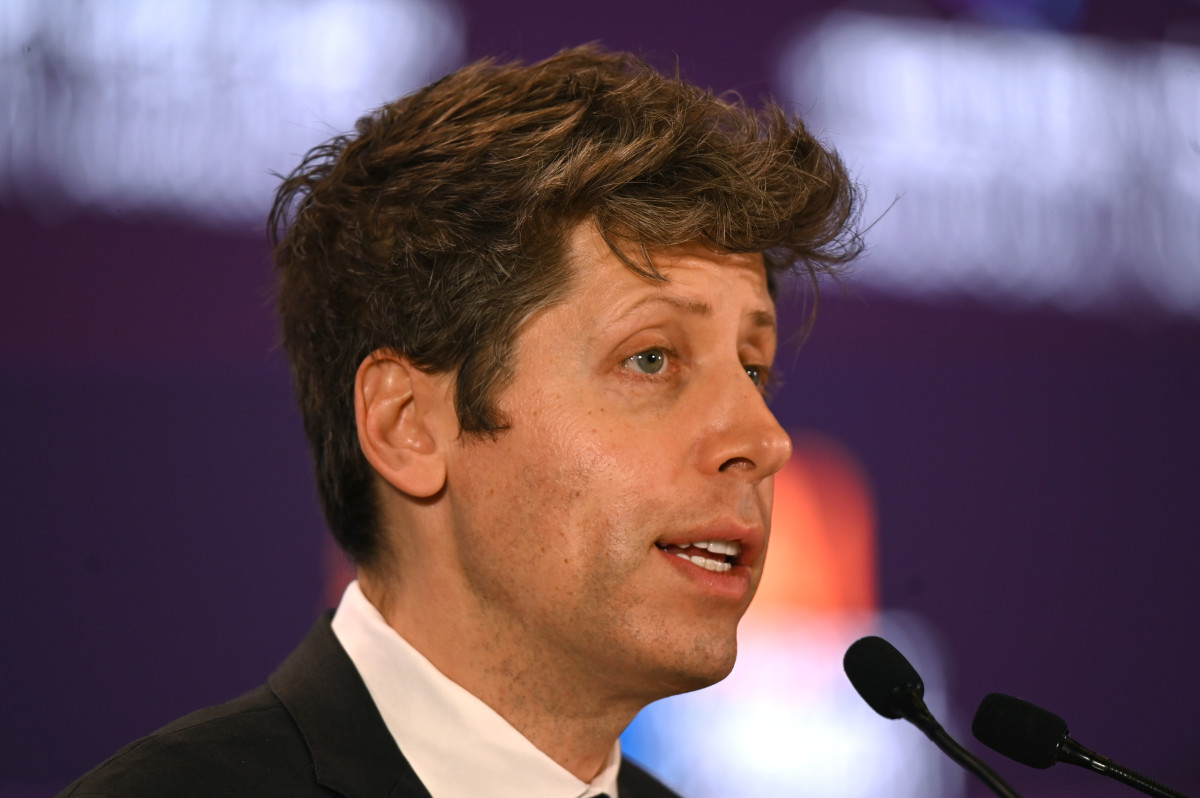
OpenAI’s CEO Sam Altman is making waves yet again, this time in the shape of a rapid-fire X AMA. There is a brewing Washington-versus-Silicon-Valley showdown. There is no doubt about that. But Altman is using the moment to calm these fears while, at the same time, issuing a word of caution.
OpenAI won’t support mass domestic surveillance or autonomous weapons, according to his AMA. Altman also criticized the government’s move against Anthropic, a competitor, and he laid out the legal line that would make OpenAI walk.
You have to give it where it’s due. Sam Altman decided to field questions, and that too, in public. You cannot get more transparent than that. The fact that the comments came after OpenAI struck a new deal to deploy advanced AI systems in classified Pentagon environments underscores the importance of the discussion.
The timing is intriguing. The interaction comes after the Trump administration ordered federal agencies to stop using Anthropic technology. That came after the Pentagon labeled the rival lab a “supply-chain risk,” something Anthropic says it will contest.
OpenAI’s message, in effect, is simple and straightforward. We’ll work with the government, but only if the rules don’t turn into a political weapon and only if there are limits.
OpenAI’s 3 “red lines”
OpenAI said there are three non-negotiables as part of the deal:
- No mass domestic surveillance using OpenAI technology.
- No directing autonomous weapons systems with OpenAI technology.
- No high-stakes automated decisions (OpenAI cites “social credit” as an example).
Altman argues that the key issue remains enforceability. It says it keeps “full discretion over our safety stack,” sets up via cloud, and has authorized OpenAI personnel “in the loop,” backed by contract language and U.S. law.
What’s actually in the contract language OpenAI published:
“The Department of War may use the AI System for all lawful purposes…” but it will not be used to control autonomous weapons on its own when human control is needed.
More AI Stocks:
- Morgan Stanley sets jaw-dropping Micron price target after event
- Bank of America updates Palantir stock forecast after private meeting
- Morgan Stanley drops eye-popping Broadcom price target
It will also be prohibited from being used for “unconstrained monitoring” of U.S. citizens’ private information.
Related: Samsung shocks Apple in smartphone war
OpenAI says it hold the authority to nix the contract if any term is violated.
Altman’s hard boundary: illegal or unconstitutional
When quizzed on what it would take for OpenAI to take its ball and go home, Altman gave his cleanest answer of the AMA:
“If we were asked to do something unconstitutional or illegal, we will walk away. Please come visit me in jail if necessary.”
Related: Galaxy S26 brings ‘agentic AI’ to phones, and it’s bigger than Samsung
Altman doubled down in the thread as well, arguing the Constitution matters, saying the Constitution matters more than “any job” even “staying out of jail.”
The thorniest internal issue: foreign surveillance
The other element that Altman touched upon was the internal dynamics in response to the contract.
Altman said the toughest principle to reconcile internally was “non-domestic surveillance.” He came off as a realist, acknowledging the reality of foreign intelligence, while also stating that the ethical quandaries surrounding the issue still bother him.
“I have accepted that the US military is going to do some amount of surveillance on foreigners… but I still don’t like it.”
Why OpenAI says it moved fast and why it defended Anthropic anyway
One of the most striking moments during the interaction came when OpenAI, a direct competitor to Anthropic, publicly argued that the government need not crack down on the company, saying that it’s unfair to apply the “supply-chain risk” designation to Anthropic.
Altman said blacklisting Anthropic is “an extremely scary precedent.” He believed the government needed to handle it in “a different way.”
Separately, he said that OpenAI has been exploring “non-classified work only” for a long time. There were several occasions when they said no to lucrative classified deals that Anthropic accepted until this moment forced a decision.
The money angle investors can’t ignore
Reuters reported the Pentagon has inked agreements worth up to $200 million each with major AI labs over the past year, including OpenAI, Anthropic, and Google.
The nuance in all of that is that OpenAI is private, but the blast radius is public:
- Anthropic is backed by Alphabet (GOOGL) and Amazon (AMZN), which makes contract wins instantly relevant to Big Tech players.
- Microsoft (MSFT) and the larger enterprise AI stack that these models are a part of are very closely related to OpenAI.
What to watch next
These are the things that could make this story go from a “tech ethics fight” to a policy risk that affects the market in the near future:
- Litigation risk: Anthropic is signaling a legal opposition to the “supply-chain risk” label.
- Contract precedent: Whether “all lawful purposes” becomes the default language for AI deployments that are classified, and how narrowly that is understood.
- Supplier/partner exposure: If “supply chain risk” becomes a procurement tool, it can quickly spread through contractors and cloud ecosystems.
Related: Goldman Sachs analyst delivers shock message on Circle after blowout quarter