If you have been taking short hops in a Tesla (TSLA) Robotaxi around Austin, your next ride is going to cost more. Noticeably more.
On March 7, Tesla quietly updated its Robotaxi pricing for the first time in over six months. the base fare tripled, jumping from $1 to $3.25. The per-mile rate stays the same at $1. But for short rides, the difference is immediate and significant.
A 2-mile trip that used to cost $3 now runs $5.25. A 5-mile ride goes from $6 to $8.25. The longer the trip, the less the hike hurts. But for quick neighborhood runs, the formula has fundamentally changed.
How Tesla’s pricing has evolved since launch
The Robotaxi service launched in Austin on June 22, 2025 with a flat $4.20 fare. The number was a deliberate nod to Elon Musk‘s well-known affinity for the figure. A few weeks later, jumped to $6.90 as Tesla expanded the service’s geofenced area into downtown Austin, the University of Texas campus and surrounding neighborhoods. Again, not a coincidence on the number.
In July 2025, Tesla moved away from flat fares entirely. App version 25.7.10 introduced a distance-based model: $1 base fare plus $1 per mile. That structure held for six months without adjustment.
More Tesla:
- Top-rated analyst drops curt 8-word take on Tesla stock
- Tesla investors may miss game-changing move
- Judge orders Tesla to make major change or halt sales in California
The March 7 update is the first change since October 2025. It keeps the per-mile rate intact but triples the entry cost.
What rides cost before and after the March 7 update
- 2 miles: $3 before, $5.25 now (up 75%)
- 3 miles: $4 before, $6.25 now (up 56%)
- 5 miles: $6 before, $8.25 now (up 38%)
- 10 miles: $11 before, $13.25 now (up 20%)
Why short rides are taking the biggest hit
The math is straightforward. When the base fare was $1, a 2-mile ride cost $3. The base fare was a minor part of the total. Now that it is $3.25, it dominates the cost of any trip under three miles.
That appears to be deliberate. According to TeslaNorth, Tesla is using the base fare increase to manage demand and reduce wait times, which have recently averaged between 10 and 15 minutes during peak hours. By making very short rides less attractive, Tesla steers the fleet toward longer, more efficient trips.
The Austin pilot currently operates around 89 Model Y vehicles, most of which still carry safety monitors. As fleet size grows, the pricing structure is being calibrated for efficiency, not just rider acquisition.
How Tesla still compares to Waymo
Even at the new prices, Tesla remains cheaper than Waymo in head-to-head comparisons.
A January 2026 TechCrunch report citing Obi market data found that Waymo rides in the San Francisco Bay Area averaged $19.69, while Uber came in at $17.47. Tesla, despite not yet operating commercially in California, was tracking far below both based on its Austin pricing.
Goessman/Bloomberg via Getty Images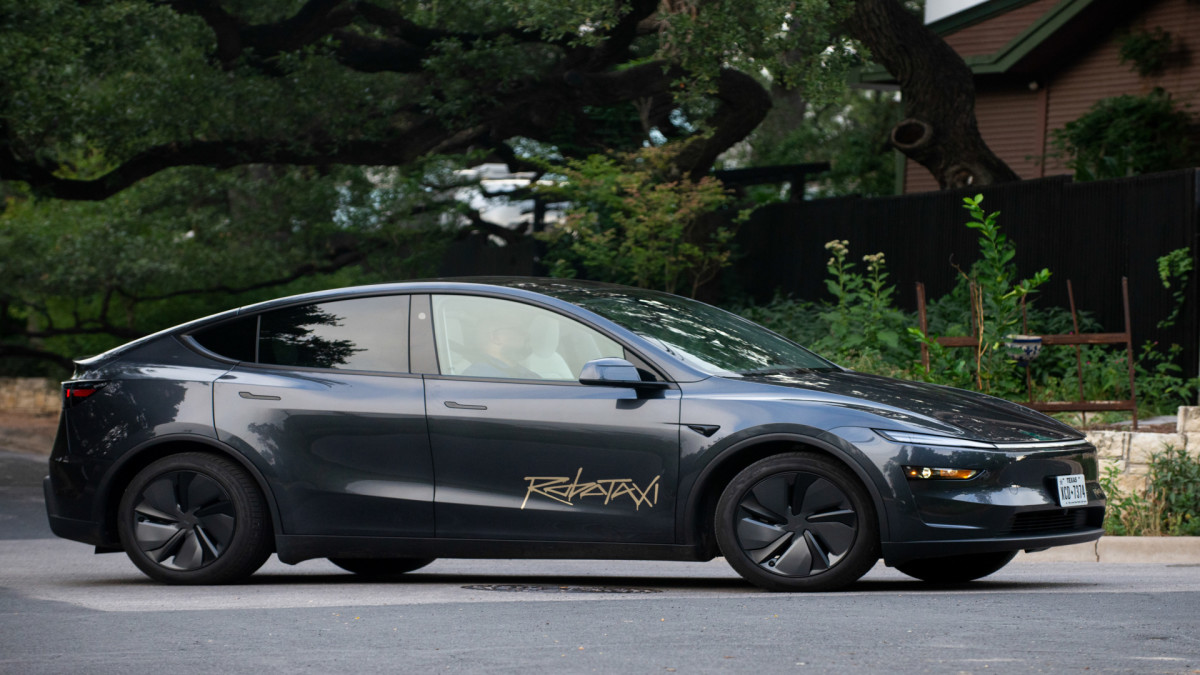
At $8.25 for a 5-mile Austin trip, Tesla is pricing well below what Bay Area riders pay for a comparable Waymo ride. That gap remains a key part of Tesla’s pitch as it prepares for broader expansion.
Wait times tell a different story. Tesla’s average is around 12 to 15 minutes. Waymo averaged 5.74 minutes in the same Obi survey. As Tesla scales its fleet, that convenience gap will be the next metric to watch.
What comes next for Tesla Robotaxi
The pricing change lands at a pivotal moment for the service. Tesla is preparing to expand beyond Austin. Phoenix, Miami and Las Vegas are all targeted for launch later in 2026. A Bay Area rollout is also in planning, though California regulations require a different operational setup than Texas.
On the hardware side, Cybercab production is slated to begin at Giga Texas in April 2026. The two-seat dedicated robotaxi, expected to be priced under $30,000, would allow Tesla to operate vehicles designed entirely around driverless ride-hailing rather than retrofitting consumer Model Y units.
There is also a regulatory dimension. Tesla submitted key Full Self-Driving performance data to the NHTSA on March 9. The agency has been probing roughly 80 incidents involving FSD-activated vehicles since October 2025. The regulator’s response will have a direct bearing on how quickly Tesla can expand its driverless operations outside Texas.
For now, riders in Austin are adjusting to a new pricing reality. The era of $3 short-hop robotaxi rides is over. Whether the new structure drives riders away or simply shifts behavior toward longer trips is what Tesla’s data team will be watching closely over the coming weeks.
Related: Tesla rival inspires Ford CEO Jim Farley’s push for EV profitability