For decades, shopping at Dollar Tree was simple. You’d walk into the store, pick up what you needed, and head to the register knowing everything cost the same.
Not only was shopping at Dollar Tree simple, but it was also a relatively low-stress endeavor.
If you grabbed an impulse purchase, it was only $1. If you were unsure about the quality of a given item, once again, you were taking a $1 risk.
But that simplicity is quickly disappearing.
Dollar Tree has been increasingly moving toward a multi-price strategy that features items across a wide range of price points. And while that strategy may be helping the business, it’s causing a world of confusion and frustration for many of its core customers.
Dollar Tree goes all-in on multi-price
Dollar Tree began shifting away from its famous single-price model several years ago. After raising its base price to $1.25 in 2021, the company started introducing products priced at $3, $5, and eventually up to $7.
The logic behind this shift is twofold.
First, by offering higher-priced merchandise, Dollar Tree can stock better quality goods.
Related: Sam’s Club fixes problem that’s a major pain point at Costco
Let’s face it — dollar stores tend to have a reputation for low-quality products, which can be a turnoff for some consumers. Higher price points give Dollar Tree more leeway to expand its assortment and improve its product quality overall.
And that ties into the second point. Dollar Tree is expanding into higher-priced items to specifically try to attract higher-income shoppers.
During the company’s December earnings call, Dollar Tree said 3 million more households shopped at its stores during the third quarter of 2025 compared to the same quarter a year earlier. Surprisingly, though, around 60% of those new shoppers came from households earning over $100,000.
Or maybe it’s not so surprising. While a good 62% of U.S. consumers were living paycheck to paycheck as of April 2024, that number includes 48% of consumers earning more than $100,000 a year, according to data from PYMNTS Intelligence.
So it may be that higher-income households need stores like Dollar Tree more now than they did in the past.
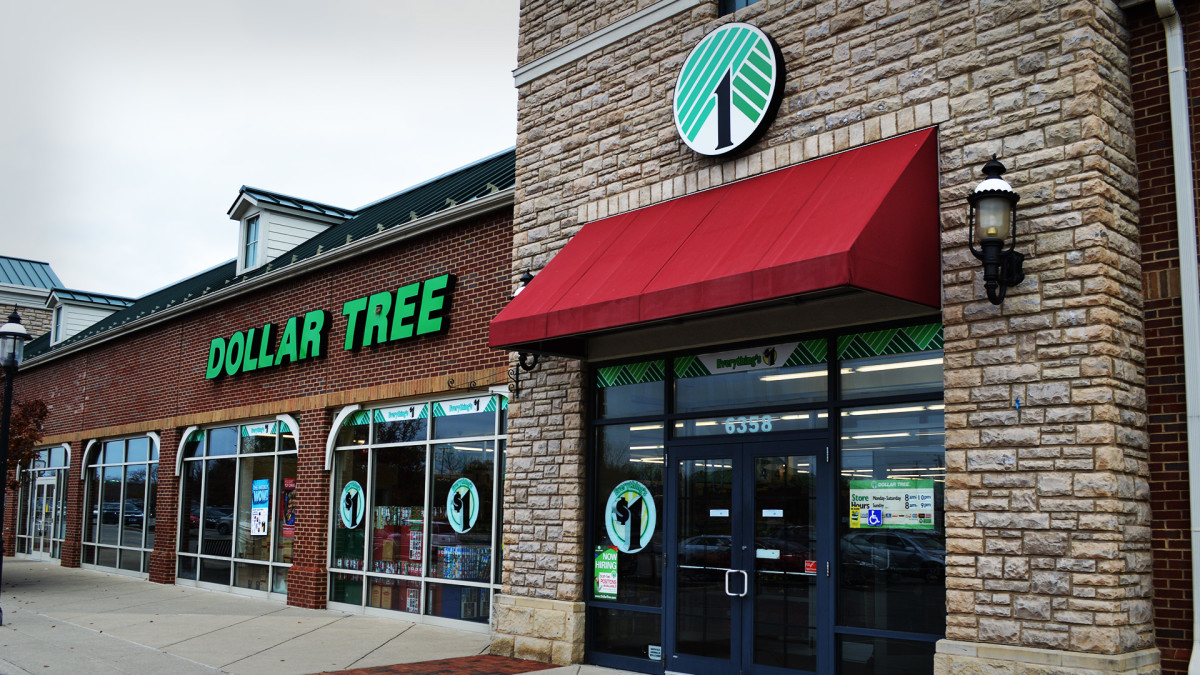
Image source: Shutterstock
Complexity is a problem for Dollar Tree customers
While it makes sense for Dollar Tree to cater to higher-income customers, the flaw in the company’s multi-price strategy is that it undermines the simplicity the brand is known for.
Shoppers don’t just go to Dollar Tree because it’s cheap. You can find budget items at Walmart and Target if you look closely enough.
Rather, the appeal of Dollar Tree was the fact that you could grab any item and know what you were going to pay. That’s no longer the case.
This means that now, Dollar Tree customers have to check labels or scan items to figure out what prices they’re looking at. And a lot of people aren’t happy about that.
As one Reddit user said, “I knew the downfall was coming once I saw a price checker scanner in the store. It is almost not worth shopping there anymore.”
Another said, “Their whole gimmick was everything for a dollar…what a waste.”
During Dollar Tree’s aforementioned earnings call, the company confirmed that it’s pleased with the impact of its new strategy.
More Retail:
- Costco sees major shift in member behavior
- Retail chain shuts all locations as legal changes hit industry
- Costco makes major investment in online shopping for members
- Lululemon struggles to reverse concerning customer behavior
- T-Mobile launches free offer for customers after major loss
“Multi-Price is one of the most important strategic shifts in Dollar Tree’s modern history, and it’s working,” CEO Mike Creedon said.
And that strategy may boost sales in the short term.
But if the shopping experience becomes confusing or frustrating, it could chip away at the very thing that made Dollar Tree successful in the first place.
Related: Dollar Tree CEO signals tough times ahead for bargain hunters