Deutsche Bank (DB) on Thursday, March 12, revealed in its annual report that it had $30 billion in private credit exposure in 2025.
DB reported higher fee revenues within the private-credit lending space and financing on balance sheets.
Given private-credit worries at the beginning of 2026 and redemption surges at giant asset managers such as Blackstone and Blue Owl Capital, DB reports pressure within private credit and non-bank financial institutions (NBFIs) due to higher interest rates, a change in investor sentiment, and refinancing risks.
Noted in the annual report, subprime lenders in the U.S. have failed, highlighting risks associated with private credit-raising standards in underwriting and fraud.
“Mom & pop” cash meets institutional risks
DB claims it is not exposed to major risk related to these NBFIs; however, it says it may face indirect credit risks through interconnected counterparties.
This could, in turn, “lead to a deterioration in Deutsche Bank’s portfolio quality and higher-than-expected credit losses, as well as increased capital and liquidity demands as clients draw down on funding lines,” the annual report said.
Related: Deutsche Bank Slumps After China’s HNA Trims Stake in German Lender
This acknowledgement from a traditional bank has once again brought to light the weaknesses within the “shadow banking” sector.
The question is: If shadow banking risk has been identified in 2025, what does that mean for this year?
Since February, after Jefferies coined the term “SaaS-pocalypse,” retail investor sentiment in the private-markets sector has been negative, especially around the concept of democratization, where institutions want to grab mom & pop’s liquid cash.
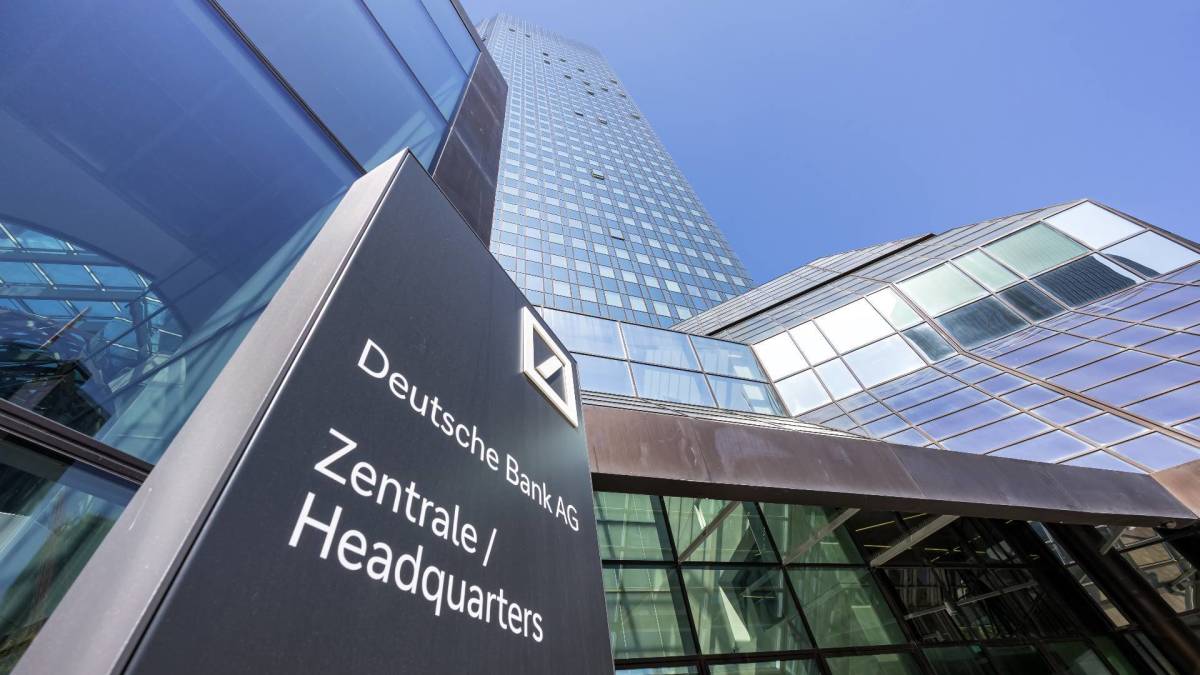
Deutsche bank software and tech exposure amid SaaS worries
DB’s loan exposure in the tech sector makes up around $18.1B USD, at an amortized cost, where $8.3B is concerned with financing data centers.
DB’s portfolio is concentrated primarily within U.S. corporate exposures that are 60% investment grade, and a smaller, confined appetite for lower-rated clients.
If you look at DB’s intangible assets, you’ll find $1.7B related to internally generated software.
What does this mean? DB is manufacturing its own software, and if the software continues to lose relevance or plunge due to AI concerns, DB has to take a sudden loss of value, also known as an “impairment.”
Deutsche Bank expands on its negative investor sentiment, claiming it will affect its ability to de-risk capital markets, leading to potential losses and higher volatility.
Overall, if Deutsche Bank is seeing indirect risks from the private sector, it may set another precedent for other major banks to react similarly to the shadow banking sector.
Related: KKR Arctos deal reshapes sports, GP solutions platform