Stocks have bounced off recent lows this week as the market tries to stabilize after the sell-off triggered by the Iran war and rising oil prices. Bank of America is warning investors not to read too much into that rebound.
In his March 17 Global Fund Manager Survey note, BofA chief investment strategist Michael Hartnett said the bank’s positioning metrics are “far from uber-bear levels seen at recent big lows/good entry points for stocks and credit,” per CNBC. In other words, the kind of capitulation that has historically marked durable market bottoms has not happened yet.
The survey is one of the most closely tracked sentiment gauges on Wall Street, covering hundreds of institutional investors each month. When its indicators align with prior market bottoms, the signal tends to matter. Right now, they do not.
What the fund manager survey shows
The March survey covered 210 institutional fund managers with $589 billion under management. The headline sentiment metric dropped sharply to 5.6 from 8.2 in February, a six-month low, as the Iran conflict and private credit concerns ended what Hartnett called the “frothy bull sentiment” of recent months, per Investing.com.
Cash levels jumped to 4.3%, the largest single-month increase since the pandemic shock of March 2020. Growth expectations fell sharply, with only a net 7% of respondents expecting a stronger global economy, down from 39% the month before. Inflation expectations surged to a net 45%, and rate cut optimism declined significantly.
More Wall Street
- Billionaire Dalio sends 2-words on Fed pick Warsh
- Top analyst bets these stocks will boost your portfolio in 2026
- Bank of America sends quiet warning to stock market investors
The shift in what fund managers are most worried about is striking. In February, the AI bubble topped the list of tail risks. By March, geopolitical conflicts had jumped to number one, cited by 37% of respondents, up from just 14% the prior month.
Private credit remained a persistent concern, with a record 63% of survey participants identifying it as the most likely source of a systemic credit event. For the eighth consecutive month, it held that distinction.
Despite all of that, several of the bank’s key indicators are not yet at the levels that have historically signaled a buying opportunity. Hartnett pointed to three specific metrics that tell the story.
Three signals not yet at capitulation levels
- Equity allocation: Survey participants are still 37% overweight equities. At three of the four most recent major market lows, investors were actually underweight stocks.
- Cash rule: Cash levels at 4.3% are a neutral reading, still well below the 5% threshold that BofA uses as a buy signal.
- Market breadth: The bank still sees positive breadth at 7%. At prior market bottoms, breadth was severely inverted.
The Bull and Bear Indicator sends a message
BofA’s Bull and Bear Indicator, one of the bank’s most closely watched contrarian gauges, currently sits at 8.5. That reading is in “sell” territory, meaning professional investors are still leaning too heavily into risk for the bank to signal a clear entry point.
The indicator has been a reliable marker of sentiment extremes; when it has hit similar levels in the past, markets have typically pulled back further before recovering.
The logic of the indicator is essentially contrarian. When everyone is bullish, it is time to be cautious. When everyone is fearful, it is time to buy.
At 8.5, the current reading says the market has not yet reached the level of fear that would make the contrarian case compelling. The bank’s broader market mood measure fell to a six-month low in March, but even that decline is not enough to flip the signal from cautious to opportunistic.
BoA suggests market has not hit bottom: why it matters for investors
Things have gotten worse, but not bad enough. Sentiment has deteriorated, cash levels have risen, and growth expectations have fallen, all movements in the right direction for anyone waiting for a genuine entry point.
But Hartnett compared the current readings against four recent major lows: the April 2025 tariff shock, Russia’s invasion of Ukraine, the Covid crash, and the 2011 U.S. debt downgrade.
In each case, the bank’s indicators showed far more extreme bearishness than they do now.
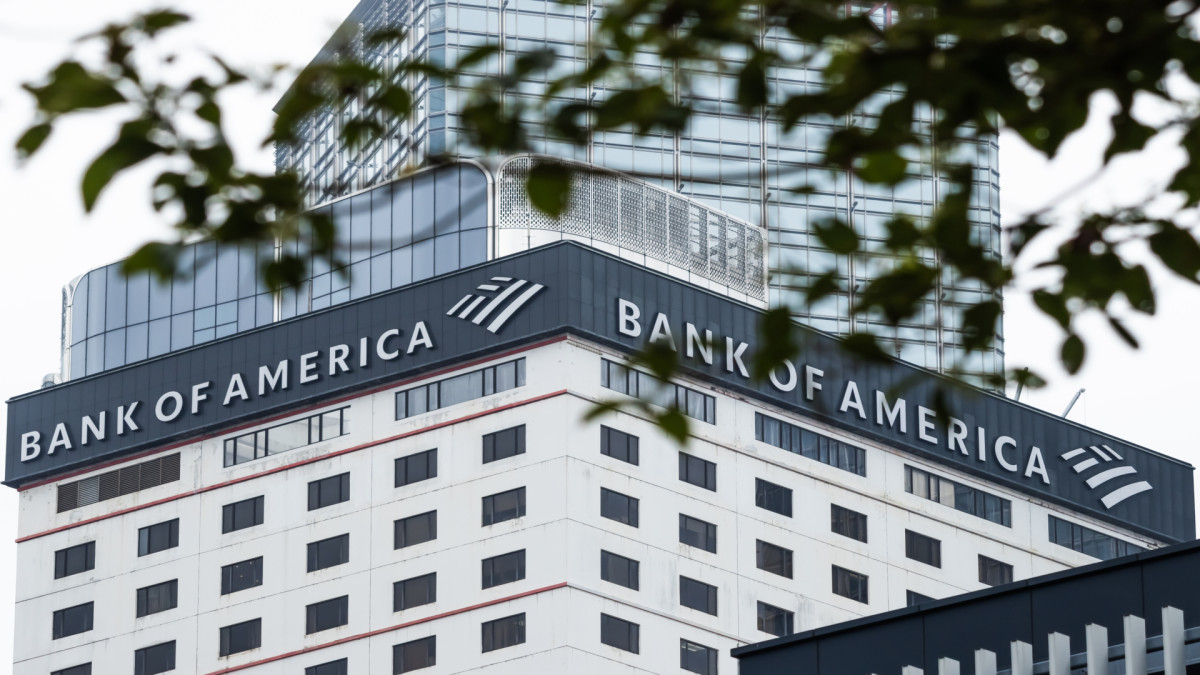
Cheng Xin/Getty Images
The March survey does not yet match that profile. Investors who bought aggressively into those prior dislocations were rewarded because the moments reflected genuine capitulation. The data suggest this is not yet one of them.
Market indicators to watch next
The broader backdrop adds to the complexity. Brent crude is trading above $100 a barrel, driven by the near-shutdown of tanker traffic through the Strait of Hormuz since the Iran war began on Feb. 28.
The Federal Reserve held rates steady at its March meeting and signaled limited room to cut, given rising inflation pressure from oil prices. Neither the geopolitical situation nor the private credit concerns that rank as fund managers’ top systemic risk show signs of resolving quickly.
The S&P 500 is currently trading near 6,630, down roughly 5% from its January peak of around 7,008. BofA’s framework gives investors a specific checklist to watch: equity allocations moving from overweight to underweight, cash levels crossing 5%, and market breadth inverting.
Until those three conditions are met, the bank’s historical framework says the bigger lows are still ahead.
For now, the message from one of Wall Street’s most closely watched sentiment gauges is clear. The rebound this week looks like relief, not a bottom.