Boeing (BA) gave investors a quarter that looked much closer to a real recovery than a hopeful one.
First-quarter revenue rose 14% to $22.2 billion, the company’s GAAP loss narrowed to $0.11 per share, and core loss per share improved to $0.20. Boeing also reported an operating cash flow of negative $0.2 billion, a sharp improvement from negative $1.6 billion a year earlier, while total backlog grew to a record $695 billion.
The stock moved higher after the report as investors responded to the smaller-than-expected loss and steadier production picture, rising about 5% after earnings, on growing confidence that Boeing is making real operational progress even as it continues to burn cash.
Commercial airplanes give quarter clearest lift
The most visible improvement came from Boeing’s commercial jet business. Boeing delivered 143 airplanes in the quarter, up from 130 a year earlier, while Commercial Airplanes revenue climbed 13% to $9.2 billion.
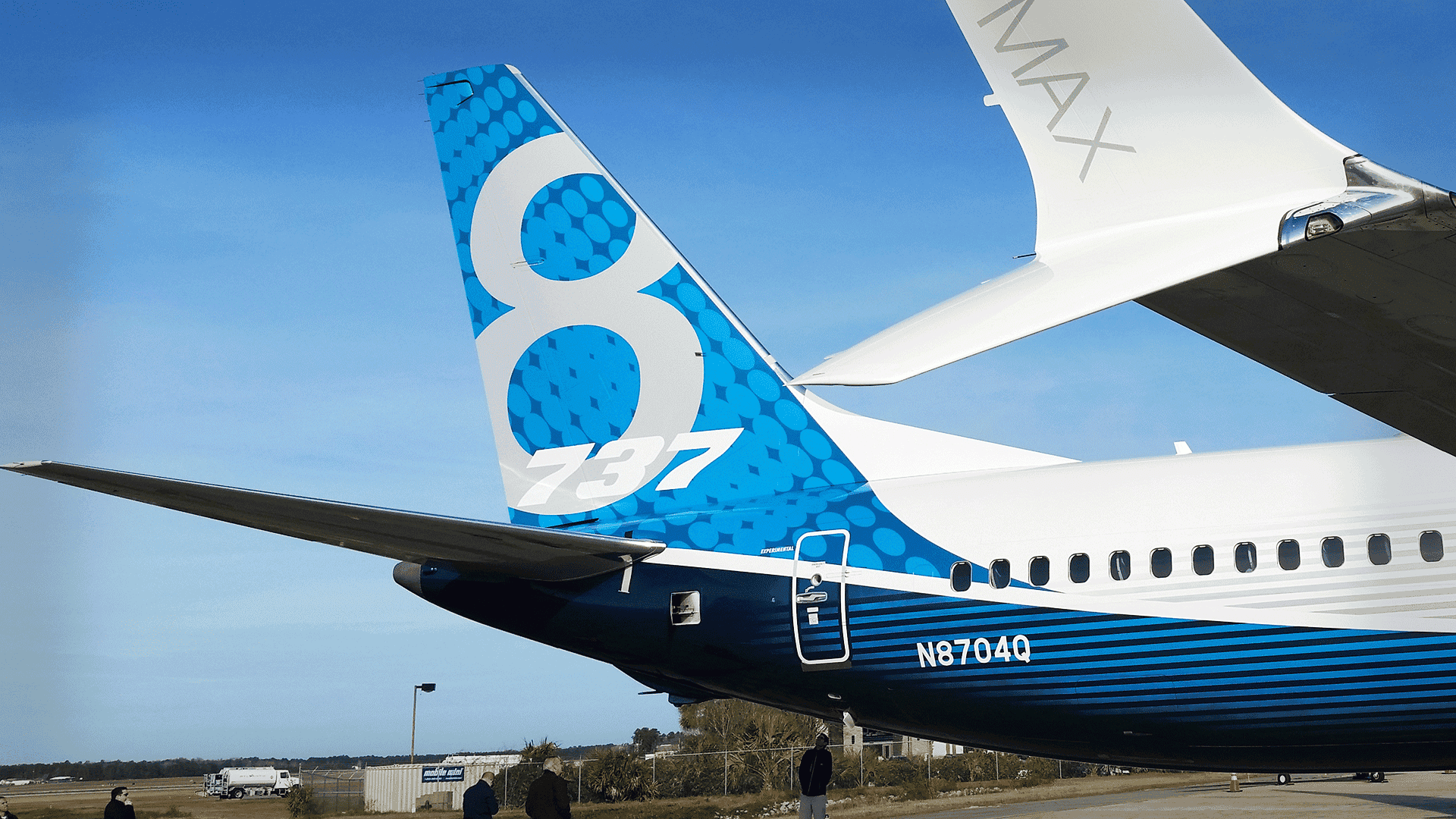
The company said the 737 program continues to produce at a rate of 42 per month, and management kept its certification timeline for the 737-7 and 737-10 in 2026, with first deliveries expected in 2027.
More Boeing
- Low-cost airline with cult following adds first business class
- Boeing faces new threat as Iran war raises pressure
- Boeing’s backlog boom puts cash flow to the test
The 787 program also held steady at eight per month, while the 777X moved further through certification.
Boeing said the 777-9 received approval to begin another phase of FAA certification flight testing and still targets first delivery in 2027. That gives investors a better sense of continuity across several major aircraft programs, not just the narrow 737 recovery story.
Commercial Airplanes still lost money in the quarter, with an operating margin of negative 6.1%. Even so, that was an improvement from negative 6.6% a year earlier, and the company tied the result to higher deliveries and better operating performance.
Defense, services round out recovery story
The quarter also showed broader strength across the rest of the company. Boeing’s Defense, Space & Security segment reported revenue of $7.6 billion, up 21%, while operating earnings jumped 50% to $233 million.
Boeing said the segment’s backlog rose to $73 billion, supported by programs including the F-15EX, P-8, MQ-25, and satellite work.
Global Services added another steadier layer. Revenue rose 6% to $5.4 billion, and the segment posted an operating margin of 18.6%. Boeing said services backlog reached $33 billion, which helps explain why this part of the company continues to be one of the cleaner earnings supports inside the broader turnaround.
Those gains are important for how investors view Boeing now. The company is not relying on a single business line to carry the entire recovery. Commercial airplanes remain the center of the story, but defense and services are giving the quarter a more balanced shape.
Shutterstock
Boeing by the numbers
- Revenue: $22.2 billion, up 14%.
- GAAP loss per share: $0.11.
- Core loss per share: $0.20.
- Operating cash flow: negative $0.2 billion.
- Free cash flow: negative $1.5 billion.
- Commercial deliveries: 143, up from 130.
- Total backlog: $695 billion.
- Commercial backlog: more than 6,100 airplanes valued at $576 billion.
Source: Boeing
The turnaround still has major hurdle
Boeing’s quarter looked better, but it did not solve the entire problem.
Free cash flow remained negative, and cash and short-term investments fell to $20.9 billion from $29.4 billion at the end of 2025. Consolidated debt also remained high at $47.2 billion, even after Boeing paid it down from $54.1 billion at the start of the year.
That leaves the next phase of the story in a familiar place. Boeing has shown better production flow, better deliveries, better backlog, and smaller losses. What investors still need to see is a quarter where those improvements translate more fully into cash generation.
Production expansion, aircraft certification efforts, and integration costs tied to Spirit AeroSystems are still weighing on that side of the recovery.
For now, the market has a cleaner answer to one question. Boeing’s recovery is no longer something investors have to imagine solely from future milestones.
More airplanes are going out the door, more revenue is showing up in the financials, and the backlog keeps getting larger. The harder work now is proving that operational progress can turn into consistently positive cash flow.