The biggest mistake most retail investors make isn’t picking the wrong growth stock. It’s ignoring the tollbooth company that quietly profits no matter which company wins the next technology race or captures the next consumer wave.
Visa has been that tollbooth for decades. The company doesn’t lend money, doesn’t carry credit risk, and doesn’t bet on any single product cycle. It collects a small fee every time money moves across its network. In fiscal year 2025, that added up to 258 billion transactions and $14 trillion in payment volume, according to TheStreet.
That’s remarkable consistency, which makes Visa’s 2026 share-price performance genuinely strange. The stock is down nearly 12% this year, even as earnings have posted their strongest results in years.
That gap between business performance and stock price is exactly the setup Wall Street‘s sharper analysts hunt for. On April 28, Wolfe Research delivered one of the most direct explanations of that gap and where the stock heads from here, CNBC reported.
Analyst Darrin Peller raised his price target from $385 to $395, kept his outperform rating, and put specific weight behind a catalyst that many investors are still underestimating: the 2026 FIFA World Cup, set to kick off June 11 across the United States, Canada, and Mexico.
The numbers behind Wolfe’s Visa stock price target
The $395 target implies roughly 28% upside from the April 28 close, the firm’s 10-page note confirmed, as reported by CNBC. That’s a meaningfully bullish stance in a market where analyst upgrades are routinely ignored.
What makes Peller’s call credible is what Visa’s actual books look like right now. On April 27, the company reported fiscal second-quarter 2026 results that beat Wall Street’s expectations on every major line, then raised its full-year guidance.
Related: Visa says AI will change how you shop
Net revenue climbed 17% year over year to $11.2 billion, the strongest quarterly growth since 2022, according to Yahoo Finance. Earnings per share came in at $3.31, topping the consensus estimate of $3.10. Payments volume in constant dollars grew 9% to $3.7 trillion. Cross-border volume surged 12%.
Those results landed before a single World Cup match was played.
Visa CEO Ryan McInerney called the quarter a continuation of “broad-based” momentum across consumer payments, commercial transactions, and value-added services, according to a Yahoo Finance transcript of the April 28 earnings call.
CFO Chris Suh, on the same call, specifically named “expected benefits from FIFA-related inbound travel and marketing service demands” as a forward tailwind.
That’s not a corporate boilerplate. Suh also acknowledged that the conflict in Iran has created short-term headwinds for cross-border travel in parts of the Middle East and Africa.
Visa offset that softness with stronger cross-border e-commerce, per Wolfe Research’s note reported by CNBC. The point is that the World Cup spending surge hasn’t even begun yet.
What the World Cup means for Visa’s network
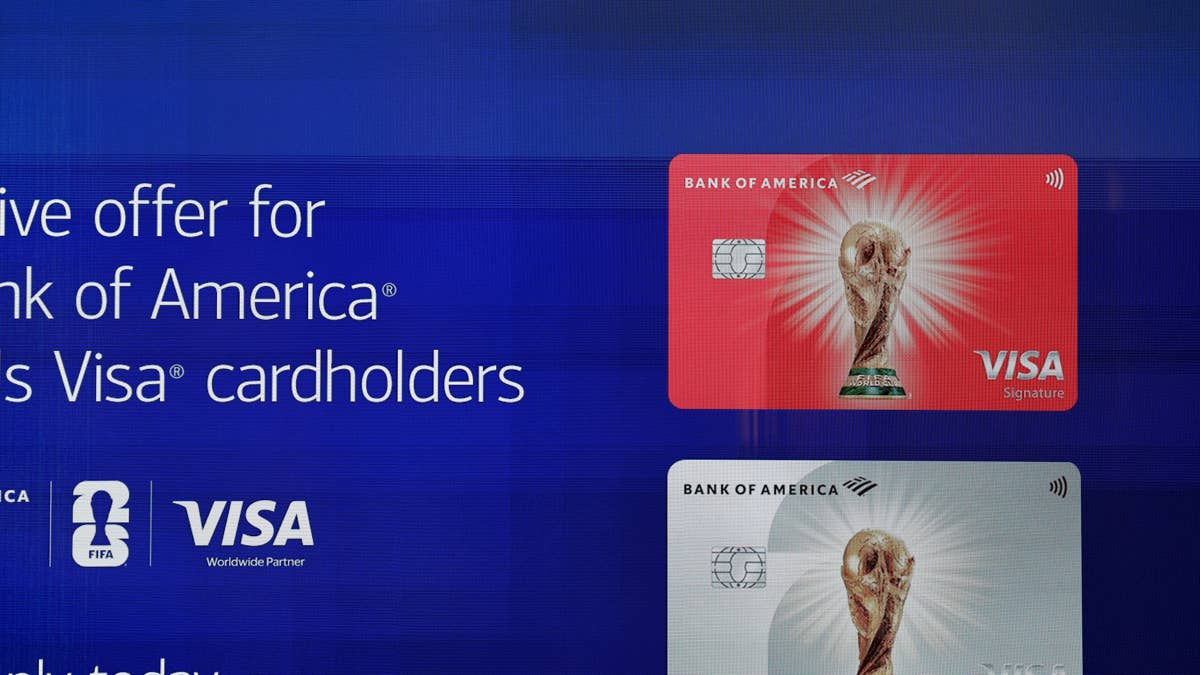
FIFA has designated Visa as the official payments partner for World Cup 2026, which runs June 11 through July 19, according to CNBC. That designation isn’t just a logo placement on a jersey.
When you’re the official payments partner for the world’s most-watched sporting event, you’re embedded in the transaction infrastructure itself. Every international fan who uses a Visa card to purchase match tickets, book a hotel in Miami, or buy a jersey in Los Angeles routes a fee through Visa’s network. That generates cross-border transaction volume in a concentrated three- to four-week sprint.
I ran the projected attendance and daily-spend numbers from the joint FIFA and World Trade Organization report against Visa’s Q2 cross-border metrics, and the scale is striking. The tournament is expected to attract 6.5 million visitors who will spend an estimated $13.9 billion, contributing $40.9 billion to global GDP, according to the joint FIFA-WTO economic impact study.
For a company whose cross-border revenue is already growing at double digits, a three-week burst of foreign fans spending U.S. dollars across 11 American host cities is precisely the kind of catalyst a tollbooth company lives for.
A tournament with record economic stakes
Here is what the independent data says about World Cup 2026’s economic footprint, by the numbers.
- The tournament is expected to generate $80.1 billion in global economic output, with $30.5 billion flowing to the United States alone.
- International visitors will spend an average of $416 per day and stay approximately 12 days, with 6.5 million fans attending across three host nations.
- The New York/New Jersey region alone projects 1.2 million visitors and $3.3 billion in economic activity.
- Average hotel rates in Los Angeles, normally $227 per night, are projected to jump 90% to $480 during the event.
- The tournament is expected to create 824,000 full-time jobs worldwide, including 185,000 in the United States.
These aren’t projections for soccer fans. They’re a map of where Visa’s cross-border transaction volume is heading.
My read on why Visa stock is still lagging
What struck me when I looked at Visa’s year-to-date stock chart against its earnings trajectory is how extreme the disconnect is. The company is reporting 17% revenue growth and raising guidance. The stock is still down double digits on the year.
That’s not a fundamental problem; it’s a sentiment problem.
A lot of it traces to macro fear: tariffs, the slowdown in consumer travel spending tied to geopolitical uncertainty, and broader growth concerns. Those headwinds are real, but they’re being priced as though they’re permanent.
More Retail:
- Another mall retailer quietly lcosed over 150 locations
- Ultra wealthy shoppers flock to this 63-year-old rugged retailer
- 72-year-old mall retailers to close more stores in 2026
The analyst consensus tells a different story. Of 42 analysts covering Visa, 39 rate it a buy or strong buy, based on LSEG data cited by CNBC. Raymond James also raised its price target on the stock to $389 from $380, keeping an outperform rating, according to Intellectia. Wolfe Research’s view is not an outlier. It is the consensus. The market just hasn’t caught up yet.
Peller’s note also flagged that Visa’s value-added services segment, which includes AI-driven fraud prevention and payment consulting, is expected to sustain growth momentum well beyond the World Cup window. That division hit $3.3 billion in Q2 and now represents 30% of total net revenue, per Biggo Finance earnings data.
Most retail investors still talk about Visa as a card-swipe company. It’s much more than that now.
What Visa’s World Cup window means for investors
The World Cup ends July 19. By then, Visa will have processed billions of cross-border transactions from fans who flew in from across six continents to spend heavily in American stadiums and cities. The Q3 results, due later this summer, will translate that into hard revenue numbers.
For investors who already own Visa, the Wolfe Research note delivers a clear message. The worst of the 2026 underperformance may already be behind the stock, and the next catalyst is eight weeks away.
For investors who don’t own it yet, here’s the reality. When the most-watched event in global sports runs entirely on your payment rails and 6.5 million tourists are swiping cards in cities where every hotel just doubled its rates, you don’t need to forecast the future. You just need to process the transactions.
Visa will do that for a few billion dollars in fees this summer. Whether the stock reflects that by October is the only remaining question.
Related: Visa backed one idea that turned into $4 billion lifeline