With earnings season in full swing, company results can reveal a lot about how consumers are thinking and where they are spending their money.
And with increased inflation rates from rising oil prices due to the war in Iran, this earnings season is getting extra attention.
The latest earnings from Tyson Foods show a bigger trend creeping up in shoppers’ wallets.
Tyson Foods reports a strong second quarter
At first glance, Tyson Foods had a strong second quarter, with increased sales.
Tyson Foods earnings results
- Tyson Foods reported sales of $13.7 million in the second quarter, up 4.4% from the prior year.
- The company report a profit of $260 million, up $7 million from the same period a year before.
- Its adjusted operating income was $497 million, down 3% from the prior year.
- The food processing company reported an earnings per share of $0.87, down 5% from the prior year.
Tyson Foods CEO Donnie King attributed the quarter to the company’s diversified protein portfolio.
“With sustained market demand for protein and our proven ability to innovate and execute, we’re well-positioned for long-term value creation,” he said in a statement.
But a closer look at Tyson Foods earnings shows a concerning trend in how consumers are shopping and could point to larger pressure points in the economy.
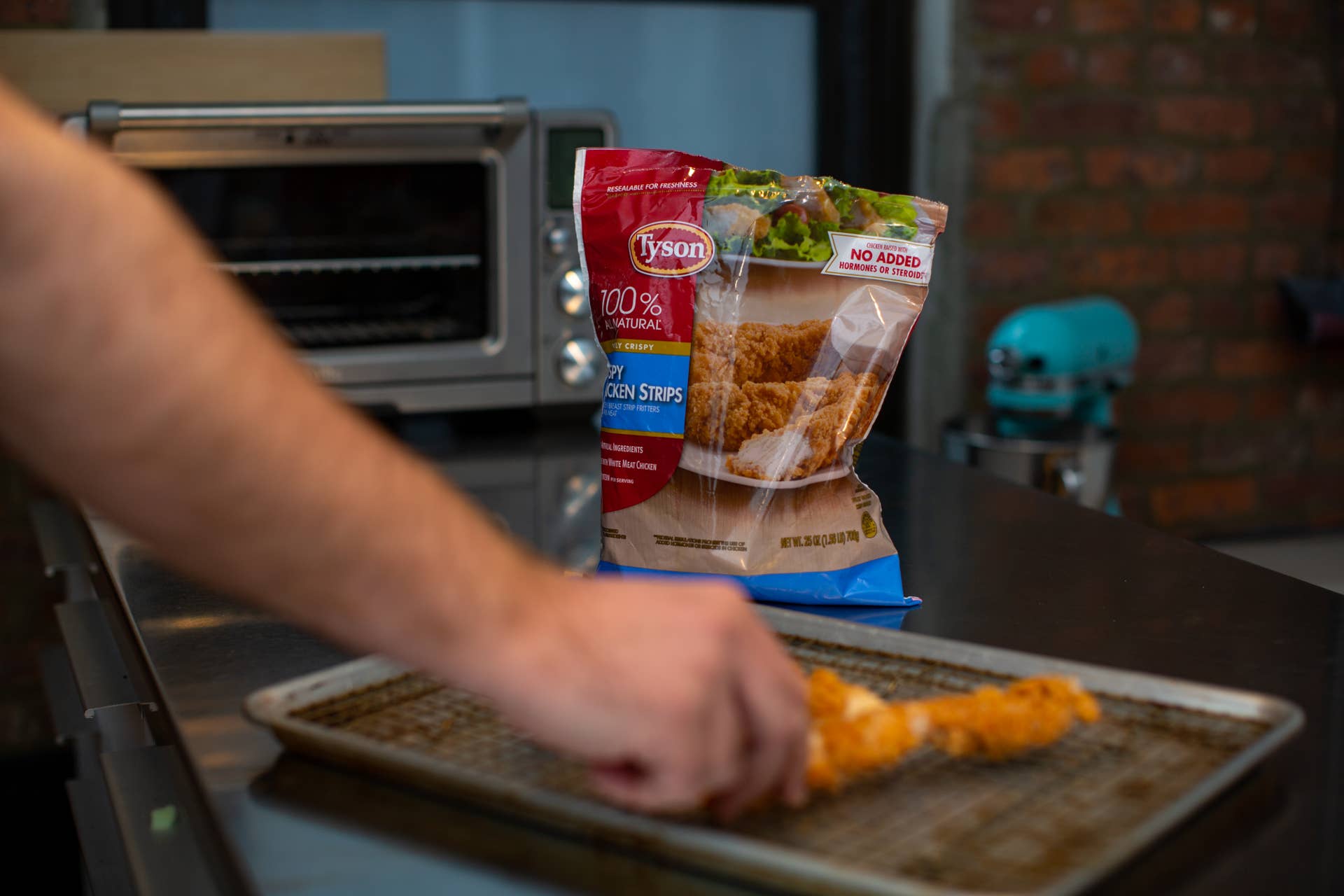
What Tyson Foods’ earnings are really telling us
While Americans still love their protein, concerns about rising prices due to the war in Iran have shoppers curbing their spending. And that has led to a dip in sales volume for Tyson Foods.
The amount of sales of beef decreased 13.1% in the second quarter, while pork was up 4.4% and chicken 1.7%.
The dip in beef sales volumes may also have to do with the price. Beef prices rose 11.5% in the second quarter of 2026 compared to the same period last year, Tyson Foods reported. That’s also weighed on Tyson Foods bottom line.
The company suffered a $240 million loss in its beef division during the second quarter, compared to a $222 million loss last year.
Shrinking demand for pricey beef
Some of Tyson Foods beef losses is likely due to a contraction in cattle herds.
Cattle herds in the U.S. have shrunk in recent years and are expected to continue to shrink until at least 2028, according to the American Farm Bureau Federation. This is likely to continue to lead to higher prices, economist Bernt Nelson said.
More retail news
- Beyond Meat tries to entice shoppers with new product
- Major fresh meal-kit supplier files bankruptcy, plans 800-plus job cuts
- Walmart earnings reveal concerning shift in customer behavior
“Tighter supplies of cattle have led to tremendous volatility in the cattle and beef markets,” he wrote. “When supplies of commodities are low, they become more sensitive to news or changes that can impact supply or demand, and the result is market volatility.”
But with inflation creeping up 3.3% in March, according to the U.S. Bureau of Labor Statistics, shoppers are also likely thinking more about keeping costs down. That’s lead to an increase in demand for chicken, with the average American eating 103 pounds per year, reports The Poultry Site.
It’s also showing up in other areas of the economy. Shoppers are spending less time in discretionary chains and are spending more time in wholesale clubs than they are in grocery stores and superstores, according to a weekly analysis of foot traffic data from Placer.ai reviewed by TheStreet.
“Shoppers appear to be exercising restraint,” said R.J. Hottovy, head of analytical research at Placer.ai. “Consequently, value-oriented channels like warehouse clubs and superstores continue to lead the industry in foot traffic as households seek to stretch their budgets.”