Restaurants across the country have been wracked by financial pressures, including facing bankruptcy filings, and now another longtime American restaurant is preparing to shut its doors after serving travelers and loyal customers for generations.
The closures reflect a broader shift happening throughout the restaurant industry, where rising operating costs, changing dining habits, and softer consumer spending are making it increasingly difficult for even legacy brands to sustain long-standing locations. While new restaurant concepts continue entering the market, many iconic roadside stops and regional staples are quietly disappearing.
Over the past year alone, the ice cream and quick-service restaurant sector has faced growing instability as franchise operators struggle with inflation-driven expenses, higher labor costs, declining customer traffic, and rising rents.
Recently, a Rita’s Italian Ice franchisee in St. Johns, Florida, filed for Chapter 11 bankruptcy protection on June 9, 2025. Another Rita’s franchisee in Tuscaloosa, Alabama, followed with its own Chapter 11 filing on July 1, 2025, as both operators sought to restructure debt and stabilize operations.
The growing number of closures and restructurings underscores the difficult reality for operators that longevity and customer loyalty alone are no longer enough to guarantee long-term survival in today’s uncertain economy.
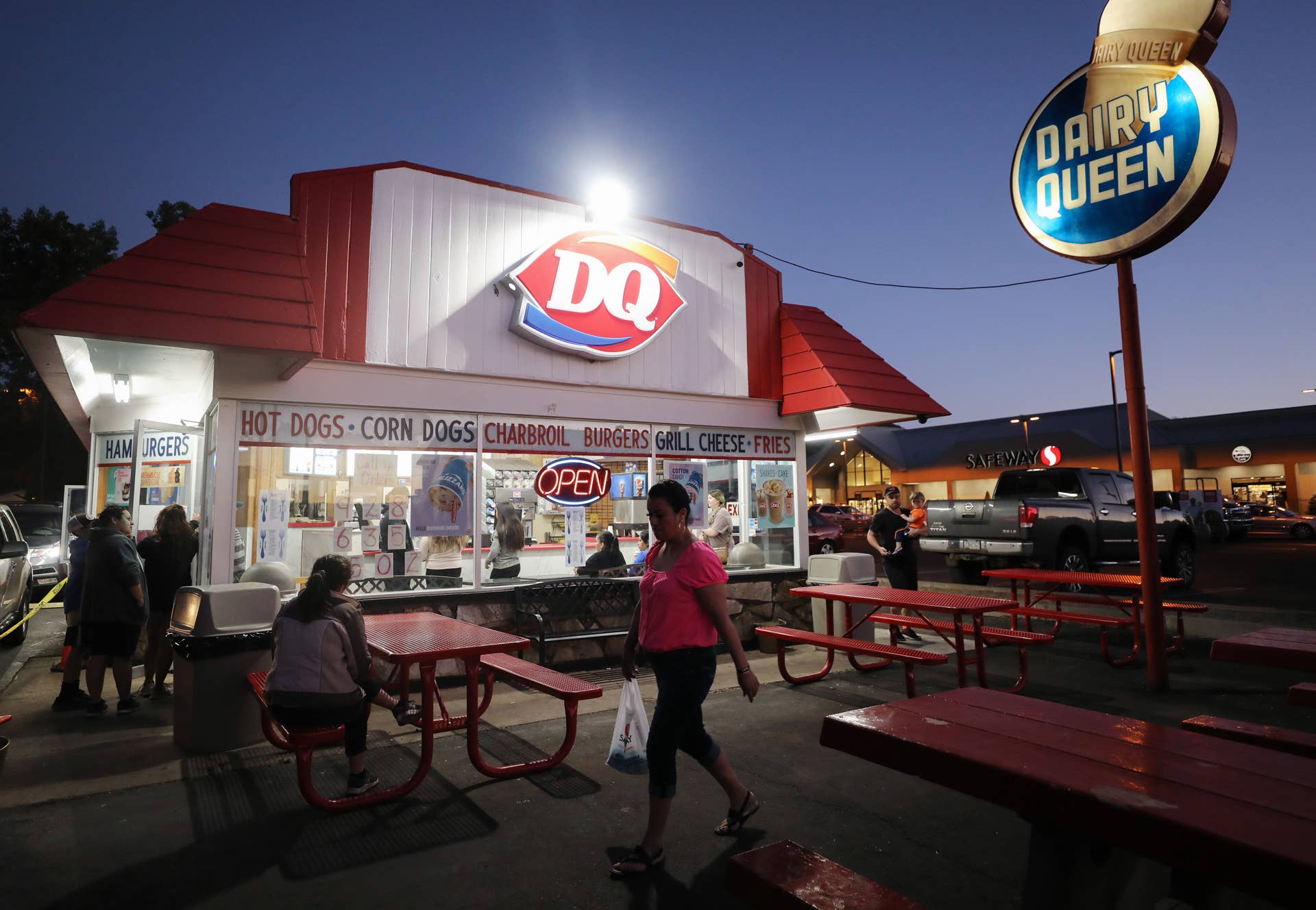
Dairy Queen confirms store closure after 40 years
After serving road-trippers and local residents for four decades, Dairy Queen confirmed that its Picacho Peak Dairy Queen Travel Center location at 16543 Camino Adelante in Picacho, Arizona, will permanently close on May 31, 2026.
The closure stems from an unresolved lease dispute between owner Bowlin Travel Center and the Arizona State Land Department (ASLD), according to a company announcement.
“We want to thank the Arizona State Land Department (ASLD) for their kind considerations,” said Bowlin Travel Centers and Picacho Peak Dairy Queen Travel Center COO Valkyrie Musarra in a statement. “However, ultimately, we were unable to come to mutually agreeable terms that would allow us to continue as a tenant on this parcel of ASLD property going forward.”
Although the longstanding travel center location is closing, the company said a new food concept will soon be introduced at Bowlin’s Picacho Peak Plaza next door.
Located along Interstate 10 between Casa Grande and Tucson, Picacho Peak is one of southern Arizona’s most recognizable roadside landmarks and attracts nearly 100,000 visitors annually, according to travel publication Only In Your State. Its heavy tourism traffic helped make the Picacho Peak Dairy Queen Travel Center a key stop for travelers driving throughout the region.
Dairy Queen still operates approximately 110 locations across Arizona, according to the company’s store locator.
The Dairy Queen closure follows a series of franchise shutdowns
The Arizona closure comes after at least 37 Dairy Queen locations across Texas shut down in 2025 amid a legal dispute involving franchise operator Project Lonestar, which ran 38 stores.
According to the court filings, Dairy Queen alleged the franchisee failed to pay royalty fees, missed transfer payments, and did not complete required store remodels. Several of the affected locations were later auctioned and sold.
Even with recent closures, Dairy Queen remains one of the largest quick-service dessert chains in the world, operating over 7,800 restaurants across more than 20 countries, with the majority located in the U.S., according to its website.
Restaurant operators continue facing mounting financial pressure
The latest closures reflect deeper structural challenges impacting the U.S. restaurant industry, where long-term sustainability has become increasingly difficult for businesses of all sizes.
According to the U.S. Bureau of Labor Statistics, approximately 17% of new restaurants close within their first year. Industry data cited by Oysterlink also shows that roughly half of restaurants fail within five years, while only about 34.6% survive beyond a decade.
Previous coverage by Fernanda Tronco on restaurant closures:
- Buffalo Wild Wings closes restaurants across the U.S. in 2026
- Jack in the Box fights to keep dozens of stores from closing
- Fast-food burger pioneer chain closes its final location
Inflation continues putting pressure on both restaurants and consumers. Prices for food away from home increased 3.6% in the 12 months ending April 2026, according to recent data from the U.S. Bureau of Labor Statistics.
At the same time, foodservice traffic declined 1% in the quarter ending June 2025, as consumers cut back on discretionary spending and restaurant visits, according to Circana.
Industry analysts say diners have become far more sensitive to rising menu prices than they were in previous economic cycles.
James O’Reilly, a food industry executive with more than 15 years of restaurant marketing experience, told FSR Magazine that consumers, particularly middle- and lower-income households, are feeling financial strain despite broader economic improvements.
“In strong economic environments, price increases have historically been tolerated by restaurant guests,” said O’Reilly. “Over the past few years, that’s become far more difficult.”
Meanwhile, restaurant operators continue dealing with elevated labor, supply, and occupancy costs. The National Restaurant Association estimates that both food and labor expenses have each climbed about 35% over the past five years.
Commercial rent costs have also surged. U.S. business rents have increased at a compound annual rate between 5.5% and 8.8% since 2019, according to Q1 2026 data from CoStar Group.
What the closure means for Dairy Queen and the restaurant industry
The closure of another longtime Dairy Queen location highlights how rapidly the restaurant landscape is evolving, even for brands with decades of customer loyalty and nationwide recognition.
As inflation, labor shortages, and shifting consumer spending habits continue to reshape the industry, more legacy restaurants may face difficult decisions about whether older locations can remain financially sustainable long term.
For many travelers and Arizona residents, the Picacho Peak closure represents more than the loss of a restaurant. It marks the gradual disappearance of a nostalgic roadside landmark that served generations of customers along one of the busiest travel corridors for more than 40 years.
Related: Coors brings back cult-favorite beer after 5-year hiatus