Luxury shoppers are changing the way they buy designer items, and resale platforms like ThredUp are benefiting.
As economic uncertainty and rising living costs continue to impact consumer behavior, shoppers have demonstrated some hesitancy in making major aspirational purchases. The luxury goods market has started to feel the effects of this reluctance.
Between 2022 and 2025, the number of global luxury consumers dropped by 60 million, according to Forbes. At the same time, the number of active luxury shoppers in individual markets declined by 25%, and new customer acquisition decreased by 5%.
While consumers’ tolerance for high-priced items may be dropping, their desire for luxury goods hasn’t disappeared.
Online resale platforms like ThredUp and TheRealReal have seen demand for their more affordably-priced high-end items rise, signaling a major shift in the luxury goods market.
ThredUp’s luxury surge
Few resale platforms have benefitted from this shift more than ThredUp.
In 2017, ThredUp launched Luxe, a section of its platform dedicated to authentic designer wear. The service was an instant hit with shoppers.
“Luxe items are flying off the shelves, and we’ve had overwhelming participation from suppliers,” ThredUp CEO James Reinhart said at the time. “Our customers told us that they wanted a one-stop solution to sell the full mix of brands in their closet, and LUXE accomplishes just that.”
In the decade since, the high-end sector has remained immensely popular with both buyers and sellers. In fact, ThredUp’s 2025 “standout performer” brands — Veronica Beard, Farm Rio, St. John, Johnny Was, and Frye (as highlighted by the company’s 2026 Resale Report) — are all considered accessible luxury brands.
This desire for high-end and designer fashion played a role in ThredUp’s decision to launch premium bags on TikTok earlier this year. The premium kits carry a higher service fee than the typical seller bag, but are intentionally designed for higher-quality items.
In the company’s Q1 FY2026 earnings call, Reinhart told investors that, like Luxe, the premium service had earned an overwhelming response.
“There are fundamentally pockets of sellers and pockets of the market that we were not addressing,” he said. “I would say premium and even just above premium were areas that I don’t think ThredUp was really known for, I think we’re slowly becoming much more relevant to customers that have that premium mix of goods.”
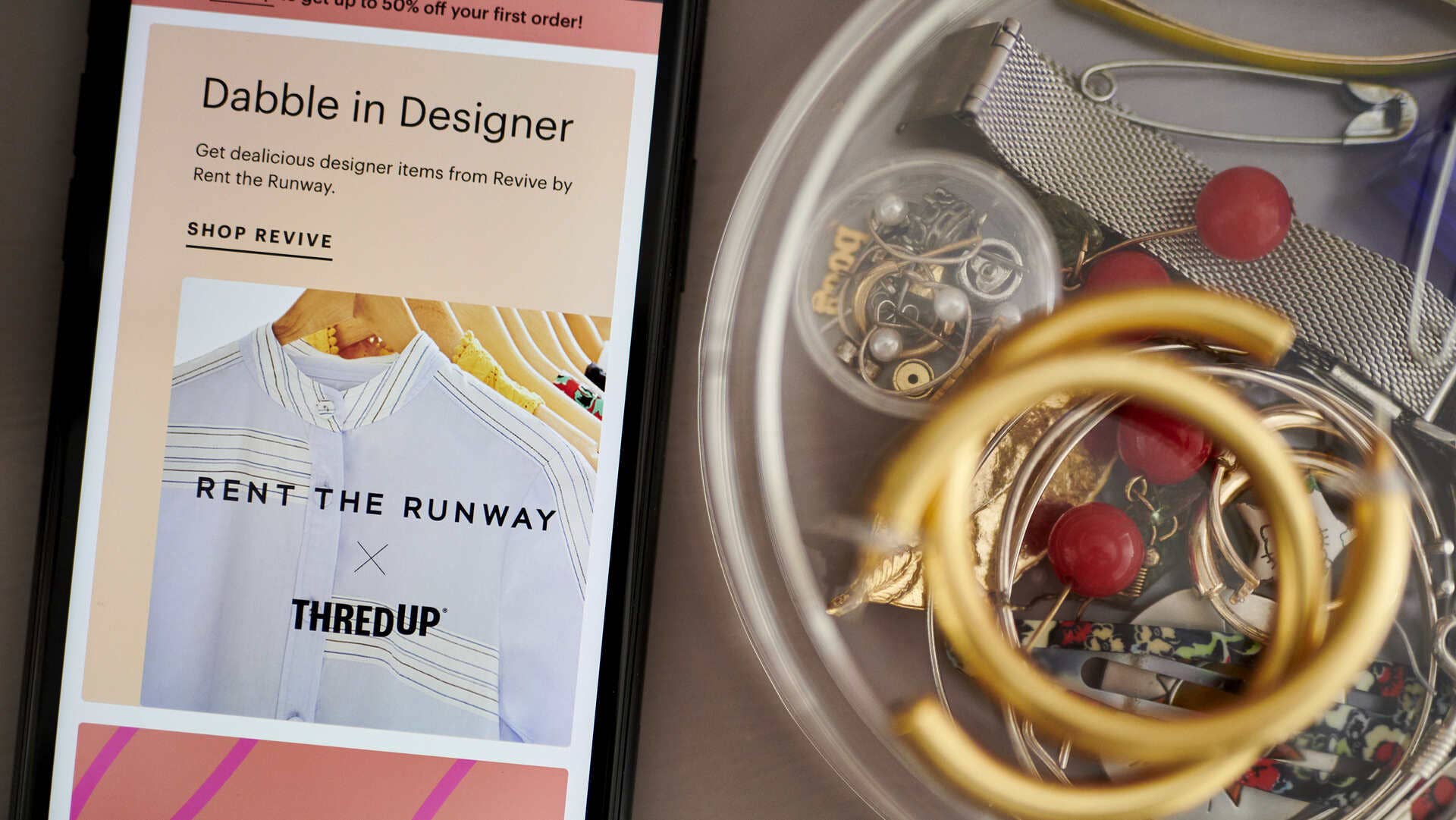
Getty Images
Luxury resale is going mainstream
ThredUp is not the only company noticing increased demand for pre-owned luxury goods.
Some 53.8% of luxury retailers now offer pre-owned or trade-in programs, according to Deloitte’s Global Powers of Luxury 2026 report. Another 44.5% of designer brands are partnering with resale platforms to create more controlled and value-accretive circular ecosystems.
“Over the next year, luxury executives envision the normalization of the second-hand market, acknowledging that consumers now freely mix new purchases with pre-owned luxury items,” the report reads. “This trend is driven by strong demand for sustainability, product longevity and tangible investment value, and is powered by growth that outpaces the primary global apparel market by 2.7 times (reaching $367 billion by 2029).”
More retail:
- Costco adds new exclusive dessert tied to viral trend
- Dutch Bros is quietly becoming an energy drink giant
- Target bets on viral toys to boost struggling sales
For luxury retailers, this resell market could be a golden opportunity to attract new shoppers.
Millennials and Gen Zers are the largest generations, comprising more than 40% of the U.S. population. However, their disposable income falls well below that of Baby Boomers and Gen Xers.
By using resale to reach younger shoppers now, luxury brands are positioning themselves to build long-term brand loyalty. Then, as Millennials’ and Gen Z’s disposable income grows, companies are more likely to benefit from future full-price spending.
With its early adoption of luxury resale services, ThredUp has positioned itself to benefit from the success of luxury brands’ resale-as-a-service programs and the long-term loyalty of consumers who use it to buy everything from designer handbags to Halloween costume pieces.
The luxury goods industry by the numbers
- The luxury goods market is estimated to be $390 billion in 2026, and is expected to grow at a CAGR of 6.8% between 2025 and 2030, according to Grand View Research.
- The luxury resale goods market is estimated at $34 billion in 2026, and is expected to grow at a CAGR of 8.9% between 2026 and 2035, according to Market Reports World.
- Middle-income households earning between $50,000 and $100,000 are the most likely to buy secondhand luxury goods at 59%, according to Civic Science.
- About 40% of luxury resale shoppers say they prefer buying secondhand for sustainability reasons, according to Statista.
- About 72% of luxury resale purchases are made through digital platforms, according to Market Reports World.
Related: ThredUp spots a worrisome trend in consumer behavior