When a company files for Chapter 11 bankruptcy protection, it gives up control of its future. Financing can fall through, and courts can decide that the owner’s plans don’t best meet the needs of debtholders, employees, or landlords.
That can lead a company to go from working on a restructuring to fighting a liquidation.
In the case of Pennsylvania Brewing Company Inc., which operates as Penn Brewery, it filed for Chapter 11 bankruptcy on March 31 to reorganize and restructure its debts, according to PacerMonitor.
The 40-year-old craft brewery, which according to its website is the oldest in Pittsburgh, filed its petition in the U.S. Bankruptcy Court for the Western District of Pennsylvania on March 31, listing up to $50,000 in assets and $1 million to $10 million in liabilities.
Owner Stefan Nitsch, confirmed the Chapter 11 filing in a statement on Facebook.
“Penn Brewery is not closing,” he wrote at the top of the message.
“We’ve faced real challenges in a changing economy,” Nitsch shared. “Through it all, one of our core values has remained the same: take care of our people. We made the decision to keep our team intact, protect jobs, and continue showing up for the community that has supported us for decades, even when it came at a cost.”
Now, the fate of Penn Brewery seems very much in doubt.
Penn Brewery faces a forced sale
Penn Brewing’s building has been listed for a sheriff’s sale.
Nitsch, who owns the building, remains confident that the sale won’t mean closing the brewery.
“While we do not know what the future may hold, we do not believe the sale itself will have any immediate direct impact on brewery operations beyond the possibility of a new landlord,” Nitsch told CBS News. “As we understand it, any future changes involving the brewery’s portion of the property would require a formal lease non-renewal and legal eviction process.”
A sheriff’s sale would result in the building having a new owner, unless there are no interested bidders.
“The primary purpose of a sheriff’s sale is to sell a property to satisfy an outstanding debt, such as an unpaid mortgage. But a sheriff’s sale could also be held to recover unpaid property taxes or other unpaid property liens. This process allows lenders, banks, and other creditors to recoup their losses after the borrower fails to meet their repayment obligations,” according to NOLO.com.
Penn Brewery remains in Chapter 11 bankruptcy
Pennsylvania Brewing Company estimates it has between $1 million and $10 million in liabilities, with First Commonwealth Bank listed as its largest creditor at $5.1 million. Meanwhile, the company estimates having up to $50,000 in assets, according to court documents on PacerMonitor.
The beer brand was the fourth-largest producer in the Pittsburgh region in 2025, with about 3,500 barrels of beer or 108,500 gallons of brew, Pittsburgh Business Times reported.
Focusing on high-quality brews, the brewery has won 20 Great American Beer Festival and World Beer Cup medals, according to its website.
Penn Brewery, which began as a contract brewer in 1986, moved into its historic facilities in 1989 after the brewery was restored with the assistance of the North Side Civic Development Corporation.
More Bankruptcy:
- Classic comfort food chain forced into Chapter 11 bankruptcy
- Another award-winning beer brand files for Chapter 11 bankruptcy
- After bankruptcy, Hooters closes restaurants, fights for survival
The original facilities date back to 1848, when the Eberhardt and Ober families operated a brewery at the site.
The company’s year-round beers include its flagship Penn Pilsner, Penn Dark, Penn Gold lager, Penn Weizen wheat beer, Penn Kaiser Pils, Penn IPA, and Refreshen’ Session IPA.
Following the Chapter 11 bankruptcy filing, Penn Brewery permanently closed its location at Pittsburgh International Airport, according to an April 7 article in the Pittsburgh Post-Gazette.
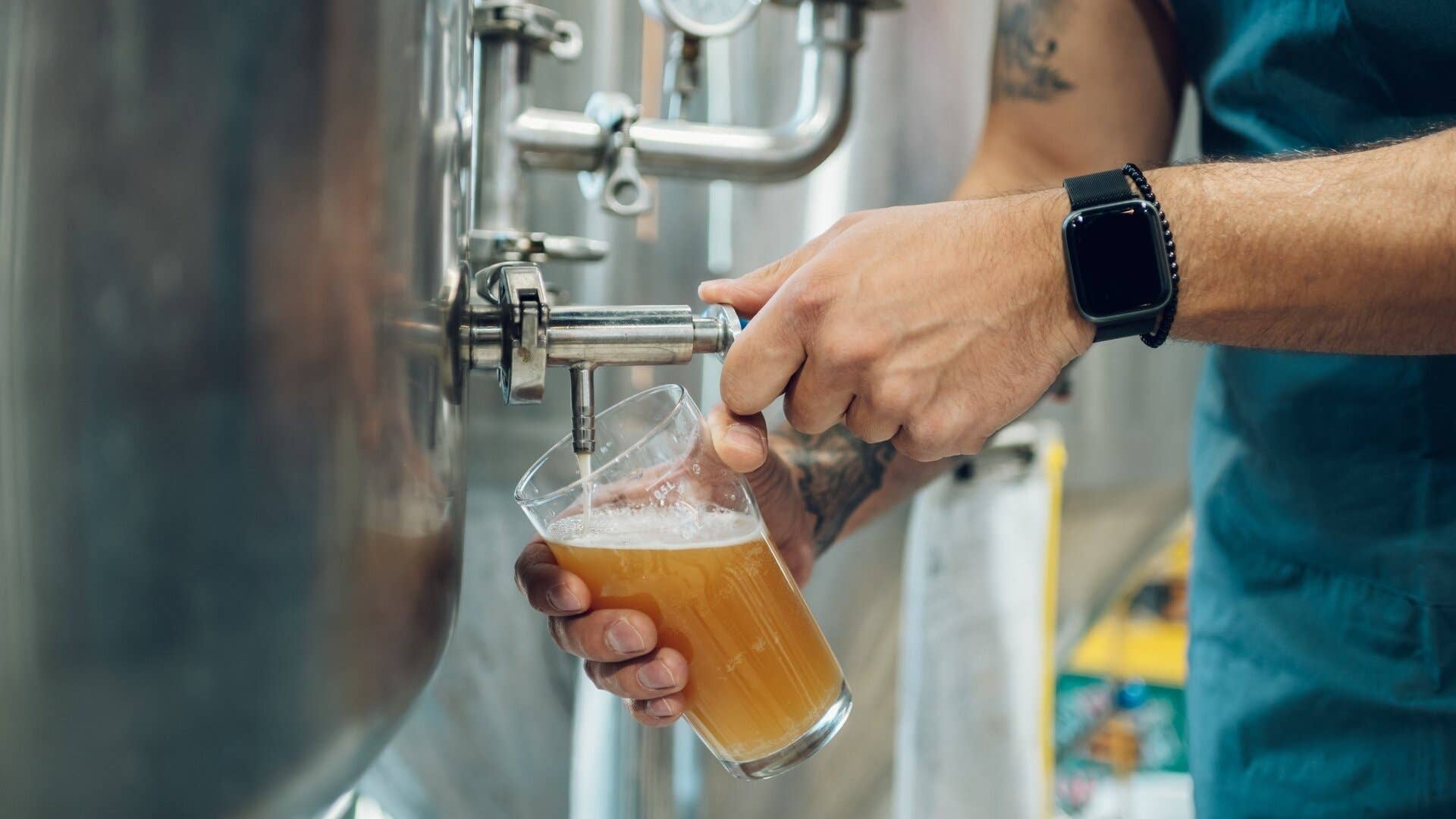
Shutterstock
Breweries have been closing in record numbers
Craft beer sales have been dropping, according to the 2025 Year in Beer Report from the Brewers’ Association (BA).
“The headwinds facing the industry did not diminish compared to a year ago, and in some areas only strengthened. Measured in July in the BA’s midyearsurvey, craft volume was estimated to be down 5%, a somewhat steeper decline than the full-year trend of 2024 (-4%),” according to the BA.
Breweries have also been closing in record numbers, according to BA data.
- Throughout the year, the BA has tracked 268 new brewery openings and 434 closings.
- 2025 marks the second straight year in which more U.S. breweries closed than opened.
Source: 2025 Year in Beer Report
“If the craft beer industry is a ship, we can comfortably say we’re no longer in the safety of a harbor. The days of relative calm are behind us, and brewers are getting their sea legs in this new, challenging open water,” BA Staff Economist Matt Gacioch said. “Changing consumer behaviors, retailer rationalization, cost increases due to inflation and tariffs, and more competition than ever have been compounding difficulties in 2025.
Related: Pepsi drops 5 limited-edition soda flavors Coca-Cola doesn’t have