The Strait of Hormuz handles roughly 20% of the world’s oil supply on any given day. When it closes, everyone eventually feels the heat at the pump.
ExxonMobil Chairman and Chief Executive Officer Darren Woods had a clear message for Wall Street analysts on the company’s first-quarter 2026 earnings call: the worst may not be over.
In fact, Woods argued the market hasn’t come close to pricing in the full damage yet.
Why oil prices could spike further
The Strait of Hormuz sits at the mouth of the Persian Gulf. Nearly every barrel of crude oil pumped in the region passes through it.
Saudi Arabia, Iraq, Kuwait, the United Arab Emirates, and Iran all rely on it to reach global buyers.
When conflict disrupted flows through the strait earlier this year, the immediate price response was surprisingly muted. Woods explained why.
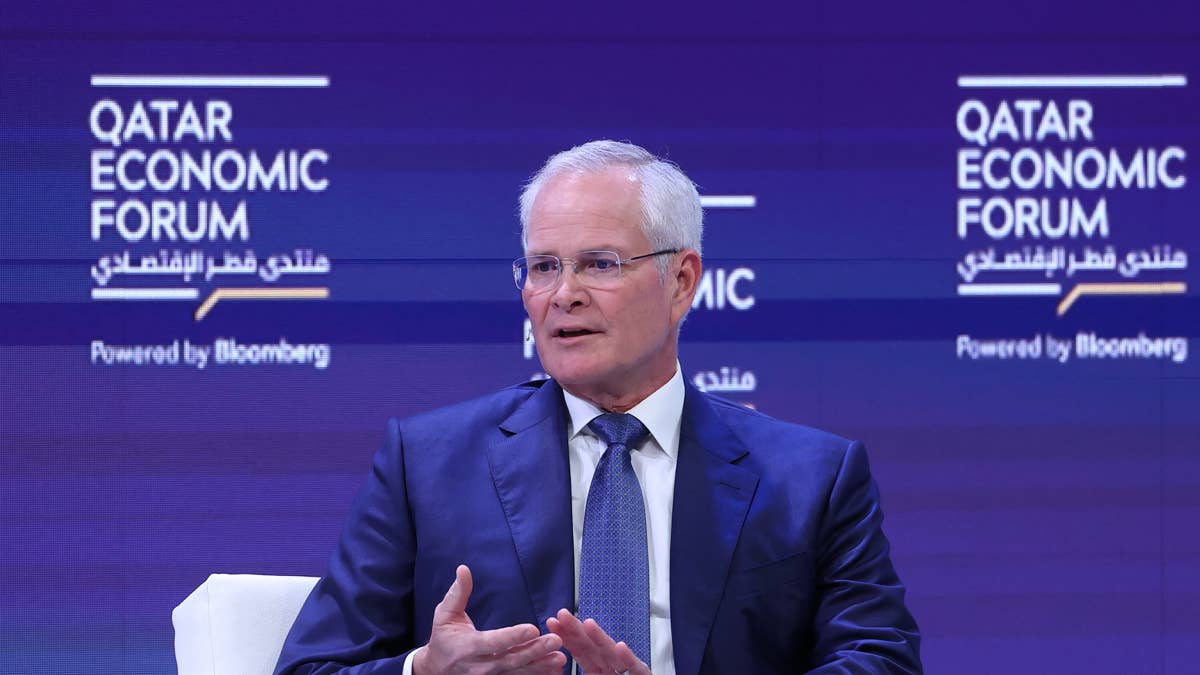
Woods stated:
“There was a lot of oil in transit on the water, a lot of inventory on the water that has been deployed in the first month of the conflict. Strategic petroleum reserves have been released, commercial inventories have been drawn down.”
In plain terms, the world has been living off its emergency stockpiles, which won’t last forever.
Woods warned that once commercial inventories hit their minimum working levels, one major cushion disappears entirely. From there, if the Strait remains closed, he expects prices to rise meaningfully.
And even after the Strait reopens, he cautioned against expecting an immediate return to normal.
- Ships need to be repositioned, and a backlog of cargoes needs to be worked through the system.
- Transit times add days or weeks to the time before the product actually reaches consumers.
“We’re thinking there’s going to be a 1- to 2-month time lag between the Strait opening up and the market seeing normal flow,” Woods said.
Beyond that, governments and buyers that have drawn down reserves will need to restock.
That creates a fresh wave of demand on top of regular consumption, which Woods believes will add further upward pressure on oil prices.
Strait of Hormuz exposure and Q1 results
ExxonMobil is not just watching this crisis from the sidelines. The company has direct exposure in Qatar, where two liquefied natural gas (LNG) trains at a joint venture facility with QatarEnergy sustained damage during the conflict.
Those two trains represent about 3% of ExxonMobil’s total global production. QatarEnergy has estimated the repair timeline at three to five years.
Related: Exxon Mobil earnings carry a hidden risk
Woods said the company is pushing hard to land at the lower end of that range, though a full damage assessment is still underway.
Still, ExxonMobil posted a strong quarter.
- The energy products segment, which covers refining and fuel supply, earned $2.8 billion in the first quarter. That is up roughly $2 billion compared to the same period a year ago.
- The company’s Gulf Coast refineries ran at record utilization rates. In March alone, ExxonMobil increased refinery output by 200,000 barrels per day compared to February.
- To put that in perspective, that is roughly the equivalent of an entire mid-sized refinery coming online overnight.
Senior Vice President and Chief Financial Officer Neil Hansen pointed out that when you strip out external disruptions (including the Middle East conflict, drone attacks in Kazakhstan, and a Permian Basin winter storm in January), upstream production was actually up 8% year over year.
That growth came from the Permian and from Guyana, where the company achieved record output.
What this means for oil prices
The core takeaway from Woods is straightforward: do not assume the energy market has already absorbed this shock.
Inventories are being drawn down. Reserves are being spent. Ships are rerouting. And the long-term risk premium on oil from the region has not yet been priced in, depending on how the situation in Iran ultimately resolves.
More Oil and Gas:
- Early Chevron stock investors now earn 12.1% dividend yield
- Chevron, Shell ink more surprising Venezuela deals
- AAA gas prices reveal a new trend for Americans
For everyday Americans, that matters. Higher crude oil prices translate into higher gasoline prices at the pump, higher airline ticket costs, and higher prices for goods that depend on fuel to move. Heating oil and natural gas bills can follow.
ExxonMobil’s own position heading into this period is stronger than it has been in years.
- Its Beaumont, Texas, refinery expansion, completed in 2023, already paid back its full initial investment ahead of schedule.
- Golden Pass LNG Train 1 achieved first output in March, adding roughly 5% to total United States LNG export capacity.
- Two more trains are expected online by mid-2027.
Woods put it plainly: scale, integration, and execution matter in periods of economic uncertainty.
ExxonMobil is betting its decade of restructuring has positioned it better than almost anyone else to navigate what may still be a bumpy road ahead for global energy markets.
Related: Exxon Mobil’s future rests on massive play (it isn’t Venezuela)