Nine accounts. Eighty-plus bets. A $2.4 million profit. And a win rate so high that a data analytics firm shared its findings with “60 Minutes” before anyone else.
That is the story that pulled Wall Street‘s attention toward a corner of finance most professional investors had been happy to ignore. And it turns out the implications run much deeper than any single investigation.
Prediction markets become stock market concern, not just niche debate
Prediction markets allow traders to bet directly on elections, wars, central bank decisions, tariffs, and geopolitical developments.
They were once considered a curiosity. They are not anymore.
More Wall Street:
- JPMorgan resets S&P 500 price target for the rest of 2026
- Vanguard challenges the S&P 500 as a one-stop strategy
- Goldman Sachs resets Broadcom stock forecast
Traders across financial markets now monitor platforms such as Polymarket and Kalshi as real-time sentiment indicators. They surface expectations around major global events before equity markets, bond markets, and commodity markets fully react.
That influence makes the integrity of these platforms a direct concern for traditional investors. If traders are profiting from nonpublic information about military operations or policy decisions, the same information asymmetry can move oil futures, currency markets, and equity indices seconds or minutes later.
IronWallet CEO Ermo Eero said the speed is what makes this problem structurally different from anything regulators have faced before. “They are creating faster and sharper information asymmetry,” Eero told TheStreet.
“Traders with early access to signals, leaks, internal polling, on-the-ground intel, can profit before traditional media or Wall Street fully reacts.”
What Bubblemaps investigation revealed about information edges in markets
The concern moved from theoretical to documented in May 2026. Bubblemaps, a data analytics firm, published findings first shared with CBS’s “60 Minutes.” The firm identified nine linked accounts on Polymarket that collectively made $2.4 million with a 98% win rate on bets tied specifically to U.S. military operations against Iran, according to Decrypt.
The accounts correctly predicted the timing of U.S. strikes on Iran, the removal of Iranian Supreme Leader Ali Khamenei, and the announcement of a U.S.-Iran ceasefire. Four of the nine accounts were created just days before the first strikes in late February. The accounts also placed small intentional losing bets on unrelated events to avoid triggering detection systems.
Related: Veteran analyst stuns Wall Street with Fed interest rate forecast
“This might be the most insane pattern we have found on Polymarket so far,” Bubblemaps CEO Nicolas Vaiman told “60 Minutes.”
“Luck alone cannot explain those numbers.”
The investigation followed the April arrest of U.S. Army Master Sgt. Gannon Ken Van Dyke. He allegedly used classified intelligence to bet on America’s capture of Venezuelan president Nicolás Maduro, netting more than $400,000 on a $34,000 investment. Van Dyke pleaded not guilty, according to Sidley Austin.
The CFTC is separately examining suspicious oil futures trades placed shortly before President Donald Trump confirmed progress in Iran negotiations, according to Freshfields.
Why the existing insider trading framework does not cover this problem
Traditional securities law was designed around equities. Insider trading rules focus on material nonpublic information tied to companies, earnings releases, merger announcements, and executive disclosures. The CFTC’s equivalent framework applies to commodity derivatives.
Neither was built to handle bets on the outcome of military operations or geopolitical negotiations.
Ivan Patriki, fintech specialist and co-founder of QuantMap, said the gap is fundamental. “Prediction markets are essentially doing what financial markets have always done, with far more insider trading,” Patriki told TheStreet.
“The information edge in these markets doesn’t come from a Bloomberg terminal. It comes from proximity to decision-makers, on-the-ground intelligence, or network access that regulators have no existing framework to evaluate.”
The ethical parallel to traditional markets is direct. “A government official betting on a policy outcome they’re about to announce is functionally identical to a corporate insider trading ahead of earnings,” Patriki said. “The mechanics differ, but the ethical problem remains the same.”
The CFTC formally asserted full authority to police illegal trading on prediction markets on Feb. 25, 2026, citing Section 6(c)(1) of the Commodity Exchange Act and CFTC Regulation 180.1, according to Freshfields. On March 12, the agency published an Advance Notice of Proposed Rulemaking seeking public comment on new regulations.
More than 40 senators wrote to the CFTC and Office of Government Ethics in late March, urging executive branch-wide guidance requiring federal employees to refrain from insider trading on these platforms, according to the office of U.S. Senator Mark Warner (D-Va.).
Eero said the regulatory response is still far behind the pace of the problem. “Current regulators are largely unprepared,” he added. “Most rules were designed for slower, centralized securities markets, not real-time global event betting.”
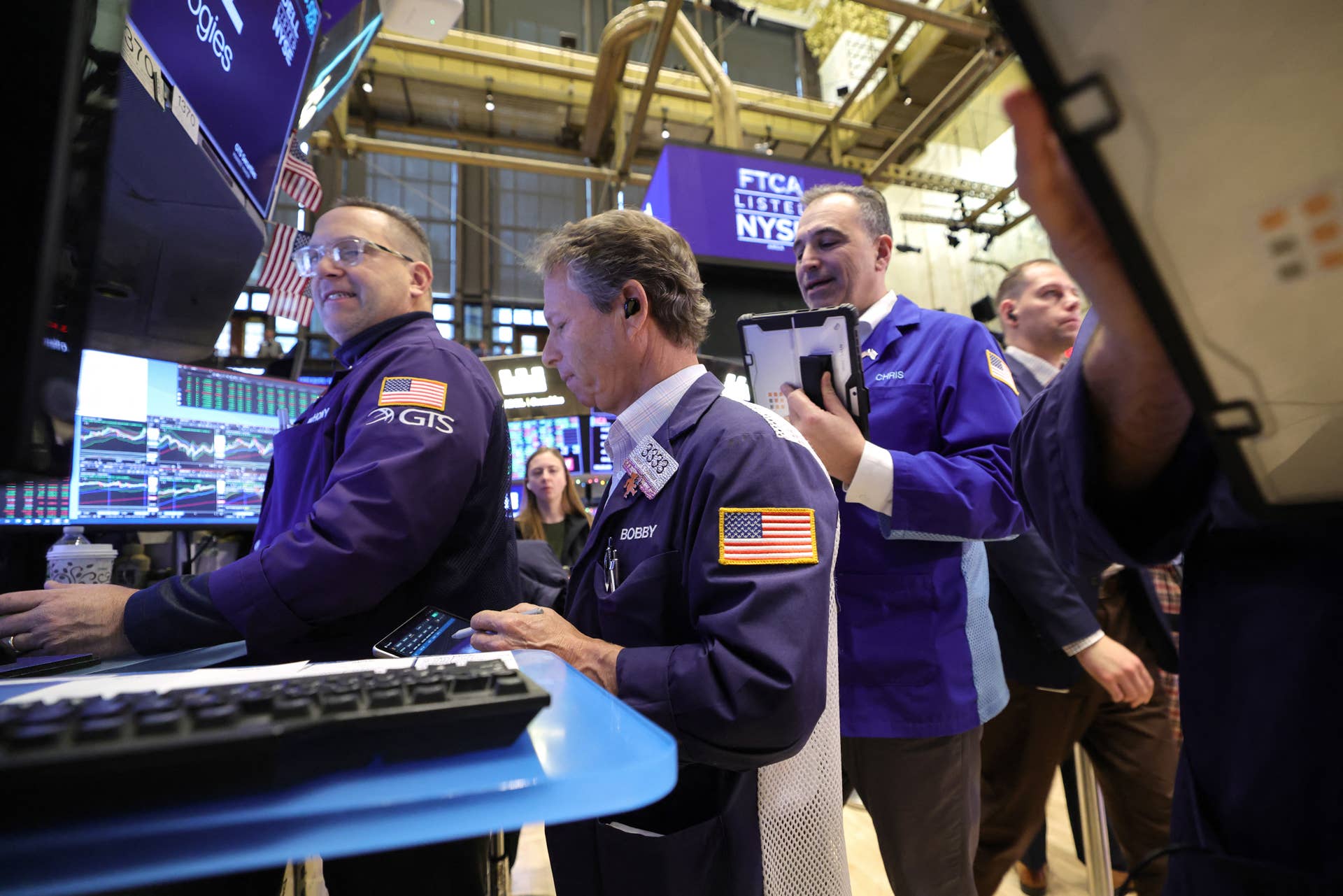
Timothy/Getty Images
The transparency debate and what it means for market fairness
Vaiman said the public nature of prediction market activity is actually a structural advantage over traditional finance when it comes to spotting suspicious patterns. “On Polymarket, everything is publicly visible on the platform,” he explained.
“Every trade, every profit, every connection. That level of transparency is unprecedented in finance and allows the public to spot suspicious activity and bring attention to it.”
That is precisely what the Bubblemaps investigation demonstrated. But Patriki said public visibility does not translate into legal accountability. “For ordinary people, yes. For investigators? Rarely,” he told TheStreet.
“On-chain, you have account addresses and transaction history, which are transparent for the public in one sense, but deeply opaque when it comes to ownership.”
Vaiman acknowledged the same limitation. Tracing account ownership requires cooperation from exchanges, intermediaries, and international law enforcement that can take months. The nine Polymarket accounts tied to the Iran operations remain unidentified.
Key figures on prediction markets, insider trading, and the regulatory response:
- Bubblemaps investigation: Nine linked Polymarket accounts made $2.4 million with a 98% win rate on U.S. military operations bets; accounts used small intentional losses to evade detection, according to Decrypt.
- Van Dyke case: U.S. Army Master Sgt. Gannon Ken Van Dyke indicted April 23 for insider trading using classified intel; $34,000 in bets netted $400,000+; pleaded not guilty, Sidley Austin reported.
- CFTC action: Asserted full authority over prediction markets Feb. 25; published ANPRM March 12 seeking new regulations; CFTC and SDNY both brought charges in Van Dyke case, Freshfields confirmed.
- Congressional response: 40+ senators urged CFTC and Office of Government Ethics to issue federal employee guidance; Public Integrity in Financial Prediction Markets Act introduced in Congress, according to Sen. Warner’s office.
- Oil futures link: CFTC examining suspicious oil futures trades placed before President Trump announced Iran negotiations progress, Freshfields noted.
- Platform rules: Kalshi operates as a CFTC-regulated exchange with explicit insider trading rules; Polymarket introduced its own insider trading policies, according to Davis Wright Tremaine.
Prediction markets: what investors, traders should know
The structural issue prediction markets expose is not new. Information asymmetry has always existed in financial markets.
What is new is the surface area. A government official with advance knowledge of a policy announcement, a military officer aware of an operation, a central bank employee with early visibility into a rate decision — none of these people previously had a direct financial market where they could instantly monetize that knowledge.
“Before prediction markets, those people just knew but didn’t have a way to monetize that knowledge,” Vaiman told TheStreet. “Now, suddenly, with prediction markets, almost anyone with private information can turn it into anonymous, guaranteed profit.”
For investors in traditional markets, the implication is specific. As prediction markets grow in liquidity and influence, the information flowing through them increasingly leads what is reflected in equity prices, bond yields, and commodity markets.
A trader who knows what a prediction market is pricing in, and why, has an informational edge in every market that reacts to the same underlying events.
That is the version of this problem that Wall Street is only beginning to fully process.
Related: Michael Burry has a blunt message on the stock market for 2026