A major bank just lost its Buy rating, and the firm behind the call did not stop at one name.
The downgrade came because the people watching the whole sector think the easy money may already be made, not because the bank underperformed.
That distinction matters for anyone holding bank stocks right now; it is worth understanding this downgrade before you act on it.
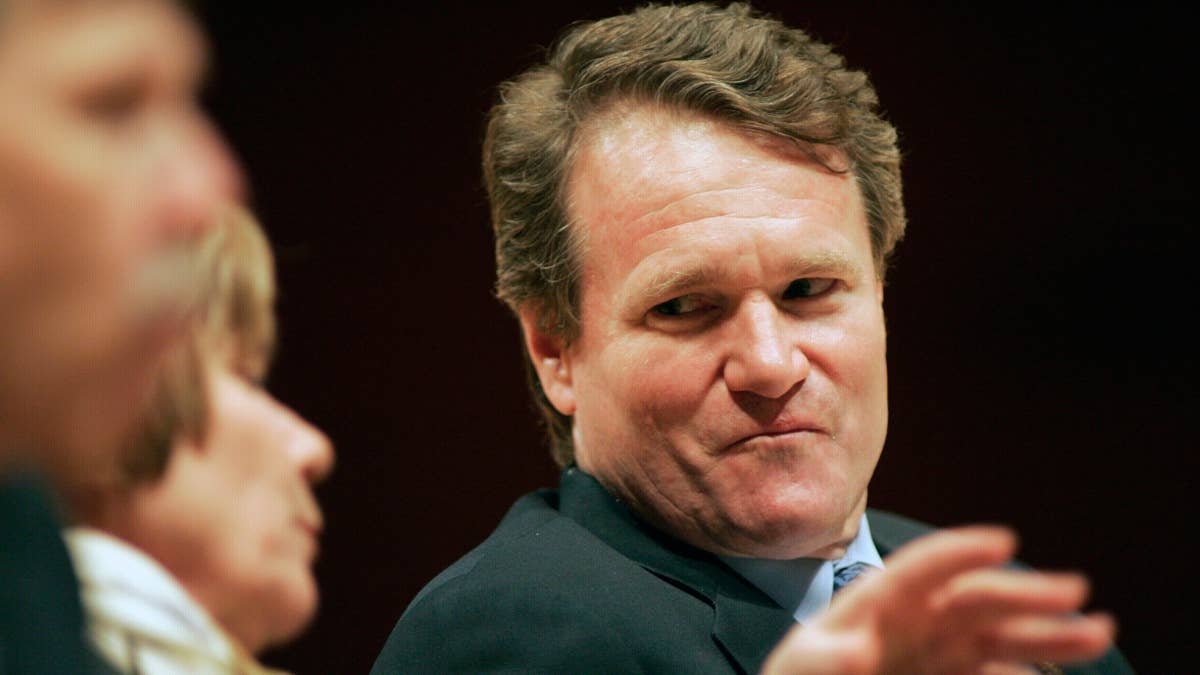
CFRA cuts Bank of America stock to Hold, and Citigroup right alongside it
The giant in question is Bank of America (BAC).
Research firm CFRA cut its rating on the stock to Hold on Tuesday, May 19, according to Yahoo Finance. On the same day, CFRA also downgraded Citigroup (C) to Hold.
More banking and markets coverage:
- Bank of America issues blunt warning to Wall Street on stock market
- Bank of America sends blunt message on GTA 6 price
- Goldman Sachs sends blunt message on Fed interest rate cuts
Two downgrades on one day, hitting two of the country’s largest lenders, tells you the call is about the group, not a single company.
CFRA framed it as trimming exposure to big banks after a strong run. A Hold rating means the analyst expects the stock to perform in line with the market, not beat it. It’s a step back from a buy recommendation, not a call to sell.
Why CFRA pumped the brakes on the big-bank trade
CFRA’s reasoning follows the standard caution list for bank stocks late in a rally.
The firm pointed to stretched valuations after a re-rating, a softer outlook for net interest income, commercial real estate office exposure, and uncertainty around capital rules.
Net interest income, or NII, is the gap between what a bank earns on loans and what it pays on deposits. It is the core profit engine for a lender like Bank of America.
That engine is sensitive to rates. The bank itself has flagged that a 100-basis-point drop in rates could cut NII by roughly $2 billion over 12 months. So if the Federal Reserve keeps easing, that pressure is real.
CFRA’s caution wasn’t limited to these two names. It also cut Synchrony Financial to Hold on May 15. And the firm isn’t the only one wary of the group: Evercore ISI had already placed a Hold on Citigroup on May 8, The Globe and Mail reported.
Where the rate worry spills into commercial real estate
The commercial real estate piece deserves its own line, because it reaches beyond banking.
Office buildings have struggled since remote work reshaped demand, and the owners of those buildings borrowed money from banks to finance them. If a landlord can’t repay, the bank takes the loss.
Related: Bank of America tweaks CoreWeave stock price target for 2026
That is the thread connecting big banks to the property market. CFRA’s concern is that office exposure is a tail risk, meaning an unlikely but painful outcome, rather than a base case.
For readers, the takeaway is simple: a bank downgrade can be a quiet read on the health of the commercial buildings in your city, not just the stock ticker.
How Bank of America stock actually looks under the hood
Here is the part that complicates the bearish story: the company is performing well.
Bank of America is the second-largest U.S. bank, holding more than 10% of all American deposits. Its first-quarter 2026 results were strong, with earnings of $1.11 per share, revenue of $30.27 billion, and net income up 17% from a year earlier.
Capital return is climbing too. The bank sent $9.3 billion back to shareholders through buybacks and dividends in the quarter.
The stock is also cheap by historical standards. BAC trades around 13 times trailing earnings and 12 times forward earnings, with a 2% dividend yield, and the stock sat near $50.71 on May 19, per Benzinga data.
What the bull case still rests on
A few things keep the long-term argument intact:
- Consistent earnings power, with net income rising 17% year over year in Q1 2026
- 11 straight quarters of sequential deposit growth
- Accelerating capital return, at $9.3 billion in a single quarter
- A consensus that is still bullish, with about 25 analysts rating BAC a “Strong Buy” and a roughly $62.98 average target
Bank of America stock versus the sector it trails
The performance gap is what makes CFRA’s “crowded trade” case land.
Bank of America stock is down about 8% year-to-date in 2026, even though it has returned roughly 13% over the past year. Citigroup, the other downgrade, has surged 58% in a year.
When a sector runs that hard, the cushion in the valuation thins out. That is the heart of the argument: less room for error, not a broken business.
For comparison, the broader market has kept grinding higher, with the S&P 500 trading above 7,400 in late May, which raises the bar for any single stock to stand out.
What this downgrade means for your portfolio
A Hold from one firm does not force a decision, but it is a useful prompt to check your reasoning.
If you own BAC for income and long-term compounding, this looks more like a yellow light than a stop sign. The dividend and buyback story is intact.
If you bought in late after the rally had already run, you paid a higher price, so there’s less upside left and less cushion if the stock slips. Keeping the amount you hold relatively small is the sensible move.
A few practical steps:
- Watch the Q2 2026 NII guidance. If net interest income holds, CFRA’s main worry softens.
- Track the Fed. Faster rate cuts pressure bank margins, so the Fed’s rate path is the variable to follow.
- Mind concentration. Holding several big banks at once doubles your exposure to the same rate and real estate risks CFRA flagged.
None of this is a prediction that BAC falls. It is a reminder that the gains may simply be harder to come by from here.
The big-bank trade looks like it is maturing, and the smartest move now is to research your position, not react to a single rating.
Related: BofA resets Salesforce stock price target with sobering AI verdict