Most executives announcing layoffs lean on a familiar script. They talk about efficiency, strategic alignment, and the need to position the company for long-term growth. The language is careful. The emotion is managed.
What Mark Zuckerberg wrote to employees on May 20 was something different.
In a memo to staff posted by Business Insider, Zuckerberg opened with a direct acknowledgment of the human cost behind the restructuring.
“It’s always sad to say goodbye to people who have contributed to our mission and to building this company,” he wrote. “I feel the weight of that.”
That is not the language of a company running a cost optimization. It is the language of a leader trying to hold two things at once: conviction about a strategic direction and genuine discomfort about what that direction requires.
Zuckerberg tries to show empathy
For a CEO who has been criticized in the past for being emotionally detached in his communications, the framing was notable, according to Business Insider, which published the full memo.
Zuckerberg told employees he did not expect additional company-wide layoffs this year and acknowledged that Meta had not always communicated as clearly with staff as it should have.
He framed the cuts not as a retreat but as preparation.
He said the company was “one of the few companies positioned to help define the future” and reaffirmed his goal of delivering “personal superintelligence” to users worldwide, AFP confirmed.
More Layoffs:
- E-commerce giant shuts down office as layoffs rise
- Oracle signals massive AI opportunity as layoffs hit
- AI won’t trigger mass layoffs yet, Fed says
The message attempted to do something difficult: to be honest about the pain while simultaneously making the case that the pain has a purpose.
Whether employees found that reassuring is a different question. But the tone itself was a departure from the more clinical language that has often accompanied large-scale tech layoffs.
The context behind the message and what Meta is actually doing
This is not the first time Zuckerberg has addressed employees about this round of cuts. He held an internal town hall on April 30 that left many employees with more questions than answers.
The memo came on the same day Meta began laying off roughly 8,000 employees, approximately 10% of its global workforce. Notifications began in the early morning hours, with Singapore-based workers among the first to be informed, according to Tom’s Hardware.
The cuts arrive alongside a capital expenditure forecast of between $125 billion and $145 billion for 2026, more than double Meta’s 2025 outlay. The company is not contracting. It is redirecting aggressively toward AI infrastructure, foundational models, and AI-driven monetization.
The layoffs are the financing mechanism for that redirection, not a signal of a company in distress.
That context makes Zuckerberg’s message to employees more complicated to read. He is asking people to absorb the loss of colleagues while simultaneously being told that the company has never been more ambitious or better positioned.
The emotional logic of those two statements is in tension, and Zuckerberg’s memo acknowledged it without fully resolving it.
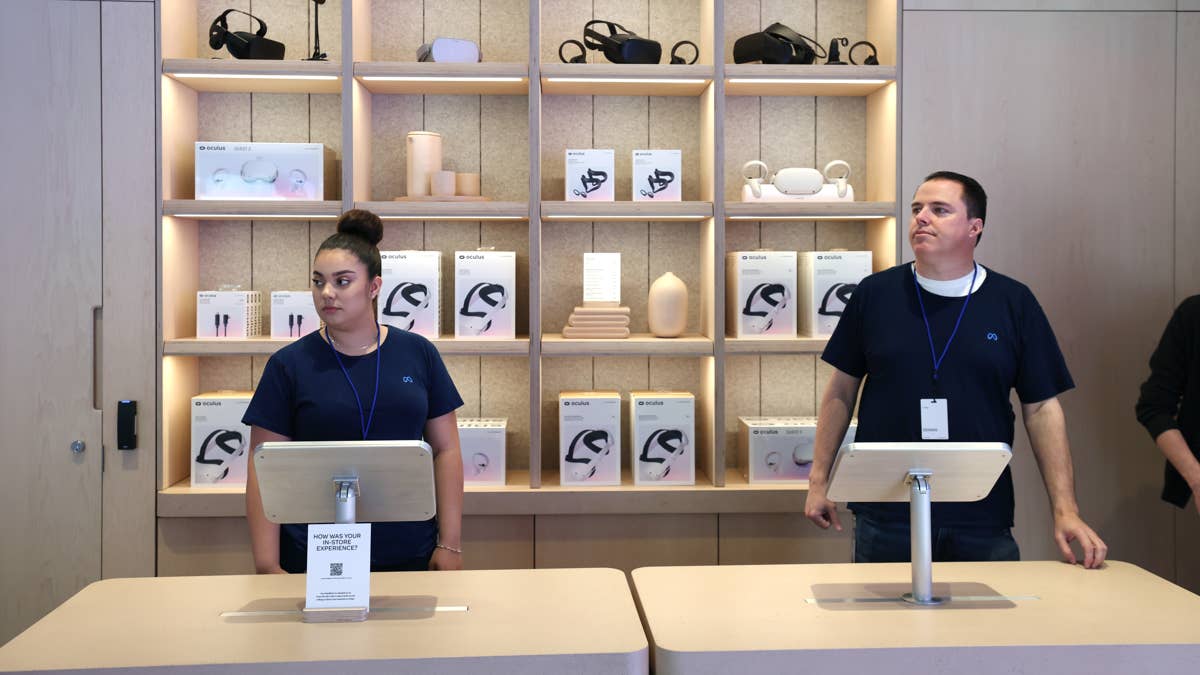
Sullivan/Getty Images
Why Meta’ message matters beyond the headcount number
The 2022-2023 “Year of Efficiency” eliminated roughly 21,000 positions and was presented primarily as a financial correction after a period of over-hiring. The May 2026 round is the company’s largest restructuring since then, but the framing is different.
Zuckerberg is not correcting a mistake. He is making a choice, and he is doing so in language that signals he understands how that choice lands for the people on the receiving end.
That distinction matters for how investors and employees interpret what comes next. When a CEO talks about feeling the weight of a decision, it suggests the decision was not made lightly. It also signals that leadership is aware of the morale and reputational risks that accompany large-scale workforce reductions, even when those reductions are strategically justified.
The cuts have created anger and anxiety across Meta’s roughly 78,000-person workforce, with current and former employees expressing frustration that a company posting record revenue is still reducing headcount.
Zuckerberg also offered employees a specific assurance: no further company-wide layoffs are expected this year. He did not rule out targeted cuts in specific functions, but the commitment to stability for the remainder of the year was deliberate.
It is the kind of signal that matters to remaining employees trying to assess their own security, and it reflects an awareness that the organizational disruption of repeated restructuring can damage the very productivity that AI investment is meant to accelerate.
Key figures on Meta’s May 20 restructuring and Zuckerberg’s message:
- Layoff size: approximately 8,000 employees, roughly 10% of global workforce; notifications began May 20, Singapore among first affected, according to Tom’s Hardware
- 2026 capex guidance: $125 billion to $145 billion, more than double the 2025 outlay, Bloomberg confirmed
- Prior moves: Meta canceled 6,000 planned hires and redirected 7,000 employees into AI roles in April 2026 before the May layoffs, Tom’s Hardware noted
- Historical scale: the 2022-2023 Year of Efficiency eliminated roughly 21,000 positions; May 2026 is the largest round since then, Tom’s Hardware confirmed
- Zuckerberg’s commitment: no further company-wide layoffs expected in 2026; acknowledged Meta fell short in staff communications, Tom’s Hardware noted
- Strategic framing: Zuckerberg described Meta as “one of the few companies positioned to help define the future” with a goal of delivering “personal superintelligence” to users
What Zuckerberg’s tone signals for investors watching Meta
For investors, the emotional register of an executive’s communications can be as informative as the financial disclosures. A CEO who acknowledges the weight of a difficult decision is also a CEO who has thought about the second-order effects: employee morale, talent retention, and the cultural costs of repeated restructuring.
The fact that Zuckerberg committed to no further company-wide layoffs this year is itself a financial signal. It places a boundary on the near-term organizational disruption, which matters for execution.
Meta is simultaneously cutting staff, redeploying thousands of others into new AI roles, and ramping capital expenditure to levels that would have seemed implausible three years ago. That is a complex transition, and it requires the people who remain to stay focused and engaged.
The broader question his message leaves open is whether the pain of this restructuring will be proportionate to the gain. Zuckerberg has made his case clearly: Meta is betting on AI at scale, it believes it can win, and it is willing to absorb short-term disruption to fund long-term positioning.
His message to employees on May 20 was not just about the 8,000 people leaving. It was about making the case to the people staying that the destination is worth the cost of getting there.
Related: Mark Zuckerberg’s AI push reveals painful side of layoffs