In February and March 2026, Snowflake was the stock Wall Street couldn’t quite figure out. The stock was down 50% from the early January high to early April 2026, according to TradingView data. Snowflake was caught between a decelerating core business and an AI narrative that kept getting pushed further into the future.
Then Snowflake reported earnings. And the stock jumped 37% in a single session. Goldman Sachs responded with one of its most dramatic price target increases on a major software stock this year, raising its Snowflake (SNOW) target in a note shared with me at TheStreet.
SNOW is now trading at $255.37, up 16.42% year-to-date after the post-earnings surge, according to Yahoo Finance.
The Goldman note identified two specific dynamics converging inside Snowflake’s business right now that the market had been underpricing. Once you understand both, the 37% single-day move starts to look less like euphoria and more like a rational repricing.
Goldman Sachs raises Snowflake price target to $278 from $216
Right after earnings, Goldman Sachs raised its Snowflake (SNOW) target to $278 from $216 in a note shared with me at TheStreet, while maintaining its Buy rating. The two AI inflections Goldman mentioned in the note are compounding simultaneously within Snowflake’s business.
The first is external: the proliferation of AI coding tools is making it dramatically easier for enterprises to migrate from legacy data platforms to modern ones like Snowflake. Migrations that previously required months of engineering work are being compressed.
More Wall Street:
The cost of switching has fallen. The urgency to switch has risen as companies need governed, structured data environments to run AI applications. Snowflake is the direct beneficiary of both forces.
The second is internal: Cortex Code. That’s Snowflake’s own AI coding product, launched in general availability in mid-February 2026, which embeds a context-aware AI coding agent directly into the development workflow.
It enables customers to build, deploy, and iterate on data pipelines, analytics, and AI agents faster while remaining fully governed within the Snowflake environment.
Related: Snowflake stock analyst reveals surprising stock forecast
Adoption has been the fastest of any Snowflake product in company history, with over 7,100 accounts already using it — approximately 50% penetration — according to the Q1 earnings release report and the note.
Goldman Sachs described Cortex Code as both a new revenue stream and a force multiplier on the core business. It was the largest single driver of the full-year guidance raise. Goldman called it “a step function in consumption.”
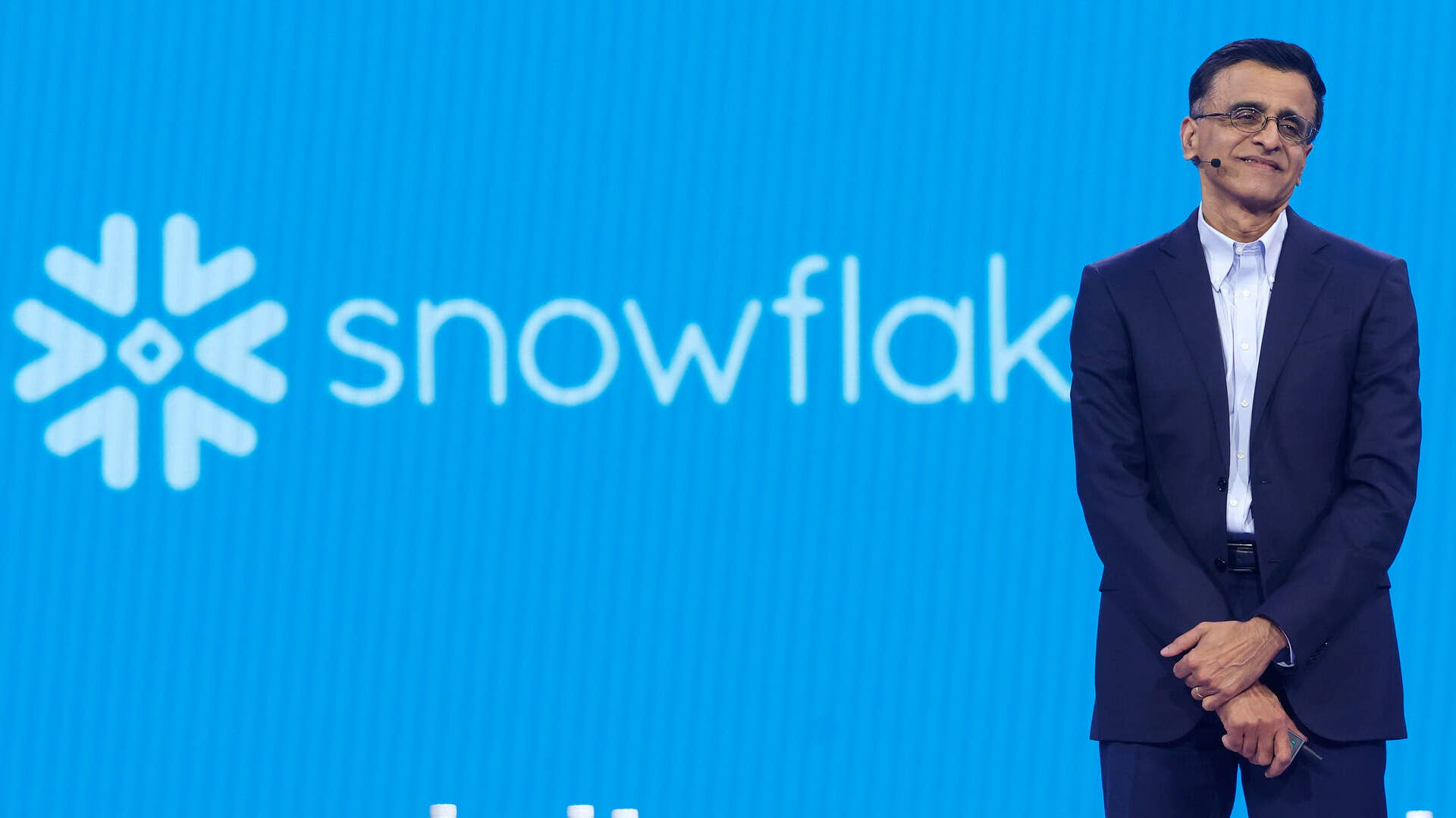
Snowflake’s Q1 fiscal 2027 results delivered the proof Goldman needed
The first-quarter fiscal 2027 results from Snowflake’s May 27 earnings release:
- Product revenue of $1.33 billion, up 34% year over year — the strongest sequential dollar growth in company history.
- Total revenue of $1.39 billion, up 33% year over year.
- Net revenue retention rate of 126%.
- 779 customers with trailing 12-month product revenue above $1 million, up 29% year over year.
- 46 new customers crossed the $1 million threshold in Q1, compared to 26 a year ago.
- 813 Forbes Global 2000 customers.
- Remaining performance obligations of $9.21 billion, up 38% year over year.
- Full-year fiscal 2027 product revenue guidance raised to $5.84 billion from $5.66 billion.
Source: Snowflake First Quarter of Fiscal 2027 Results
“Q1 marks a clear inflection point in that journey,” CEO Sridhar Ramaswammy said in the earnings release.
“With Cortex Code and Snowflake Intelligence, we are extending from the trusted foundation for enterprise data and context to become the control plane for the Agentic Enterprise,” Ramaswamy added.
Related: Snowflake stock spikes on $6B deal with cloud giant
Goldman raised its full-year fiscal 2027 revenue estimate to $6.09 billion from $5.91 billion and its fiscal 2028 and 2029 estimates proportionally, according to the note.
The new $278 price target reflects an Enterprise Value-to-Forward (EV/Fwd) unlevered free cash flow multiple, up from 45x, justified by higher growth.
The Natoma acquisition and AWS deal extend Snowflake’s AI surface area
The Q1 results came alongside two strategic moves that expand Snowflake’s addressable market beyond core data warehousing.
Snowflake signed a definitive agreement to acquire Natoma. This is an enterprise Model Context Protocol platform for AI agents meant to extend governance to AI-driven workflows beyond the data layer.
The acquisition enables AI agents to securely connect to tools customers use daily, directly within and beyond the Snowflake environment. Goldman flagged this as constructive evidence of Snowflake broadening its monetizable surface.
Related: Bank of America tweaks Snowflake stock price target before earnings
The $6 billion multi-year AWS collaboration agreement, also announced in the quarter, accelerates enterprise AI adoption globally and deepens the hyperscaler integration that enterprise customers increasingly expect from their data platform of choice. A deepened OpenAI partnership for co-innovation and joint go-to-market efforts adds another AI credibility layer.
My review of the full guidance picture reveals a company now projecting 31% growth for the full fiscal year 2027 — accelerating from 29% in fiscal 2026 — with non-GAAP operating margins of 13.5%, up from prior guidance of 12.5%.
That simultaneous acceleration of growth and margins is the combination that software investors pay premium multiples for. Goldman believes Snowflake has found that combination.
Related: Goldman Sachs doubles down on S&P 500 message for 2026