Consumers have a breaking point.
There’s a pricing level — and it varies by person, income, and the actual item being purchased — where people no longer see value. When the price of a meal, a luxury, an event, travel, or anything else crosses that line, consumers will either skip making the purchase, or cut back on how often they buy.
Technomic Senior Principal and Head of Strategic Partnerships David Henkes spoke about this concept during a recent conference, Bar and Restaurant News reported.
“This cost increase couldn’t come at a worse time because the industry is already struggling with a value challenge, a value image problem,” he said.
In this case, Henkes was talking about tariffs, but it doesn’t really matter what the source of a price increase is.
“Consumers are still going out to eat, they’ve just become a lot more selective when they do,” Bank of America Institute economist Taylor Bowley told S&P Global.
Analysts say the combination of higher input costs and more selective demand is forcing operators to rely on pricing power they don’t fully have anymore.
Barbecue restaurants, specifically ones that specialize in brisket, have been hit hard by skyrocketing beef prices, and they can’t solve the problem by adding more chicken items like McDonald’s has tried to do.
Beef prices create a BBQ industry problem
“Right now, there is a tightness in the U.S. protein supply, especially where beef is concerned, due to reduced cattle herds that could go on for years before they’re replenished,” Bill Lapp, president of Omaha, Neb.-based Advanced Economic Solutions told the National Restaurant Association (NRA).
That’s not a problem that’s going to be solved anytime soon.
Fixing beef prices will take time because the American cattle herd is at its smallest size in 75 years, the Associated Press (AP) reported.
“The national herd size isn’t the only factor that determines what beef costs at the grocery store. Still, the dwindling number of cattle is a key reason the average price of all uncooked ground beef in the U.S. was $6.86 per pound in March, 3 cents off the record high set in February, according to federal statistics.
That price in March is up nearly 48% from March 2021,” added the AP.
Those numbers have stayed elevated.
The average retail price for beef, which is used in brisket as a staple at many barbecue restaurant, was a record $9.64 per pound in April, up 13 percent from the previous year, according to the U.S. Department of Agriculture.
BBQ restaurants are struggling
While some barbecue restaurants focus on pork ribs, pulled pork, and extensive chicken offerings, Texas barbecue is defined by beef brisket.
Brett Jackson, co-founder of Brett’s BBQ in Katy, Texas, saw a change in customer behavior as the rising cost of beef forced him to raise menu prices.
“Eight months ago, I saw that about one in every eight groups were splitting a two-meat plate for two people,” he told Texas Monthly.
He also noticed that people who used to come in twice a week were now coming in once a week or even monthly.
That forced Jackson to make the decision to close the restaurant in December.
More rising beef prices:
- McDonald’s menu adds new chicken choices as beef prices rise
- How to cheaply add protein to your McDonald’s burger
- Americans could face high beef prices for years
Brett’s BBQ Shop is not the only barbecue restaurant that closed because of fewer customers and higher beef prices. In addition to Brett’s, two other Texas favorites have shut down, while many other are struggling.
- Kirby’s BBQ: New Caney, TX (near Houston). Owner Shawn Jones announced the closure at the end of 2025, citing “absolutely insane” beef prices, with brisket as his biggest seller weighing on margins, reported The Independent.
- Sabar Barbecue: Fort Worth, TX. Listed among the recent closures attributed to sky-high beef prices, according to Texas Monthly.
Kirby’s owner Shawn Jones made it clear that rising beef prices forced him to close.
“With brisket being our biggest seller here in Texas, that is really weighing on our profit margins,” Jones told his followers on YouTube. “When brisket costs $36 a pound for the consumer and then you got ribs and sausage and sides and desserts and all that… you can easily be spending $70 to $100 for barbecue.
Many other barbecue restaurants are facing the same problem.
“This is as bad as it gets,” Russell Roegels, who owns two BBQ restaurants in Houston, told The Washington Post. “Everybody’s at risk these days: You’re one bad week from closing.”
Shutterstock
McDonald’s pivots away from beef
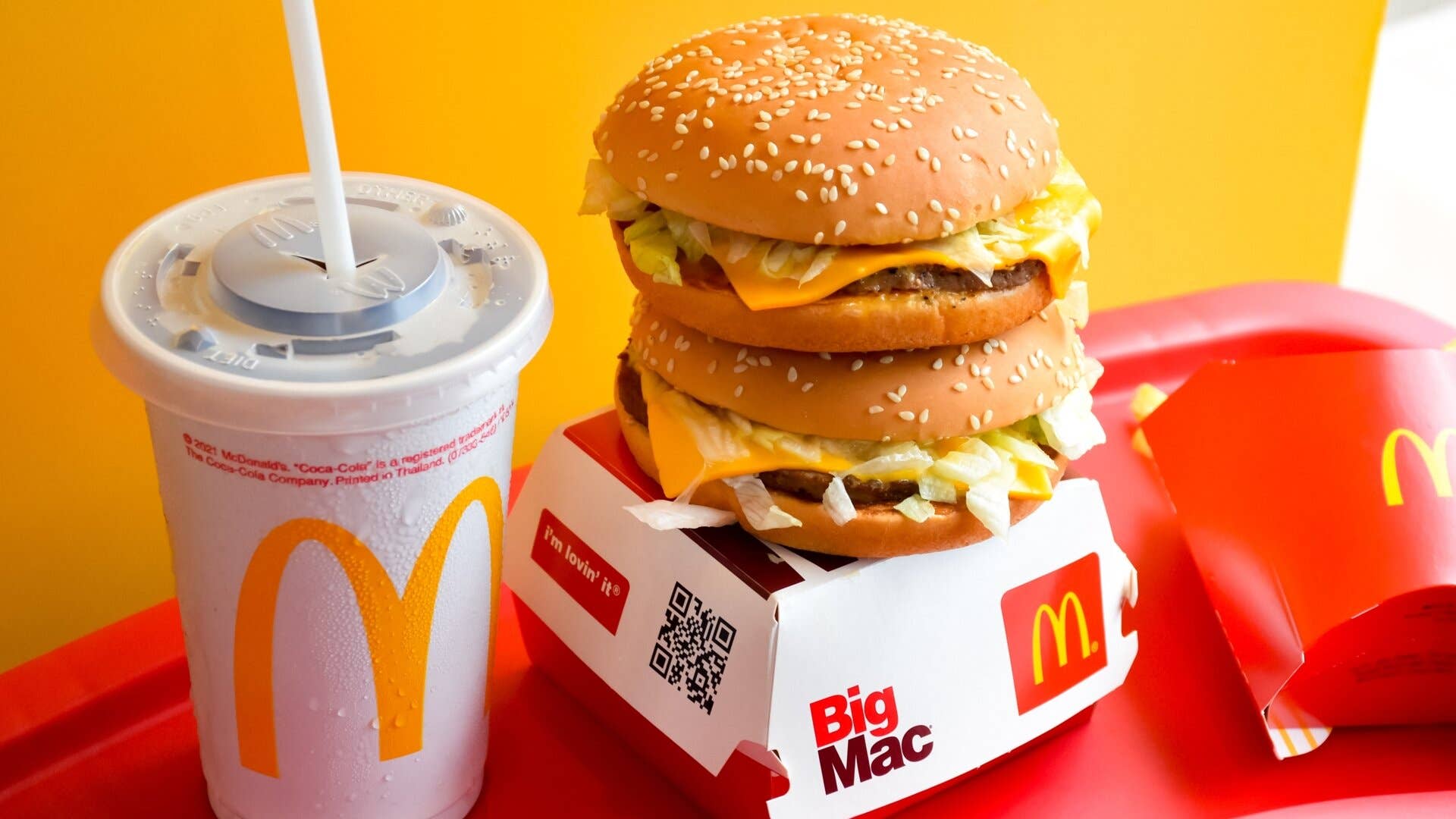
Barbecue restaurants have higher beef prices than McDonald’s for a functional reason, according to TheStreet advisor and RTMNexus CEO Dominick Miserandino.
“Saying barbecue chains are struggling just because beef costs went up misses the entire structural crisis. It’s about the brutal math of shrinkage. If McDonald’s buys a pound of ground beef, they sell a pound of ground beef,” he said.
That’s not how it works for barbecue restaurants.
“But when a barbecue pitmaster buys a raw, twelve-pound brisket, they have to trim off the hard fat, and then it loses up to fifty percent of its weight during a fourteen-hour smoke. A 15% increase in raw beef prices effectively doubles by the time that brisket hits the cutting board,” he added.
McDonald’s also has the ability to entice customers to buy proteins other than beef, while a Texas barbecue restaurant known for brisket can’t simply change its menu to offer more chicken.
The chain has added multiple new chicken items, ranging from sandwiches to chicken tenders and wings, all over the world. Chief Restaurant Experience Officer Jill McDonald believes the demand for chicken can make up for higher beef prices.
“Just as a reminder, this global category is 2x the size of beef and faster growing. We grew our chicken category share across our top 10 markets in 2025 and believe we’re well on our way to increasing our share by at least 1 percentage point by the end of 2026 versus where we were in December 2023,” she said during the chain’s fourth-quarter earnings call.
Related: Olive Garden rival down to 38 restaurants after two bankruptcies