Qualcomm’s stock was under pressure on June 1 after Nvidia CEO Jensen Huang made a surprise move that rattled the PC chip market.
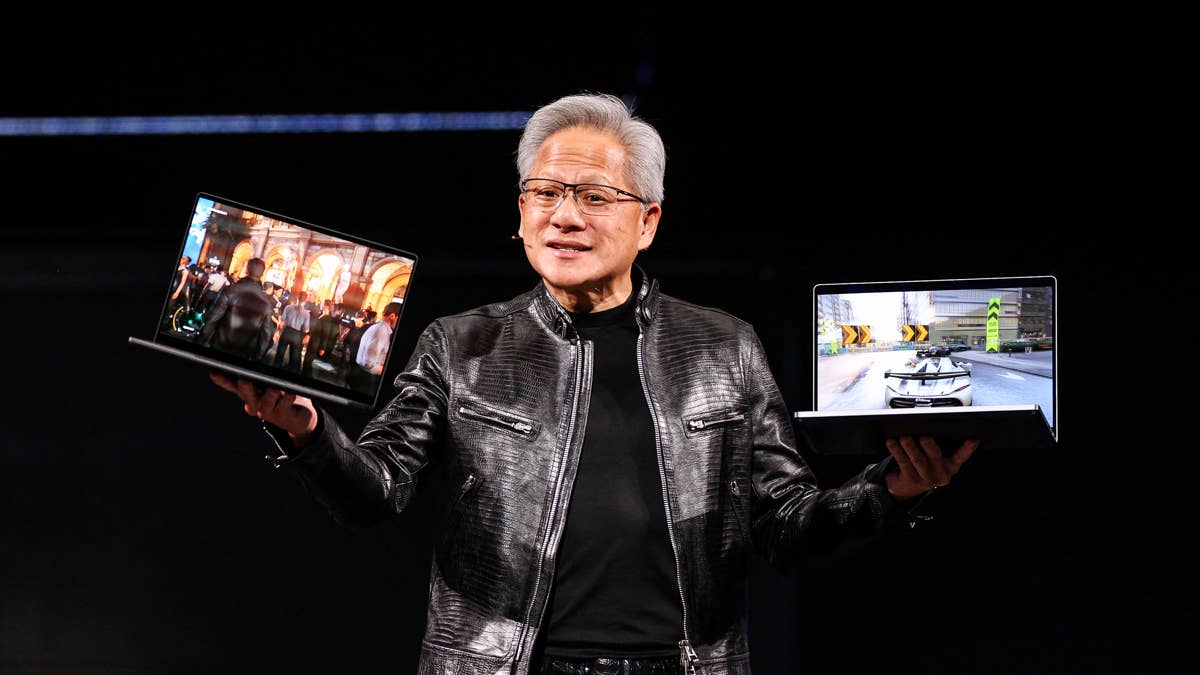
At Taiwan’s annual Computex conference, Huang shared that Nvidia (NVDA) is entering the personal computer processor market with a new chip developed in partnership with Microsoft.
The announcement sent shares of Qualcomm (QCOM), Intel, and AMD lower as investors assessed its implications for the existing pecking order in Windows laptops.
Qualcomm has spent the last two years building out its Snapdragon X chip lineup for Windows PCs and has been quietly gaining ground.
Now, a much larger rival is stepping onto the same turf.
NVIDIA’s PC push puts edge AI rivals on notice
According to a CNBC report:
- NVIDIA’s new processor, called the RTX Spark (also referred to as the N1X), is a joint effort with Taiwan’s MediaTek.
- It combines one of Nvidia’s Blackwell graphics processing units (GPUs) with an Arm-based custom central processing unit (CPU) and 128 gigabytes of unified memory.
- That unified memory setup matters because it lets the CPU and GPU share a single memory pool, removing a major bottleneck when running large AI models locally.
- The chip is set to debut in the fall on a new line of Windows computers from Microsoft, Dell, HP, Asus, Lenovo, and MSI.
Huang framed the announcement in sweeping terms, CNBC also noted, saying that he and Microsoft are going to “reinvent the PC” and calling it the biggest change to computing in 40 years.
Nvidia said it plans to release more than 30 laptops and 10 desktops using the new chip over time, according to CNBC, though the initial focus will be on premium, thin-and-light machines aimed at creators, AI developers, and gamers.
The competitive concern for Qualcomm is real, at least on the surface. IDC analyst Tom Mainelli told CNBC that Nvidia’s entering the space reflects Huang’s ambition to control every layer of the artificial intelligence stack.
Chip analyst Patrick Moorhead put it more bluntly in a CNBC interview. “Jensen is not going to be happy if they just get data center or data center and auto. They want everything on the edge.”
That said, analysts were cautious about the near-term financial impact.
Creative Strategies analyst Ben Bajarin estimated that Nvidia’s PC business will be at least 20 times smaller than its networking segment alone, which reported roughly $15 billion in sales last quarter, CNBC confirmed. Nvidia’s total data center revenue topped $75 billion in that same period.
Qualcomm’s data center bet is heating up
Despite the stock pressure, Qualcomm CEO Cristiano Amon spent much of last week at the Bernstein Strategic Decisions Conference outlining why the company’s competitive moat remains intact and why its best growth years may still be ahead.
Amon confirmed Qualcomm is actively building toward a major data center business spanning three product lines: AI inference accelerators (its XPU rack systems), Arm-based CPUs for hyperscalers, and custom application-specific integrated circuit (ASIC) chips for large technology companies.
He said shipments for the custom ASIC business have been pulled forward and are now expected to begin within calendar year 2026, earlier than originally planned.
More AI:
- Micron sits at the center of a red-hot chip rally
- IBM CEO sends blunt message on AI and quantum computing
- Anthropic CEO makes shocking admission about AI
- Judge Orders Qualcomm to Pay Apple Nearly $1 Billion Rebate: Report
Amon described the data center opportunity as “material” revenue in fiscal 2027, which, for a company of Qualcomm’s scale, means multiple billions of dollars.
Amon also noted progress in automotive, where the company now expects to end the fiscal year at a roughly $6 billion annual run rate. That puts it firmly on track toward a $29 billion automotive revenue target it had set years ago.
The pipeline of signed contracts has grown beyond the $45 billion Qualcomm disclosed publicly, with a new figure potentially coming at its Analyst Day on June 24.
On handsets, Amon acknowledged the market remains squeezed by elevated memory prices but said Qualcomm can see the bottom.
The company believes it is undershipping to actual consumer demand right now, which sets up sequential improvement after the third fiscal quarter.
What Nvidia’s move means for QCOM stock
The PC market is real, but in context, relatively small. Intel’s entire PC chip segment generated $32.2 billion in revenue for all of 2025, according to CNBC.
And Qualcomm’s PC business, while growing, remains a portion of its broader IoT segment.
Qualcomm has its own Arm-based edge AI story, and Amon made clear at Bernstein that the company views the arrival of AI agents as an eventual catalyst for a smartphone and PC upgrade cycle.
He argued that no existing device today has the computing power to run the orchestrators and agent frameworks proliferating across every major operating system. That upgrade wave, when it comes, benefits Qualcomm’s premium chip position.
NVIDIA’s entry is a genuine competitive development.
But Qualcomm enters the next chapter with a $45 billion-plus automotive pipeline, growing AI accelerator engagements, a custom chip business already generating early revenue, and a smartphone platform that still commands more than 70% share at Samsung.
The Analyst Day on June 24 will be the next major moment for investors to size up how the company plans to defend and extend that position.
Related: Qualcomm stock gets harsh reality check after semiconductor rally