Most CFOs at major investor conferences speak carefully. They manage expectations. They hedge. They say “we feel good about the trajectory” and just leave it there.
Intel‘s CFO did not do that at the Bank of America 2026 Global Technology Conference on June 2, 2026.
The CPU market is going to have explosive growth as a result of AI.
Zinsner did not qualify it. He did not walk it back. And then he went further, saying Intel has more than enough demand to grow its data center revenue meaningfully, if it can execute the supply ramp.
Intel (INTC) rose on the comments. The stock is up 168.75% year to date and 396.10% over the past year, according to Yahoo Finance. INTC traded at $99.17 at the close on June 5.
The turnaround that seemed improbable two years ago is producing results that are increasingly hard to argue with. And Zinsner’s conference remarks signal the company believes the best is still ahead.
Also Read: Intel Corporation Latest News
Zinsner sees “enough demand” to grow data center revenue
The core of Zinsner’s message at the BofA conference was a structural argument about where AI compute demand flows as the industry evolves beyond training.
“Obviously, the ratio of CPUs to GPUs is growing meaningfully as we get from training to inference, inference to agentic, and multiagent and reinforced learning,” Zinsner said, according to a transcript compiled by Seeking Alpha. “So it’s just going to drive a lot of CPU requirements.”
Related: Intel’s new AI chip skips the costly memory Nvidia relies on
The logic is straightforward. Training AI models is a GPU-intensive workload. Running those models — inference — requires a different balance.
Agentic AI, where multiple AI systems interact autonomously to complete tasks, requires even more general-purpose computing alongside specialized acceleration.
Every step up the AI deployment stack increases the relative demand for CPUs, and Intel is the dominant CPU supplier in the data center. Zinsner put a number on the confidence level, according to the transcript.
More Tech Stocks:
- Morgan Stanley sets jaw-dropping Micron price target after event
- Nvidia’s China chip problem isn’t what most investors think
- Quantum Computing makes $110 million move nobody saw coming
“Quite honestly, big is enough. We’ve got enough demand out there that if we can do a good job executing on the ramping of supply, we should have no issue with growing our revenue meaningfully in the data center space,” Zinsner said at the conference.
That is the language not of a company chasing market share, but of one trying to build fast enough to keep up with what is already in the pipeline.
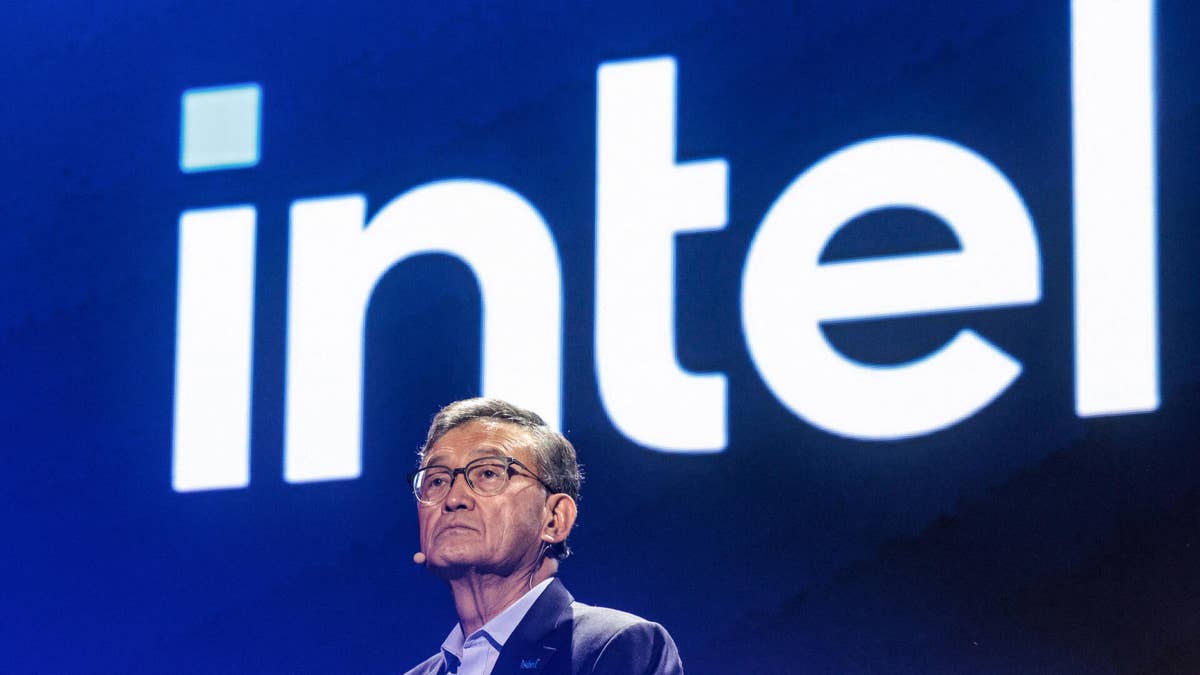
The supply ramp that Intel’s CFO described as the binding constraint
The most practically significant part of Zinsner’s remarks was not about demand. It was about supply.
“In the near term, it’s all about supply,” Zinsner said, noting Intel is ramping production and expects a meaningful increase in Intel 3 and 18A supply over the next several quarters to meet demand.
Zinsner added that 18A for notebooks is Intel’s fastest-ramping product in at least five years. As reported in the earnings statement, Intel plans to increase Intel 7 wafer starts in 2026 before gradually winding them down in 2027 as Intel 3 and 18A take on more volume, marking a long-planned technology transition.
More AI:
- Micron sits at the center of a red-hot chip rally
- IBM CEO sends blunt message on AI and quantum computing
- Anthropic CEO makes shocking admission about AI
Intel’s 18A process node has been Intel’s most closely watched manufacturing milestone. Zinsner’s comments at the BofA conference provide the clearest indication yet that 18A is moving from validation into commercial-scale production.
Intel CEO Lip-Bu Tan framed the same dynamic in the company’s Q1 2026 earnings release on April 23.
“The next wave of AI will bring intelligence closer to the end user, moving from foundational models to inference to agentic. This shift is significantly increasing the need for Intel’s CPUs and wafer and advanced packaging offerings.”
The operational transformation that is making Intel’s growth claims credible
On May 23, 2026, I reported that Intel CEO and management were pushing a “speed-of-light” new strategy aimed at cutting the management hierarchy from 12 layers to five.
Then on June 2, Zinsner provided the most specific public accounting yet of the management restructuring that CEO Tan has executed since taking over.
“We had 12 layers of management. He collapsed it into 6 layers,” Zinsner said. “We had, at our peak, over 400 vice presidents — he collapsed that to 200. We had over 100,000 employees — he collapsed that to under 80,000 employees.”
Related: AMD just left Nvidia, Intel flat-footed
These changes represent a major overhaul of Intel’s decision-making process, allowing engineering leaders to respond faster to customers and market trends.
Combined with the “bad news first” culture that requires issues to be reported within 24 hours, the restructuring aims to make Intel far more agile than under its previous bureaucracy.
Intel’s Q1 2026 results, reported April 23, showed early returns of that reset:
- Revenue of $13.6 billion, up 7% year over year
- Non-GAAP EPS of $0.29, versus a consensus estimate of $0.01
- Q2 2026 guidance of $13.8 billion to $14.8 billion in revenue
- Cash from operations of $1.1 billion
- Sixth consecutive quarter of revenue above Intel’s own expectations
Source: Intel First-Quarter 2026 Financial Results
Intel Xeon 6 selected as the host CPU for Nvidia‘s DGX Rubin NVL8 systems, according to Intel Newsroom. Also, a multi-year Google collaboration covering Xeon deployment and custom ASIC co-development.
Intel is also working with SambaNova, SpaceX, xAI, and Tesla through the Terafab project, according to their earnings statement. The customer relationships that matter most in the AI data center are increasingly involving Intel, not just at the perimeter, but at the center of the architecture.
Zinsner’s “explosive growth” language at the BofA conference was not accidental. It was a CFO telling the market that the constraint on Intel’s AI CPU revenue is supply, not demand. And supply is ramping.
Related: Intel CEO reveals rare ‘speed-of-light’ turnaround plan