The best investments are usually the ones you are not allowed to make. By the time a great company finally opens its doors to the public, the people who got in early have already collected the part of the story worth telling. What reaches everyone else tends to be the receipt, marked up and handed over with a smile.
Wall Street has run on that arrangement for the better part of a century. The richest growth stories stay locked behind private funding rounds, sovereign wealth funds, and venture firms until the easy upside has thinned, and only then do they get repackaged for the rest of us as an initial public offering.
One company has kept that wall taller and standing longer than almost any rival. It launches more than half of the world’s orbital missions, it was last valued in private markets near $400 billion, and for everyday investors it has been a thing to read about, never a stock to own.
That company is SpaceX, and the wall is finally coming down. The rocket maker has filed to go public, and one of the loudest voices on Wall Street says the listing itself is the least interesting part of what happens next. Dan Ives, the Wedbush Securities analyst famous for his maximalist calls on Tesla (TSLA), has been telling anyone who will listen where this is really headed.
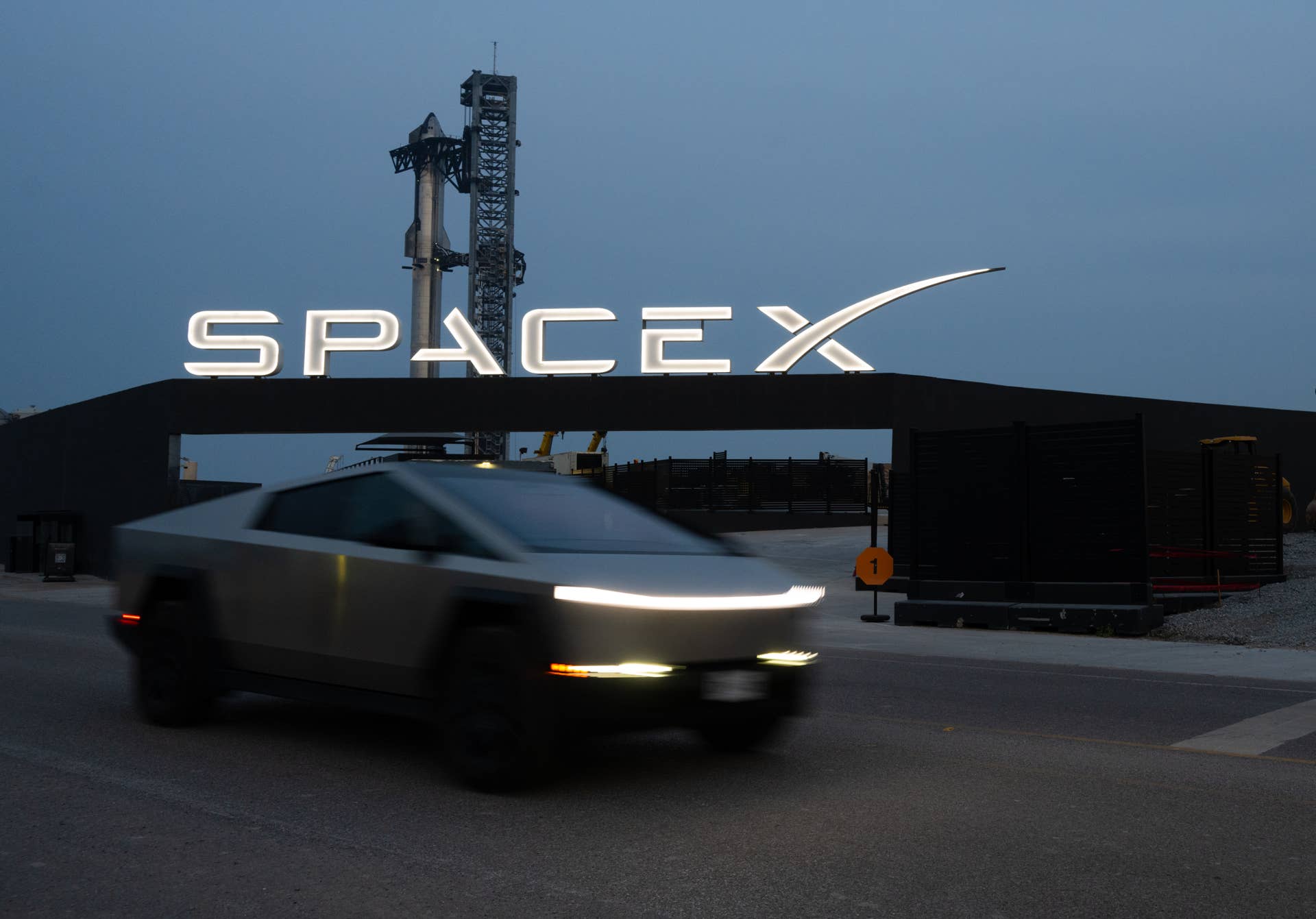
Why the SpaceX IPO is bigger than one stock
The filing makes it official. SpaceX, expected to trade under the ticker SPCX, filed its S-1 on May 20 and is aiming for a Nasdaq debut around June 12, targeting a valuation of up to $1.75 trillion and a raise of roughly $75 billion, which would make it “the largest IPO in history,” according to Electrek.
Put that in human terms. A debut near $1.75 trillion would price SpaceX above all but a tiny handful of public companies on the planet. A single share would buy a slice of rockets, the Starlink satellite network, and the artificial intelligence work Musk has been pulling into the company. For most people, it is the first time any of it has been purchasable.
More Tech Stocks:
- Morgan Stanley sets jaw-dropping Micron price target after event
- Nvidia’s China chip problem isn’t what most investors think
- Quantum Computing makes $110 million move nobody saw coming
Ives has been blunt about the timing. He told CNBC that for an offering of this scale, “I think the time is right.”
His read is that the listing does not pull money away from Tesla so much as widen the menu of ways to bet on Musk.
When I ran the SpaceX target against Tesla’s roughly $1.6 trillion market value, the arithmetic got interesting fast. Two Musk companies, public at the same time, would together rival the largest corporate empires ever built. And that is before anyone talks about combining them.
Related: Navellier to SpaceX buyers: wait for escape velocity
What Dan Ives is really betting on
Strip away the rocket imagery and Ives’s thesis is simple. He is not betting on one hot IPO. He is betting on consolidation, the slow folding of Musk’s businesses into a single machine, with the SpaceX listing as the on-ramp rather than the destination.
In a post on X, Ives framed the listing as the opening of a key chapter for investors in what he calls the fourth Industrial Revolution, and repeated his standing view that SpaceX and Tesla have an 80%-plus chance of merging in 2027. He has said the same on camera, telling Yahoo Finance that once SpaceX goes public, “Tesla and SpaceX will merge” inside a year.
The groundwork is already visible. Consider the timeline.
- SpaceX absorbed Musk’s AI startup xAI in February 2026, setting a precedent for pulling his ventures under one roof, according to CleanTechnica.
- The company reported $10.1 billion in first-quarter capital spending, roughly 75% of it aimed at AI, according to CleanTechnica.
- A combined SpaceX and Tesla would be worth roughly $3.4 trillion, according to Fortune.
- Ives pegs the odds of that merger at 80% to 90% for the first half of 2027, according to Teslarati.
Each of those moves makes the next one cheaper and easier to justify. That is the whole bet.
The merger math that makes Wall Street nervous
A combined company looks clean on a slide. The reality is messier. Musk holds about 20% of Tesla’s equity but controls 85.1% of SpaceX’s voting power through a super-voting share class, which means he “would largely be negotiating the terms with himself,” according to Teslarati.
That is the kind of setup that breeds litigation. Tesla shareholders are already suing Musk over an earlier xAI investment, according to Electrek, and a SpaceX deal would dwarf that fight in scale. There is also the money problem. A merged entity could lose money from day one given SpaceX’s enormous capital needs, according to Fortune.
It collides with Musk’s own incentives, too. He still needs Tesla to clear the milestones behind his trillion-dollar pay package, and reshuffling the corporate structure scrambles that math. CNBC has reported that Musk has discussed folding the two companies together with close colleagues in recent weeks, which is what turned a long-running rumor into a live question covered by TheStreet.
What struck me reading the prospectus chatter against the prediction markets is the gap between conviction and crowd. Ives sits at 80% to 90%. Traders on Kalshi were pricing the deal closer to 52% by next May, according to Fortune.
That spread is not noise. It is the difference between an analyst’s thesis and what people will actually wager.
Why an internet pioneer is wary of the SpaceX IPO
Not everyone reads the timing as a gift to the people buying in. David Holtzman, who designed the global domain name system and ran the internet’s master root server before becoming chief strategy officer at Naoris Protocol, lived through the last technology boom that ended this way.
When I asked him where the flood of AI IPO money is creating risk that buyers do not see, he reached for history. The money going in before and right after a debut like this comes from private equity and investment banks, he said, and those players are insiders who plan to flip the stock. “They’re insiders,” Holtzman told me.
In the dot-com bust, the firms that received IPO stock sold near the top and kept the gains, he said. The people who got hurt came in months later, after reading about the future in the financial press. They were pension funds, teachers, police officers, and engineers. “They got screwed,” Holtzman said, and he expects a repeat.
He is no AI skeptic. “I actually do believe that AI is going to be huge,” he told me, and he thinks some AI companies will rank among the largest in history. His worry is narrower. The technology can be real and the entry price can still be a trap for whoever buys last.
He sees the same flaw Ives glides past. Musk and OpenAI’s Sam Altman both run dual-class setups where they keep the controlling shares, and history has not been kind to outside holders in those arrangements.
SpaceX “has that problem in spades,” he said. His fix is not heavy regulation but disclosure. “We all do best when we all have the same information,” Holtzman said.
What the SpaceX listing means for your portfolio
So the IPO is the ticket booth, not the ride.
If you own Tesla, you do not need to buy a single SpaceX share to be exposed, because a merger would convert your stock into a stake in a rocket, satellite, and robot conglomerate whether you asked for that or not. Watch where SPCX prices, watch whether Tesla takes a stake, and watch that merger probability.
The day the crowd’s number starts climbing toward Ives’s is the day the next chapter actually opens, and the day you find out whether Holtzman was right about who holds the receipt.
Related: Elon Musk sends startling message on SpaceX, Tesla merger