If you have been on Instagram or TikTok recently, you’ve probably seen influencers telling you to purchase your plane tickets at the library or use a VPN to mask your location because of dynamic pricing that changes based on location and search frequency.
Dynamic pricing, also known by monikers including surge pricing, real-time pricing, and demand-based pricing, has been around for years. But until now, consumers haven’t encountered dynamic pricing powered by AI.
“AI dynamic pricing is a process where product or service prices are adjusted in real time based on various market factors and demand,” according to IT solutions company Bull.
“Unlike traditional models that often rely on rigid assumptions or ignore competitor actions, this solution uses Machine Learning (ML) to estimate price elasticity: how quantity demanded changes relative to price shifts — to create highly accurate demand curves for every individual product.”
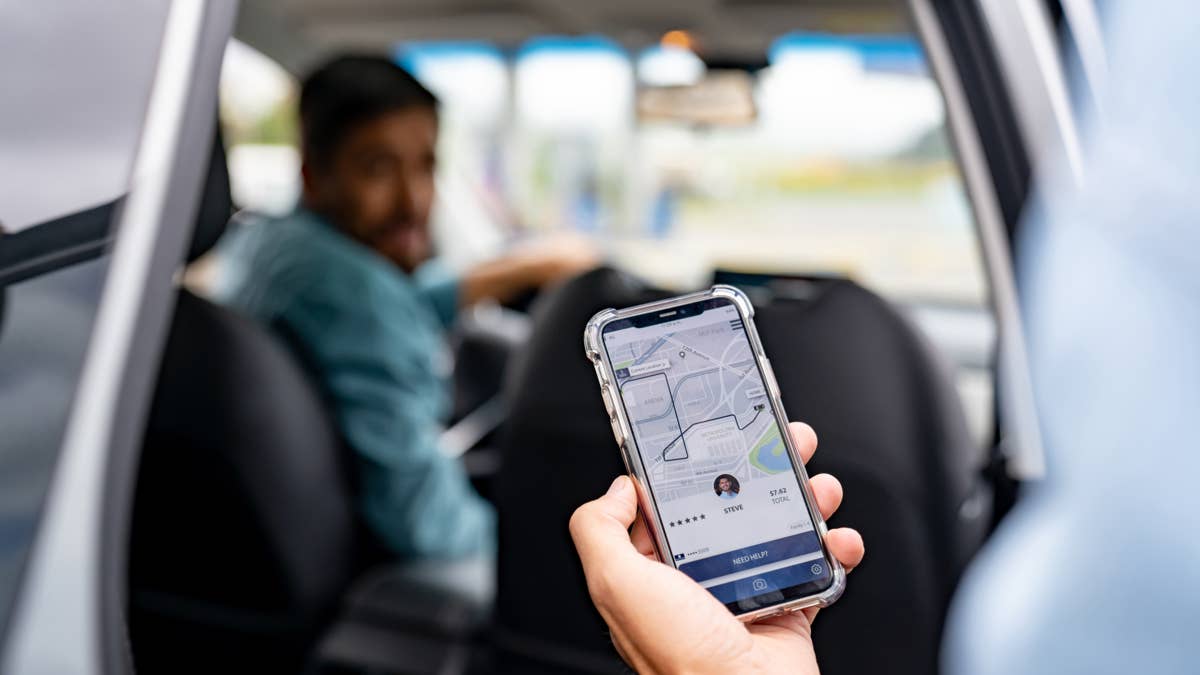
Uber and Lyft are using “algorithmic and AI-driving pricing tactics” to charge customers more, according to a recent, monthslong Consumer Reports study. Ride-hailers are being deceived by the companies offering supposed discounts on what are actually inflated original prices, the study also concludes.
Dynamic pricing, even if it’s AI-powered, is one thing. Yet, CR alleges, what Uber and Lyft are doing is “deceptive and manipulative” and “may violate several states’ consumer-protection laws.”
Uber vehemently denied the allegations (we’ll get into their rebuttal later) and attacked Consumer Reports‘ methodology for the study, while Lyft did not immediately respond to TheStreet’s request for comment.
Uber, Lyft join other tech subscription companies using AI-driven pricing
While dynamic pricing is ubiquitous now, Uber is considered to be one of the pioneers of surge pricing. The idea is simple: Instead of being fixed, prices are increased during periods when demand is high and supply is low, and lowered when the opposite is true.
And while American consumers have grown accustomed to that new normal, they have also become frustrated with it, according to Consumer Reports. It seems that what was once limited to ride-hailing services has been expanded to include everything from plane tickets to concerts and sporting events.
“But the pricing practices observed in our Uber and Lyft tests are different from dynamic or surge pricing. Because our volunteers booked identical rides at roughly the same time, the dramatic price differences we saw can’t be explained away purely by the economics of supply and demand,” Consumer Reports noted.
CR volunteers conducted “virtual” tests in March and April in which they checked the prices of 30 select routes (15 for Uber and 15 for Lyft) digitally across 17 states, and 12 in-person tests with volunteer riders purchasing the same rides at the same time in Portland, Ore.
CR’s data across the “same” routes it tested showed that the median difference between the lowest and highest price groupings was about 50 percent.
Uber calls foul on CR’s definition of the “same” route
Consumer Reports admits that its study has some methodological blind spots, including not controlling for some marketplace variables such as driver supply, differences in estimated arrival times, routing differences, traffic changes, rider location precision, or network latency, because it does not have access to those data.
But Uber says the CR report is flawed for many reasons, including its definition of the “same” trip. It says what the consumer watchdog describes as the same trips are actually different trips that were priced based on changing real-time marketplace conditions (like the ones listed above).
“Trips requested at approximately the same time will have prices that are approximately the same —which is exactly what their data shows. Consumer Reports’ methodology was built to produce the findings they sought, regardless of how Uber’s pricing actually works.”
Uber says CR’s report doesn’t control for the variables mentioned above.
But the CR report also gives specific examples that are pretty egregious.
In one instance, a volunteer opened her Uber app on Wednesday evening, finding an UberX ride between two towns near Florida’s Gulf Coast. The price listed was $94.96. “At the same time,” another volunteer booked the same route. His undiscounted fare was $65.95.
“Same route. Same day. Same time. Different prices,” CR concluded.
In an 18-mile Lyft test in Kansas City, Mo., CR says about half of the 55 volunteer riders it used would have paid $40 for a trip, but seven were quoted at less than $31, and six others were quoted fares of $50, $55, and $65. The highest fare was more than double the lowest.
“The magnitude of the high/low price differentials is astonishing,” Len Sherman, an executive-in-residence at Columbia Business School in New York City, is quoted as saying in the report.
The report also says that Uber and Lyft both deny that they use personal data to set prices, which is known as surveillance pricing. Instead, they say the visible difference in prices is a result of real-time marketplace pricing.
Related: Uber riders are accidentally leaving some wacky items behind