Every wave of new technology arrives with a rich man telling everyone else to relax. The machine will lift you up, not push you out, he says. He is usually right about what the machine can do, and wrong about how it feels to be the person standing closest to it.
The argument over artificial intelligence (AI) and jobs has hardened into two camps. One side counts the roles the software will erase. The other counts the roles it will invent. They fight over the arithmetic while layoff notices keep landing in real inboxes, and most working people just watch their own field for the first crack.
The people building the technology keep insisting the worry is overblown. That message lands differently depending on whether your paycheck is the one in question.
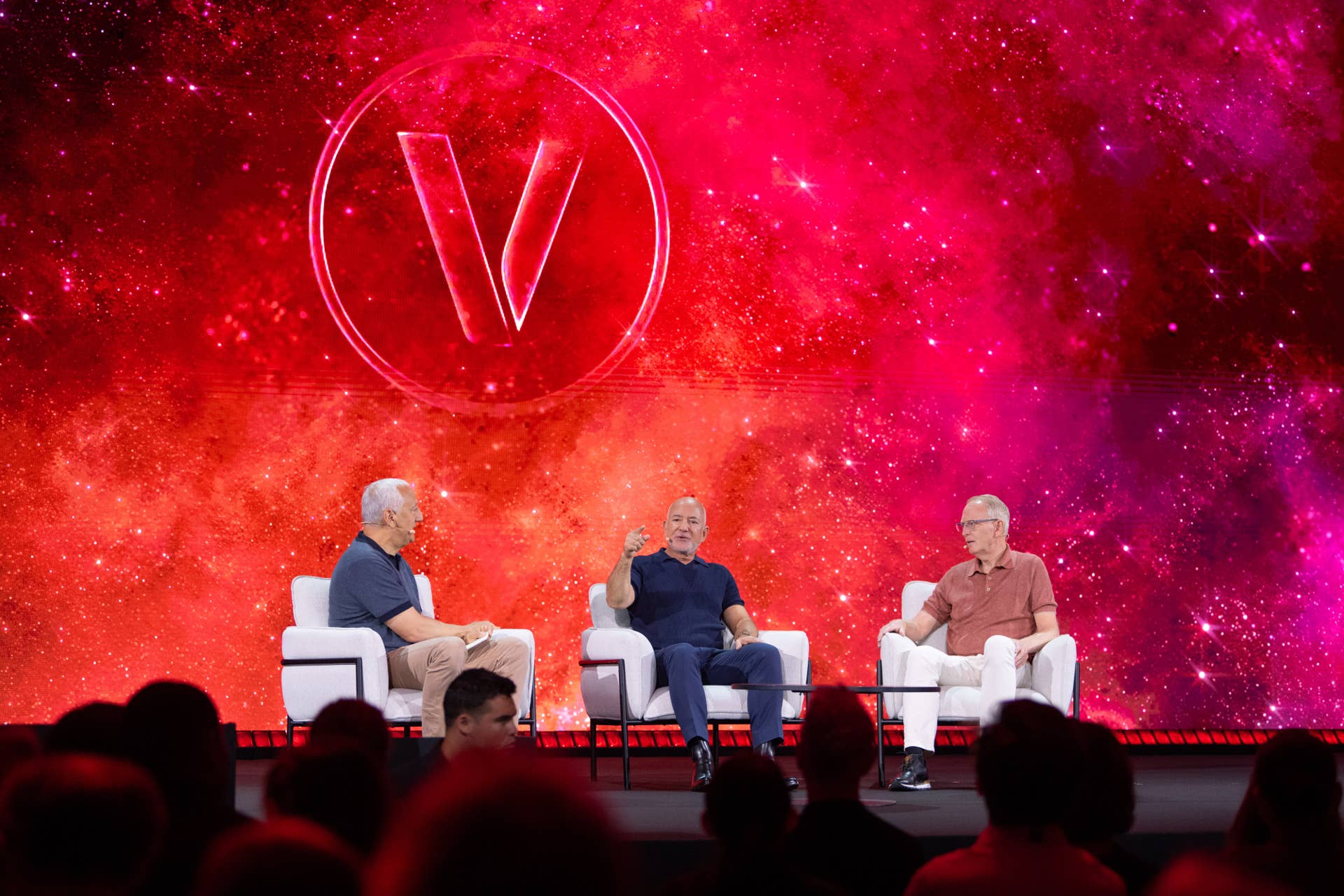
On Wednesday, June 17, the world’s fourth-richest person took it further than most. Speaking in Paris, Amazon (AMZN) founder Jeff Bezos told a tech conference crowd that AI will not hollow out the workforce. It will do something stranger. It will leave more work than there are people to do it.
Why the AI jobs fear keeps spreading
Start with why the anxiety is real. More than half of Americans, 53%, fear AI could put them or someone in their household out of work, according to a Reuters/Ipsos poll released June 10. That is not a fringe worry. It cuts across age, income, and education.
More AI:
- Qualcomm eyes $10 billion Al shortcut as smartphone growth slows
- Anthropic heads to Washington to win its Al models back
- AstraZeneca says AI is raising its odds where most drugs fail
TheStreet has already traced how Bezos arrived at this view, including the earlier sit-down where he first laid out the same argument in detail.
For a lot of households, that fear is not abstract. It is the gap between a renewed contract and a severance email, and it shows up in how people spend, save, and plan for the year ahead.
U.S. worker anxiety keeps climbing in what some now call the era of forever layoffs, and the cuts behind that mood have been concrete.
A Federal Reserve governor warned in February that AI could leave many workers essentially unemployable. Even the founders of major AI companies flirted with the doomsday version of the story before quietly softening it ahead of their own stock-market debuts.
What makes the moment tense is that both stories run at the same time. Companies are posting record AI spending while handing out pink slips, and workers are left guessing which trend reaches their desk first.
Related: Anthropic sounds the alarm on AI danger
What Bezos actually said about a labor shortage
Here is the claim in his own words. AI “is going to create a labor shortage,” Bezos said at the VivaTech conference in Paris, sharing the stage with Blue Origin chief executive David Limp, according to Fortune.
His reasoning rests on a simple idea. People want endless things, and they are held back only by limits that AI will lower. Drop those limits, he argues, and demand for human effort climbs instead of collapsing.
He has made the case before. In a May interview, Bezos compared AI to a bulldozer standing next to a shovel, a tool that makes a worker more powerful rather than obsolete. He even waved off fears for radiologists and software engineers.
For the reader, the distance between those two views is not academic. It decides whether you spend the next two years upgrading skills with some confidence or bracing for a layoff that may or may not land.
The trouble is that the present looks nothing like his forecast:
- AI is eliminating roughly 16,000 U.S. jobs a month, with entry-level and Gen Z workers hit hardest, Goldman Sachs has estimated, per Fortune.
- AI-related layoffs could run roughly nine times higher in 2026 than in 2025, Fortune calculated from a Duke University and Atlanta and Richmond Federal Reserve survey of chief financial officers (CFOs).
- Tech layoffs topped 115,000 through May, with Meta, Amazon, and Snap naming AI as a driver, according to Fortune.
- The cuts already rival the total logged in all of 2025, according to Fortune.
Bezos leans on history here. Past industrial revolutions did create more jobs than they destroyed. He does not spend much time on the people being cut in the meantime.
That omission is the soft spot in an otherwise sturdy argument. An economy-wide labor shortage can sit right next to very real job losses today, as long as the displaced workers eventually move into the new roles. The whole bet hangs on the word eventually.
How Prometheus fits Bezos’s $41 billion bet
Bezos is not only talking. He is spending. He co-founded an AI startup called Prometheus in November 2025 with former Google X scientist Vik Bajaj.
The company has raised $12 billion at a valuation of about $41 billion, one of the largest early-stage AI fundraises in history, according to Fortune. Its focus is what it calls the physical economy, things like aerospace, automotive, and drug development.
Prometheus is “a very, very modern version of CAD,” Bezos told CNBC, the computer-aided design (CAD) software engineers already use. He has pushed back hard on the idea that it builds robots.
That detail matters for the jobs question. A tool that speeds up how humans design jet engines and medicines is a bet that people stay in the loop, only far more productive. It assumes the work changes shape rather than disappears.
For ordinary investors, the size of that wager is its own signal. When some of the biggest names on Wall Street put $12 billion behind a tool meant to keep humans in the design loop, they are pricing in a future where AI sharpens expensive expertise instead of erasing it.
What a labor shortage bet means for your job
So who is right? My read, after weighing his optimism against the monthly layoff counts, is that both pictures can be true at once, just not on the same calendar.
Bezos is describing the destination. The workers losing jobs this year are living through the trip. Earlier technology waves did generate more work, but the stretch between the old job ending and the new one starting got measured in years, and somebody had to cover the rent the whole time.
What struck me reading his remarks is who was missing from them. The fourth-richest person alive did not engage with the people being cut right now, and his own company sits among those trimming staff.
The useful move is not to pick a side in a billionaire’s debate. It is to figure out which side of that gap you are standing on. Bezos may well be right that the new jobs arrive. The question that decides your year is whether you are ready when they do, or still explaining the gap on your résumé while the shortage he promises shows up for someone else.