TheStreet aims to feature only the best products and services. If you buy something via one of our links, we may earn a commission.
There are lots of household purchases that seem like a waste of money in the moment but can actually benefit you in the long run. Things like proper clothing storage, cast iron cookware, and dehumidifiers are all items that don’t just make your life easier but can save you money over time, and ice makers are the latest addition to that evergrowing list.
While most refrigerators have built-in ice makers these days, not all do, leaving folks who love an ice cold drink at a loss. Ice cubes trays can certainly help facilitate scoring that satisfying clink of ice against the side of a glass, but more often than not, you’re not getting a ton of ice out of three or four trays, and running out to pick up a pre-packaged bag of ice is inconvenient and can add up, especially if you often play host to guests who expect an ice cold refreshment. Although it’s certainly not a necessity, everyone has their preferences when it comes to their drinks, and ice makes all the difference in quality and taste. That’s why adding an ice maker to your home isn’t just for your own enjoyment. Some would argue it’s a necessity.
From a money-saving standpoint, an ice maker can easily help you save in the long run. A few ice trays are helpful when it’s just you and maybe another in your home using ice on a regular basis, but with larger households, it’s not that helpful. And the average bag of ice costs about $2.50, which isn’t expensive per purchase, but that can quickly add up to hundreds of dollars. If you bought just two bags of ice per week, that equals $260 a year — money that could be saved and better spent on something else. That number greatly increases if you find yourself playing host for holidays, sports events, and other friends and family gatherings where a few ice trays in the freezer don’t make a difference in providing ice for your guests. Ice makers can deliver you quality ice for your iced coffees, cocktails, and water bottles with ease — and often only contribute to a slightly raised electric bill with the additional energy usage.
Even if you have a fridge or freezer with a built-in ice maker, portable models are easy solutions when they get damaged. Replacing an internal fridge ice maker can cost hundreds in repair fees and specialty parts, and portable or stand alone models, although expensive, can still be cheaper and an easier alternative if you don’t have the money or aren’t willing to spend that money on repairs. Not only that, but stand alone ice makers often make better quality ice than your stand fridge or freezer does.
Standalone and portable ice makers produce clear, solid, slower-melting ice, better suited for drinks, because there are no air bubbles or impurities. Both fridge and freezer ice as well as freezer trays tend to absorb freezer odors and the ice they make frequently has air bubbles, which melts your drinks faster. Not only are you getting better-tasting ice, usually in the shape of your choosing in most models, but you’re getting something that lasts longer, earning you more for your money.
There are a few types of ice makers. Large, modular chests or machines, often seen in restaurants and bars, are more than suitable for at-home use when space is provided, and there are more convenient options like under-the-counter ice makers and portable, countertop options. Here’s what you need to know about each of them.
Modular ice makers
Although they aren’t suitable for everyone’s homes, some folks have the space and need for something as large as a modular ice maker. The stand alone unit, which typically has a chest opening where you access ice, is quite large in size and typically set up in a basement or garage — certainly not in the kitchen. Designed for high-demand environments like restaurants and bars because of how much ice they produce, they can be suitable for at-home use. They’re perfect for entertaining or households where daily ice use is high because the smaller models can put out hundreds of pounds of ice per day. In comparison, a standard built-in fridge ice maker puts out about three to four pounds a day.
They offer high-volume production and long-term durability. They operate through an automated cycle of water intake, freezing, and then harvesting, dumping out the frozen ice into a chest that’s easily accessible. They require a continuous water supply to operate so plumbing installation and set up is an additional cost you may have to factor into your purchase. They require regular upkeep with routine cleaning and water filtration.
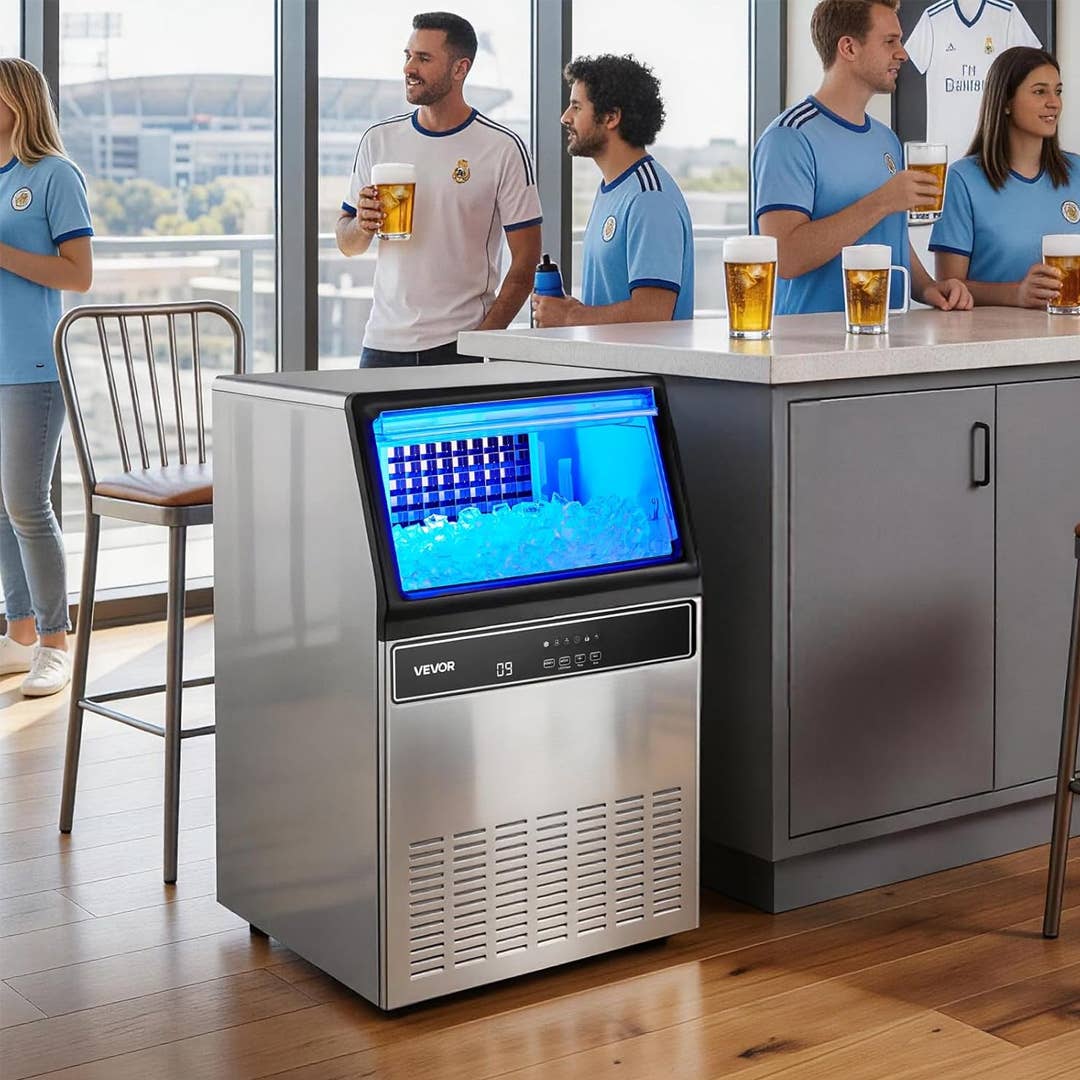
Vevor Commercial Ice Maker
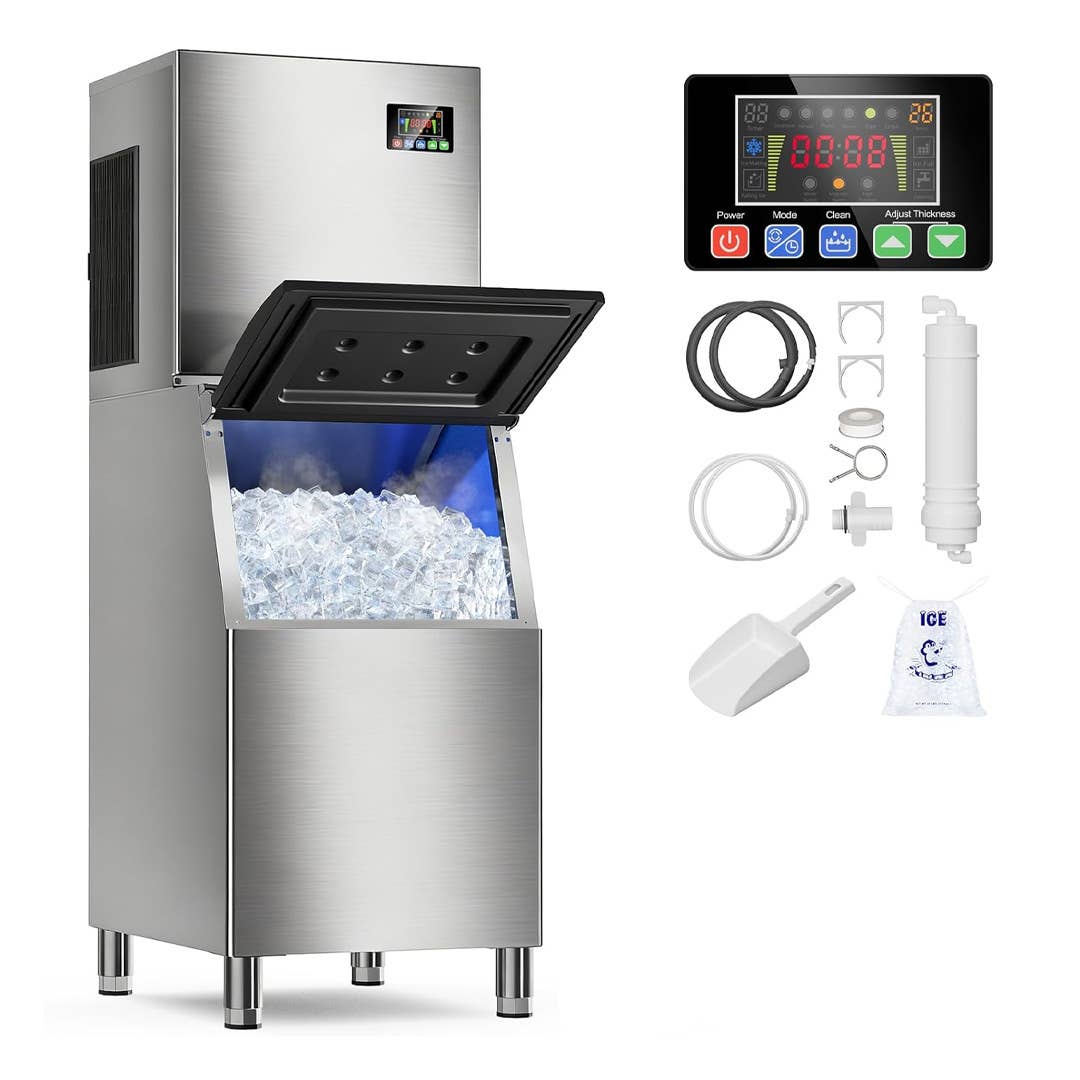
Mojgar Commercial Ice Maker Machine
Under-counter ice makers
This specific model is designed to sit beneath your kitchen or bar counters. They are standalone units that, when installed, become a built-in fixture that seems like a natural part of your decor or setup. Smaller than the modular models but larger than countertop ice makers, under-counter makers can produce anywhere between 50 to 150 pounds of ice per day, with large storage capacities to hold between 25 to 50 pounds at once. Storage bins are insulated so no matter how long the ice sits there, it stays cold and fresh, no melting or deterioration to worry about.
Like modular models, under-counter ice makers require a continuous water line connection. They do not have a manual water reservoir to pull from because of how much ice they make, so they need to be connected to your plumbing to pull fresh water. Under-counter options are great because they fit so seamlessly into your home. There’s no clunky machine or contraption taking up space. If anything, when properly installed, you practically forget they are there.
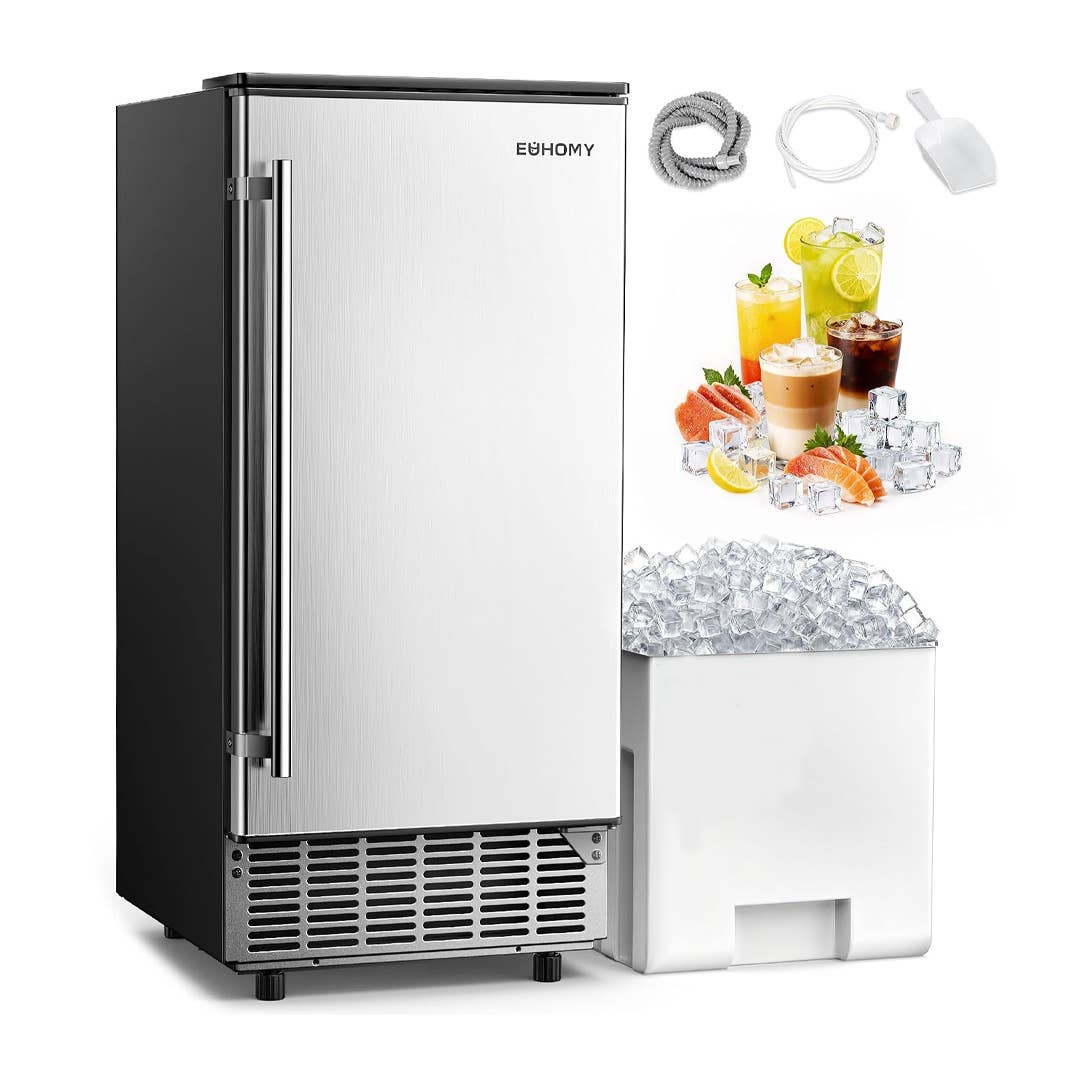
Euhomy Under Counter Ice Maker Machine
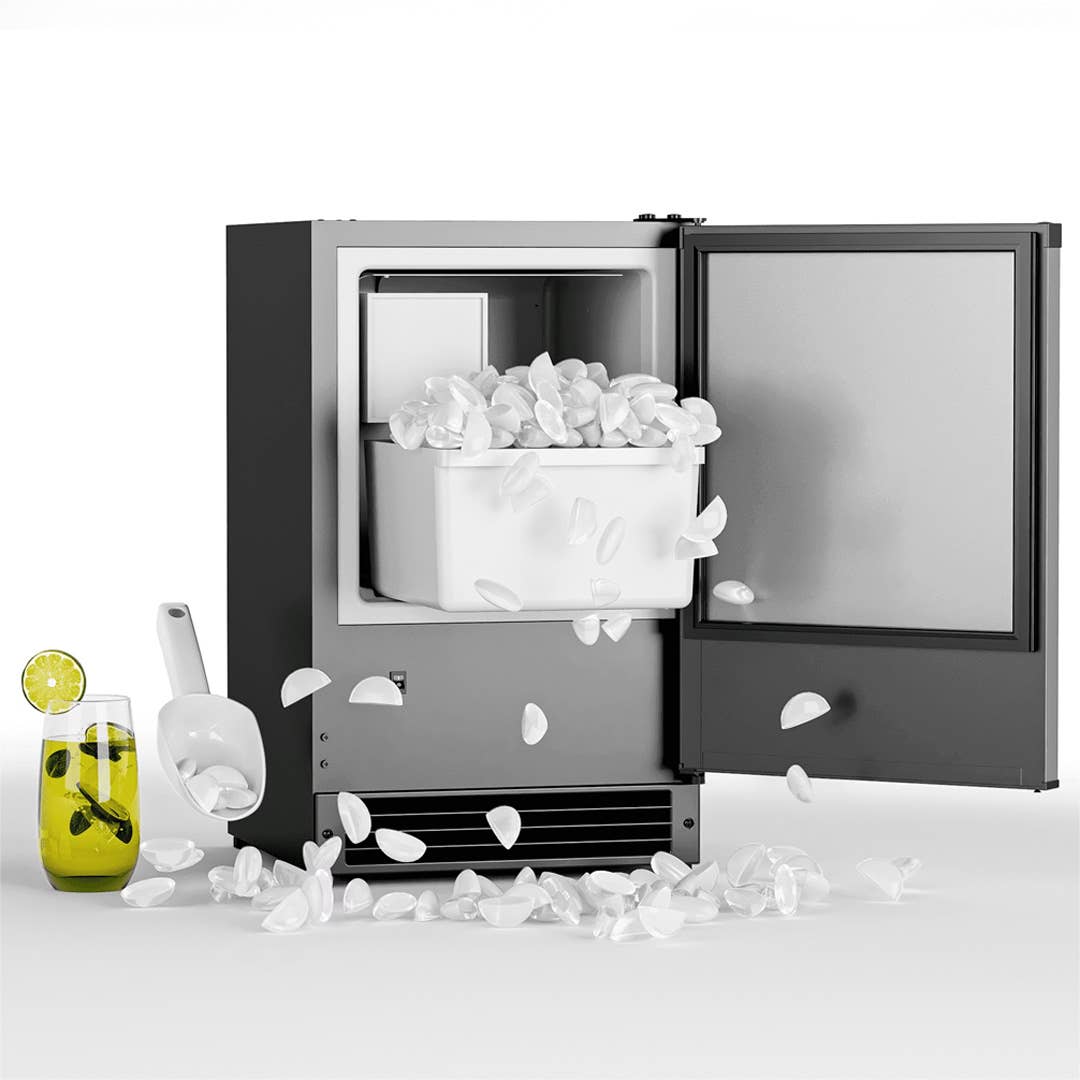
RIOCX Under Counter Ice Maker
Countertop ice makers
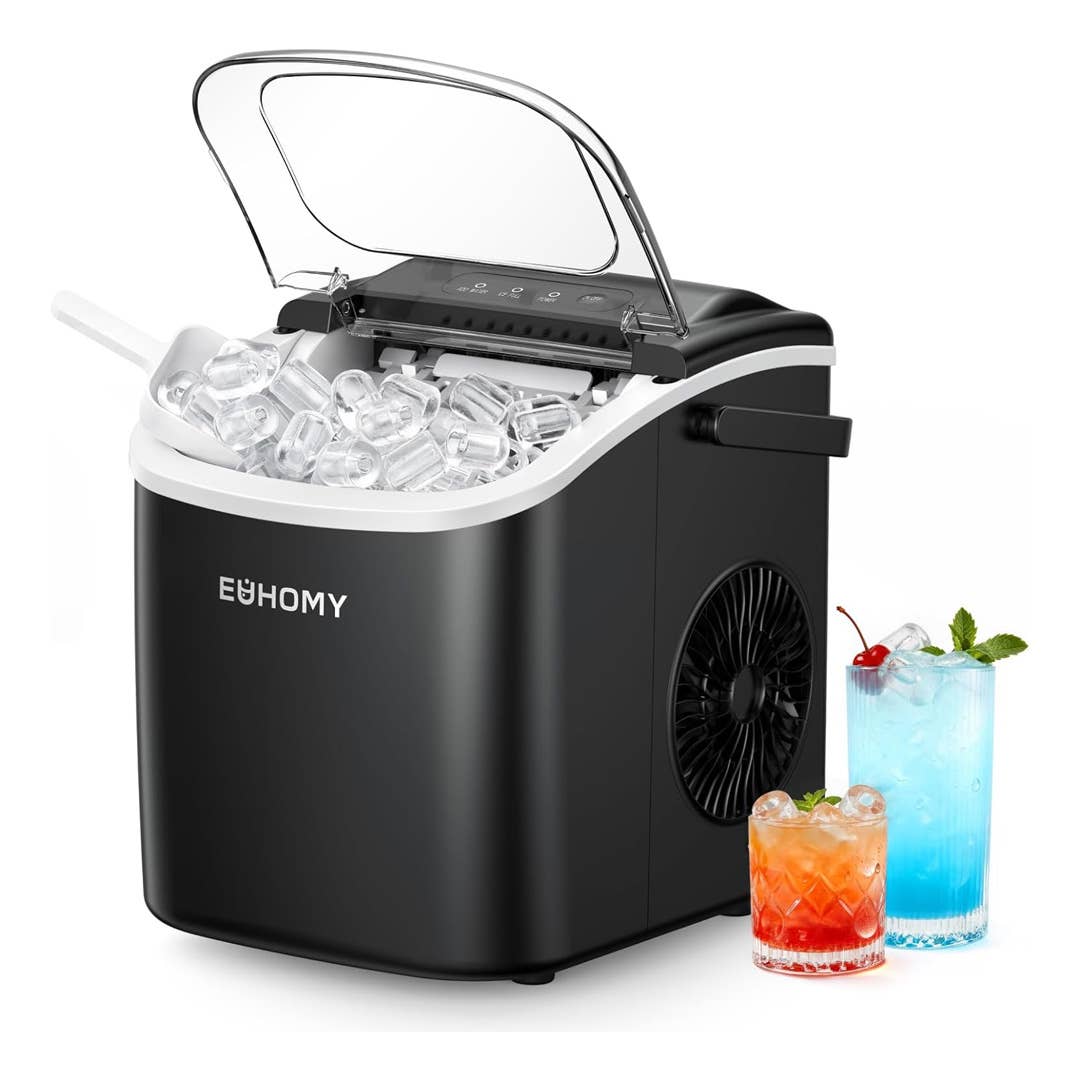
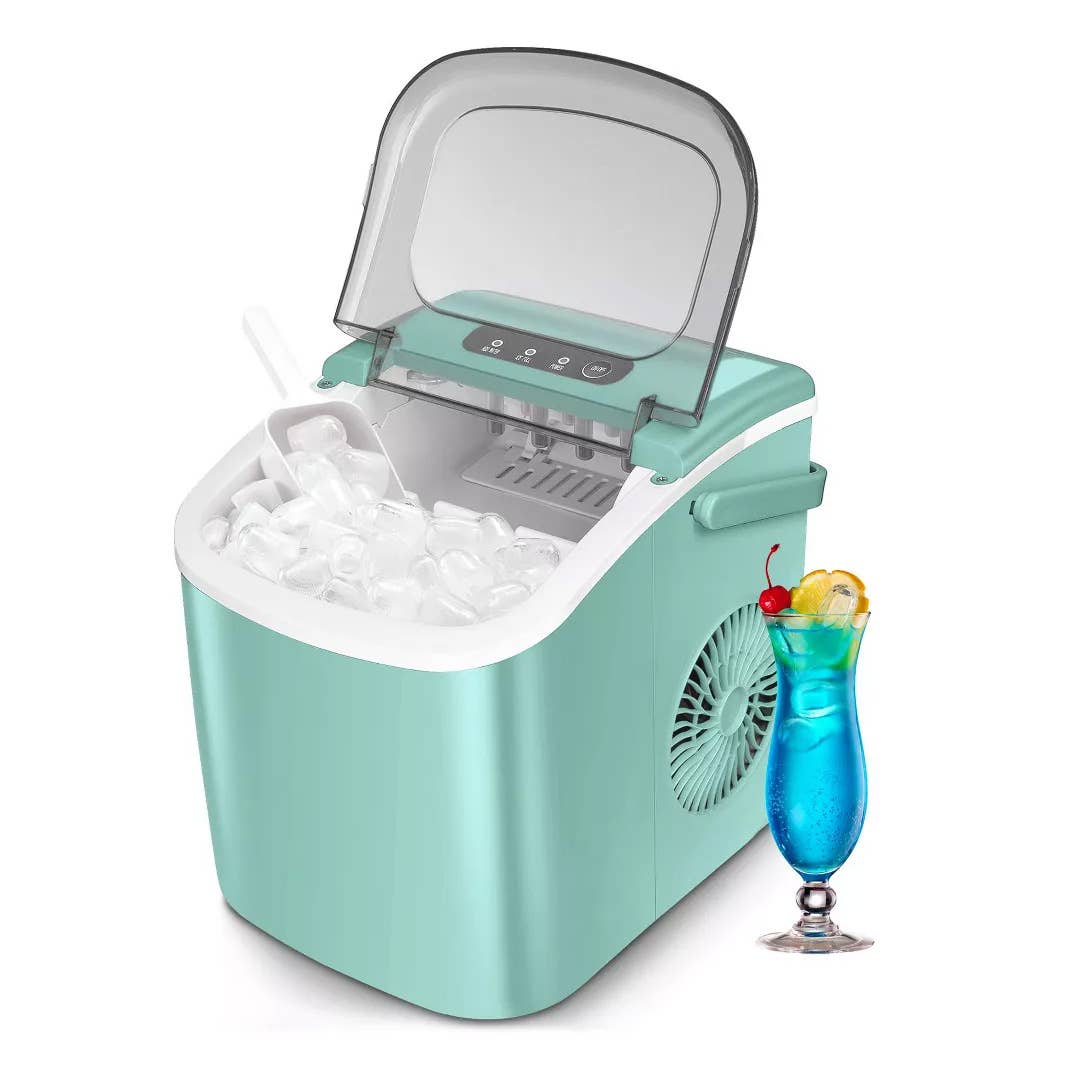
Compact and portable — the two words to best describe countertop ice makers. Designed to sit out in an easy to access area like your kitchen countertops or wet bar, countertop ice makers make ice but don’t have the space to store it until use, meaning when ice is made, you need to scoop it and store it in your actual freezer. Because these machines won’t keep ice cold, it’s important you keep an eye on the machine so that you can move it quickly before it melts.
These portable units can make between 26 to 35 pounds of ice per day, with some batches being made in as little as 15 minutes. They don’t require plumbing, instead pulling water from the water reservoir that requires manually filling, and when ice does melt that water recycles back into the reservoir to get frozen again. Because these models use a cooling and heating process to freeze then release the ice from the molds, proper airflow and ventilation is key. Never store these units up against a wall or in a confined area.
Euhomy Countertop Ice Maker Machine With Handle
R.W. Flame Portable Countertop Ice Maker
What do I need to keep in mind?
Something that might help you figure out which is best for you is taking into account installation and requirements needed for proper set up. Not only do both modular makers and under-counter makers need a continuous water flow but they also need a drain. Whereas when ice melts and you need to drain a countertop model, you can simply pour out excess water yourself, the other two models need drains to safely remove excess water and prevent overflow and equipment damage. There are two ways to do this: gravity drain systems or drain pump systems.
Gravity drain systems use a downward slope for water to drive that excess flow into a floor drain or nearby sink. In those cases, the drain has to be physically lower than the ice machine. With drain pump systems, you use an internal electric pump to push water upward and force it into an existing sink pipe, overhead line, or distant drain. The latter is recommended for machines that aren’t located close to a drain or for ones where a floor drain is not feasible directly below the unit.
Other things to consider is size — the modular units are much larger and require a hefty amount of space for storage, whereas you have more flexibility with an under-counter or portable unit. Folks who don’t use ice a lot or live in a household with only one or two people can find use with a portable countertop unit, whereas larger households might prefer an under-counter unit or modular unit because they produce more ice.
TheStreet Shopping is your guide for shopping insights and advice. We look beyond the price tag to find the best value in home, tech, and wellness gear based on product features and real-world use. Read more about our Editorial Standards and How We Choose Our Shopping Deals.