M&M’s are one of those candies shoppers can recognize without reading the bag.
The glossy candy shell, the small white “m,” and the familiar mix of bright colors have made the chocolate pieces a staple of lunch boxes, office candy bowls, movie nights, road trips, and Halloween buckets for decades.
That kind of brand recognition is hard to build.
It also makes any change risky.
For a candy like M&M’s, color is not just decoration. It is part of the product. Shoppers know what the candy is supposed to look like before they even taste it, and even a small change can stand out quickly.
Now Mars, the maker of the iconic M&M’s, is preparing to make one of the biggest updates to M&M’s in years as food companies face growing pressure to rethink artificial colors in popular snacks and sweets.
But the change is not as simple as swapping one ingredient for another.
Mars is preparing to roll out a new version of M&M’s made without artificial dyes, according to the Wall Street Journal.
The new option, expected to arrive in August, will be sold only on Amazon. And shoppers who buy the new bags may notice something missing.
M&M’s without dyes leave out two familiar colors
Mars has been working to create M&M’s without artificial dyes as part of a broader push to give consumers more choices across its biggest candy and gum brands.
The company said last year that it planned to introduce U.S. products made without FD&C colors across M&M’s Chocolate, Skittles Original, Extra Gum Spearmint, and Starburst Original fruit chews.
More Retail:
- Struggling women’s clothing retailer shutters 171 stores
- Retail giant launches first new home brand in 5 years
- Discount retail giant wins as shoppers change how they spend
Those products are expected to be sold nationwide online, with Amazon as the key retail channel.
For M&M’s, however, the reformulation has created a major challenge.
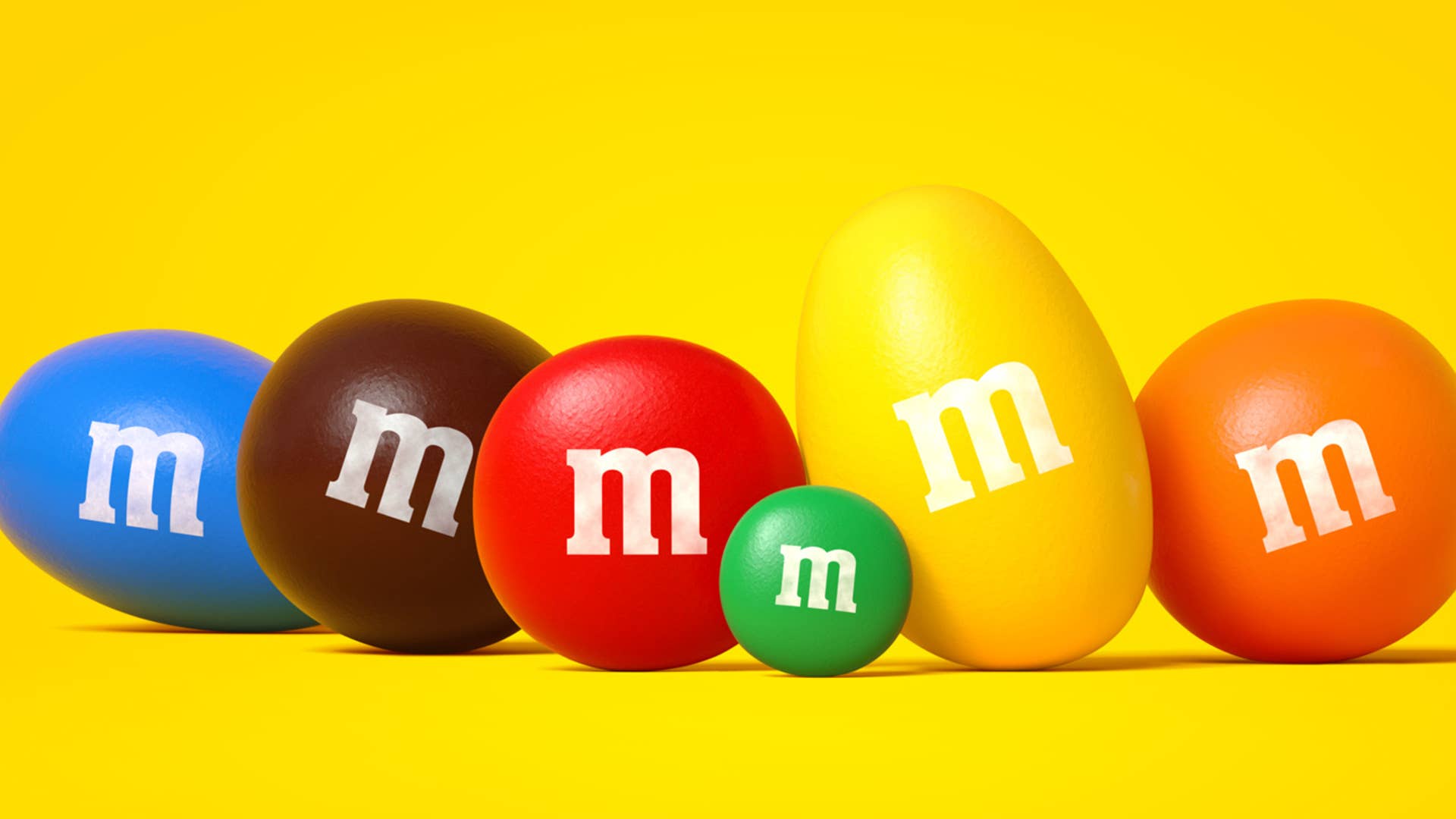
The new, naturally colored version will not include two classic M&M’s colors at launch: blue and brown.
Mars has recreated red, orange, yellow, and green M&M’s using colors derived from natural sources. But blue has been much harder to produce at scale, according to WSJ.
That matters because blue is one of the most recognizable colors in the standard M&M’s mix.
Brown is also affected because it relies partly on blue. As a result, the first launch of naturally colored M&M’s will proceed without either blue or brown.
Meanwhile, traditional M&M’s are not going away for now. Mars has said existing products with the original color blends will continue to be sold in stores and online, meaning shoppers who want the familiar mix will still be able to buy it.
The new version is being introduced as an added choice, not an immediate replacement.
M&M’s
Why blue M&M candy became a big problem
The problem is not taste. Mars told WSJ that consumers in tests did not notice a difference in taste between naturally colored and artificially colored M&M’s.
The problem is color and manufacturing.
Blue has long been one of the hardest colors for food companies to reproduce using natural sources.
Mars has been working with spirulina, an algae-based ingredient often used as a natural source of blue color.
But spirulina does not behave like a standard artificial dye inside candy factories. According to the report, the ingredient can create a thicker mixture, clog spray nozzles, and leave residue inside equipment.
That has forced Mars to make expensive changes to its production system as it tries to produce naturally colored M&M’s at the scale required for a national candy brand.
The stakes are especially high because M&M’s is not a small test product.
Mars produces hundreds of millions of M&M’s each day. A color change that works in a lab still has to work inside large factories that produce the candy consistently, quickly, and safely.
Blue also carries an unusual brand history. Mars added the blue M&M in 1995 after millions of consumers voted to replace the tan one. The color became part of the brand’s identity, which makes leaving it out of a new launch more noticeable.
Mars is aiming to eventually offer naturally colored M&M’s in all six classic colors by 2028.
Food companies face growing pressure to drop artificial dyes
The M&M’s change comes as artificial food dyes face more scrutiny from regulators, state lawmakers, health advocates, and consumers.
The U.S. Department of Health and Human Services and the Food and Drug Administration announced in 2025 that they were working with the food industry to phase out petroleum-based synthetic dyes from the nation’s food supply.
The FDA has also been tracking food companies’ pledges to remove petroleum-based food dyes.
Mars is one of the companies listed in the FDA tracker. The agency says Mars plans to offer product options without certified colors starting in 2026.
The company’s work on artificial colors dates back years, with 2016 marking its first statement of its intention to remove artificial colors from its human food portfolio globally.
The company later adjusted its approach as consumer preferences differed by product category and market.
The pressure is not limited to candy. Retailers are also starting to reshape grocery shelves around artificial colors.
Target confirmed earlier this year that by the end of May, all cereal sold in its stores and online would be made without certified synthetic colors.
That move raised the stakes for major cereal makers because some well-known breakfast brands still use artificial dyes.
WK Kellogg makes several cereals with artificial dyes, including Froot Loops, Apple Jacks, and Squishmallows, which are sold at Target.
WK Kellogg has said it plans to remove artificial dyes from its cereals by the end of 2027.
That makes Mars’s M&M’s rollout part of a larger shift across the packaged-food aisle.
Companies are not only responding to shoppers who want fewer artificial ingredients. They are also adjusting to retailers and regulators putting greater pressure on products that use synthetic colors.
Related: 32-year-old high-end restaurant chain closes all locations