Brent crude rose from $72 in late February to above $118 in March when the Strait of Hormuz effectively closed.
By late June, after a U.S.-Iran peace deal began reopening shipping lanes, it had fallen back below $80. Every major bank that published a price target this year has had to revise it, first up and now down.
JPMorgan published its latest revision on June 24. The numbers are lower, but the reasoning behind the cut tells a more complicated story than the headline figures suggest.
Why JPMorgan lowered its Brent forecast
JPMorgan cut its H2 2026 Brent outlook, Investing.com reported, citing two factors. OECD commercial inventory draws have come in below what the bank expected. Demand losses have run larger than the original forecast assumed.
The bank now projects Brent averaging $86 per barrel in Q3 and $80 in Q4, with prices exiting 2026 at $78. For 2027, JPMorgan estimates a $64-per-barrel average. That is a steep drop from the second-half 2026 range and signals how much the bank is weighing the risk of a structural surplus building into next year.
More Oil and Gas:
- Goldman Sachs quietly resets oil price forecast for 2027
- JPMorgan sends another message on strait of Hormuz, oil prices
- Exxon CEO delivers blunt message on oil prices and the economy
JPMorgan also warned that the oversupply expected in Q4 2026 and early 2027 will likely require production curtailments.
The bank expects a period of maximized output in late 2026, followed by OPEC+ having to cut in early 2027 to prevent inventories from building too sharply.
Seven countries are all projected to grow supply simultaneously in 2027: Venezuela, Iran, Brazil, Guyana, Argentina, Canada, and the United States.
Why oil demand is doing more of the work than inventory drawdowns
JPMorgan said the oil market worked through the Hormuz supply shock through a different mix of demand losses and inventory withdrawals than the bank originally assumed. Demand weakness absorbed more of the disruption than stockpile declines did.
One specific detail stands out. Private operators largely refused to draw down their own commercial oil stocks during the crisis. They relied almost entirely on government Strategic Petroleum Reserve releases to keep refinery supply flowing.
Commercial inventories are therefore not as depleted as they would be after a supply shock of this scale. Post-shock price support typically comes partly from the need to rebuild those stocks. If commercial inventories were never drawn down, that rebuilding demand is not coming.
Oil flows through the Strait of Hormuz are running at approximately 8.6 million barrels per day, averaging 6.3 million barrels per day in June, above April and May levels. Supply is recovering. JPMorgan’s revised numbers say demand is not keeping pace with it.
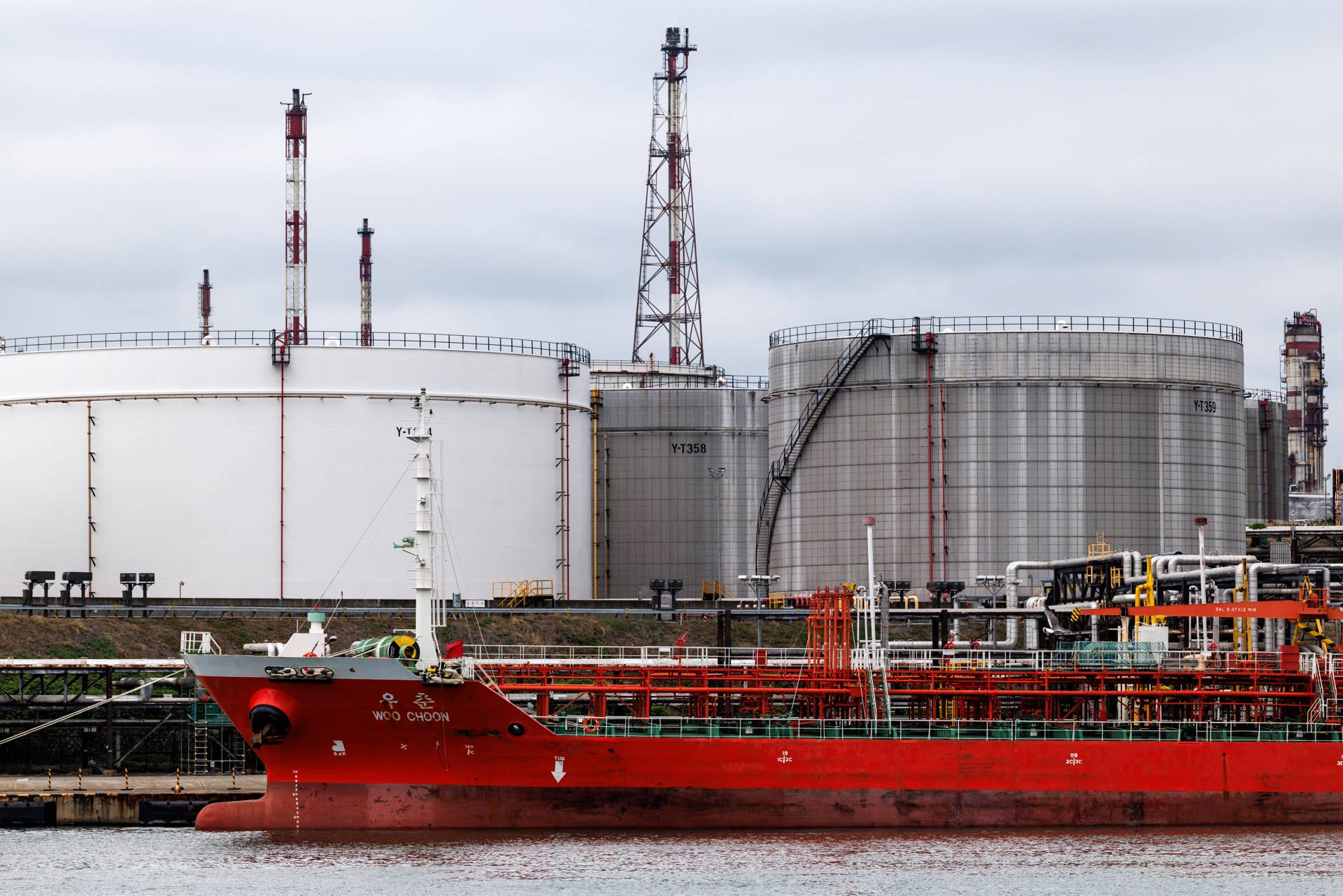
Cho/Getty Images
How JPMorgan’s oil call compares to other bank forecasts
JPMorgan is not the most bearish bank in the room. Goldman Sachs cut its Q4 2026 Brent forecast to $80 and its 2027 average to $75 on June 16. Last week, Morgan Stanley revised Q3 to $90 from $100 and Q4 to $80 from $95. UBS cut its Q3 supply-loss estimate on June 23.
JPMorgan’s Q3 target at $86 is more optimistic than Goldman for the near term. The Q4 target at $80 aligns with Goldman. On 2027, JPMorgan at $64 is significantly below Goldman’s $75, reflecting a more skeptical view of OPEC+ cohesion heading into a year when multiple large producers are adding supply.
JPMorgan’s own strategist was among the earliest to call for oil falling sharply, telling investors on June 15 that a peace deal could send Brent toward $70. The sell-off since then has moved broadly in that direction.
What the revised outlook means for oil producers and energy investors
Energy producers set their 2026 capital plans when oil was trading at $100 or higher. JPMorgan is now projecting $78 at year-end and $64 through 2027. Those are different numbers than the ones those plans were built around.
The 2027 production cut warning adds another layer. If OPEC+ has to curtail output in early 2027, producers planning to maximize volume through late 2026 will be selling into a weakening market. The ceiling on prices comes earlier than many expected.
Broader economic conditions are also shifting. The U.S. Energy Information Administration cut its 2026 global oil demand forecast by 1.1 million barrels per day in June, driven by demand destruction that accumulated when prices were at their peak.
Lower crude eases some of the pressure on inflation and gives central banks more room to move on rates, though no major policy shift happens automatically from an oil price move alone.
JPMorgan’s June 24 note reflects a market that has moved out of the supply-shock phase and into a softer demand environment. Banks that were writing about $150 Brent scenarios in April are now writing about production cuts and surplus inventory in 2027.
The story in oil has changed quickly, and the revised forecasts say it is not done changing yet.