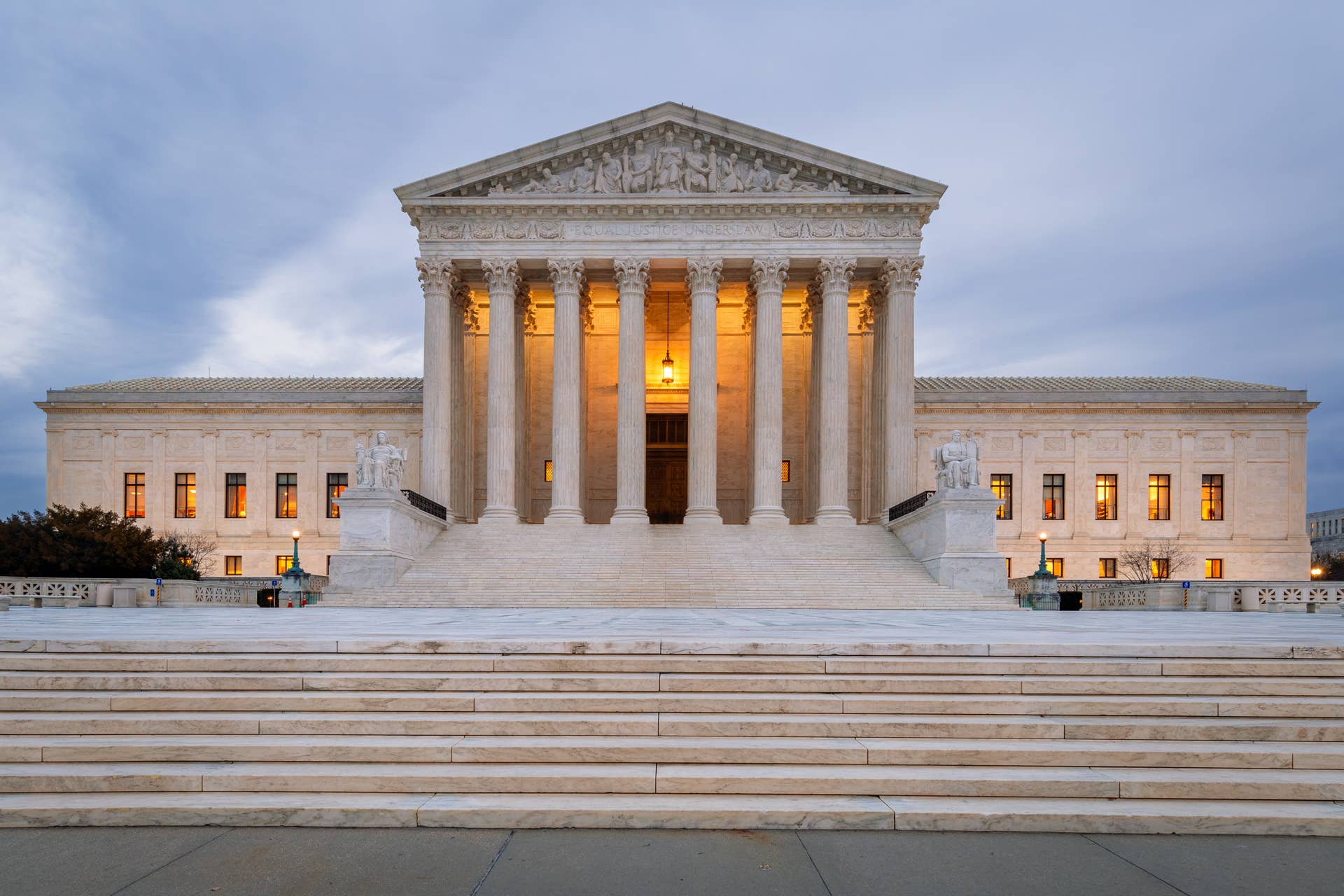
The Supreme Court reinforced the Federal Reserve’s independence from interference from the White House in a historic 5-4 ruling that protects Fed governors from being fired by the president “for cause” without proof of wrongdoing.
Ironically, the Fed protection came the same day as the high court in a separate ruling expanded President Donald Trump’s power to fire top government officials at regulatory agencies like the Securities and Exchange Commission in a blockbuster ruling that overturns a 91-year-old precedent.
The high court said June 29 that Fed Governor Lisa Cook can stay in her job for now while she fights Trump’s bid to oust her over unproven mortgage fraud allegations.
The majority of justices faulted Trump for not giving Cook notice and a chance to be heard before trying to remove her from her position.
Trump attempted to fire Cook last year, citing unproven allegations of mortgage fraud that occurred before her appointment to the central bank in May 2022.
Those allegations were brought by Trump loyalist William Pulte, the head of the federal housing agencies now also serving as Acting Director of National Intelligence.
Cook said in a statement June 29 that the court case was never about mortgage documents that she signed years before joining the Fed Board of Governors.
“It was an attempt to remove me on a manufactured pretext because I refused to bow to political pressure and continued to set interest rates based only on what would best serve the American people.’’ Cook said.
Trump cited firing Cook ‘for cause.’ The court disagreed.
Two lower federal courts blocked her removal, finding she made a strong showing that the Federal Reserve Act allows removal only “for cause” tied to misconduct while in office.
The Trump administration filed an emergency application with the Supreme Court asking it to allow the removal immediately so that Cook would no longer remain a governor.
The Fed majority opinion, written by Chief Justice John Roberts, found the president does not have the power to remove a Fed governor under the “for cause” standard in this scenario.
Related: Supreme Court signals Fed independence in Cook firing lawsuit
The high court had temporarily allowed Cook to remain in her Fed role while the litigation continued, a case that Wall Street watched very closely.
The Federal Reserve, in a statement last year, said it would abide by legal rulings. It declined to comment June 29.
The ruling moves the Cook case back to the lower courts, which means the drama could continue for years. It also means the case could return to the Supreme Court at a later point, with Roberts leaving open the possibility of Trump “trying again” to fire Cook.
Cook case mirrors Trump’s efforts to pressure Powell to cut interest rates
Trump’s efforts to fire Cook echoes his persistent past pressure on former Fed Chair Jerome Powell and challenges the political independence of the world’s largest central bank.
Trump publicly berated Powell to cut interest rates drastically to influence monetary policy.
Then, as I reported, after a two-hour emergency hearing on Jan. 21, the high court appeared likely to allow Cook to remain on the Fed board in a move that would restrict Trump’s power over the central bank.
Both liberal and conservative justices seemed skeptical about the president’s bid to fire Cook for cause over allegations that she lied about her primary residence on mortgage paperwork.
Cook denies unproven mortgage-fraud allegations
Cook denies the mortgage-fraud allegations, and she has never been charged or convicted.
She said Trump’s aim is to exert more control over monetary policy and lower interest rates.
Cook said the high court’s ruling affirms the principle “that the Federal Reserve must make all its policy decisions guided by evidence and independent judgment, free from political interference.”
More Federal Reserve:
- Inflation flips Wall Street’s Fed interest-rate bets
- Warsh’s AI task force could reshape Fed economic models
- Fed Warsh era kicks off with big surprise no one saw coming
Cook’s attorneys Abbe D. Lowell and Norm Eisen said in a statement that the decision was a “victory for the rule of law and for every American who depends on a stable economy.”
Her legal team described the mortgage discrepancies as clerical errors.
“President Trump tried to remove Governor Cook to pressure the Federal Reserve into bending its monetary policy decisions to his political will,’’ the attorneys said.
Trump ally Pulte dropped bombshell mortgage fraud allegations
Cook, one of the seven members of the Fed Board of Governors, is the first black woman to serve as a Federal Reserve governor. A Biden appointee, her term runs to 2038.
Pulte released bombshell allegations against Cook in August 2025, alleging she falsified records to get more favorable mortgage rates on properties in Michigan, Georgia and Massachusetts before she was appointed to the Fed by President Joseph Biden.
Trump responded by firing Cook “for cause,” the only way a sitting Fed governor may be removed.
Trump, in a TruthSocial post, described the Supreme Court ruling as a “strictly procedural basis,’’ adding “we will take appropriate action immediately to make sure that someone who has committed wrongdoing will not be making vital decisions concerning the Welfare of the United States of America!”
Pulte, meanwhile, doubled down on his allegations against Cook in a one-sentence social media post: “As I have repeatedly said, I believe Lisa Cook will be indicted for mortgage fraud.”
Supreme Court decision ruled Cook denied ability to respond to charges
The court’s majority ruling said Trump failed to give Cook ample opportunity to respond to the charges against her before he tried to fire her.
“The Court decides this application on the narrow ground that the president failed to afford Cook the procedural protections to which she was entitled by statute. Without such protections, she could not properly dispute the charges the president laid against her,” the majority justices said.
Justice Brett M. Kavanaugh wrote in a concurring opinion that “today’s interim ruling does not decide whether the president may lawfully remove Governor Cook for cause.”
The four dissenting high court’s conservative justices criticized their colleagues’ decision, cautioning that the majority had decided the case prematurely rather than allowing it to play out in the lower courts.
Lev Menand, a Columbia University law professor who studies the Fed and filed a brief opposing the firing, told Bloomberg that the ruling “is about the best outcome that the Federal Reserve and Lisa Cook could have hoped for at this stage of the litigation.’’
“But it is not likely to put an end to the president’s efforts to remove Lisa Cook,’’ he said.
Why the Supreme Court ruling strengthens Kevin Warsh’s Fed
The Wall Street Journal reported that the June 29 decision gives new Fed Chair Kevin Warsh more room to operate independently of Trump who viciously attacked Powell personally and professionally to lower the benchmark Federal Funds Rate.
“The more political support the institution, and therefore Warsh, enjoys outside the Oval Office, the better,” said Mark Spindel, an investment manager and co-author of a history of the Fed’s relationship with Congress and the White House.
“Enabling the president to repopulate the board with loyalists opens up all sorts of cans of worms. It would upend Warsh’s ability to focus on the mandate, the committee and his legacy,’’ Spindel told the Journal.
“The idea that a president can trump up charges and fire governors on ticky-tack grounds, and then put a bunch of real sock puppets around Warsh—how does Warsh manage the institution then?” Spindel said.
Related: Jerome Powell breaks his silence with a warning on the Fed