Think about the one account you would never gamble with. Not your checking balance, but the money that, if it vanished, would ruin you. You keep it somewhere boring and safe, somewhere it can’t be quietly drained while you sleep.
Countries run on the same instinct, except their safes hold trillions. For roughly 80 years, the answer to where the world parks that money has been almost automatic. You buy U.S. dollars. You buy U.S. government debt. You trust that the largest economy on earth will always be good for it.
That trust is why Washington can borrow enormous sums cheaply, and why the dollar in your wallet still carries weight in nearly every airport on the planet. The arrangement has survived wars, recessions, and three generations of doubters who kept predicting its end.
This week the people who actually manage those reserves said something they have never said before. For the first time, more of the world’s central banks plan to cut their dollar holdings over the next decade than add to them, an annual survey found, according to the Official Monetary and Financial Institutions Forum (OMFIF).
What the central bank survey actually found
The survey covered 90 central banks, sovereign wealth funds, and public pension funds that together manage about $10 trillion, the report found, according to OMFIF. Across 12 earlier editions, the dollar had always come out on top. More managers wanted to add it than drop it. This year that balance flipped.
The reason they gave was not a stronger rival currency. It was risk. Respondents pointed to political uncertainty in the United States and rising geopolitical tension as reasons to spread their bets, the survey found. Nearly four in five expect the global financial system to keep splintering into a more multipolar shape, with no single currency calling every shot.
More Economic Analysis:
- JPMorgan doubles down on economy, inflation outlook
- Bessent drops a bombshell on Iran oil, dollar
- Analysts warn Hormuz relief falls short of what economy needs
When I lined the OMFIF results up against the latest reserve data, the shift looked less like a stampede and more like a slow, deliberate turn. The dollar still makes up 56.77% of the world’s allocated reserves, down from a peak above 70% in the late 1990s, according to the International Monetary Fund (IMF). Nobody is running for the exits. They are quietly trimming.
The trim is broad, too, not the work of one or two rebels. The same survey found central banks racing to adopt artificial intelligence (AI), with more than two-thirds planning to expand its use and not a single advanced-economy central bank satisfied with what it has now. The dollar question is the headline, but the mood beneath it is a whole profession bracing for a different world.
The oddest part is that the dollar is not even weak right now. It has gained roughly 3% in 2026 even as managers map out their exit, the survey found. This is not a market reacting to a crash. It is a plan being written for the next 10 years.
Related: Kiyosaki escalates urgent warning about value of dollar
Why central banks are walking away from the dollar
The motive traces back to a single decision. After Russia invaded Ukraine in 2022, Western governments froze roughly $300 billion of Russian reserves held abroad. Every other central bank absorbed the same lesson at the same moment. Money held in dollars can be switched off by the country that prints it.
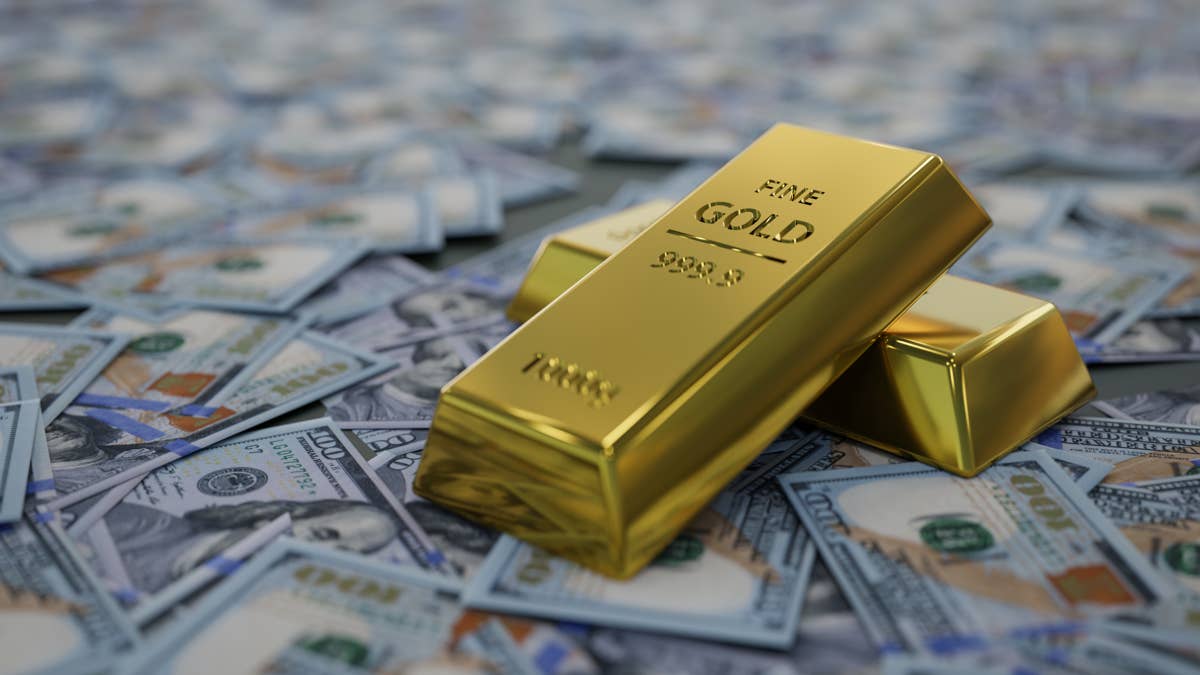
Gold cannot be switched off, which is why it has become the off-ramp of choice. The metal now makes up 27% of official reserves against 22% for U.S. Treasuries, the first time gold has held the larger share since 1996, the European Central Bank found.
The numbers behind the turn are worth seeing in one place.
- The dollar held 56.77% of allocated reserves at the end of 2025, down from above 70% in the late 1990s, according to the IMF.
- Gold reached 27% of official reserves versus 22% for U.S. Treasuries, its first lead since 1996, the European Central Bank reported.
- 74% of central banks expect the dollar’s reserve share to shrink within five years, the World Gold Council found.
- A net 30% of reserve managers plan to add gold over the next one to two years, according to OMFIF.
Where the money goes next is messier. Managers still want more euros and Chinese renminbi, but they flagged structural problems in both that keep either from replacing the dollar wholesale, the survey found. So the cash is scattering into smaller corners instead, with fresh interest in the British pound, the Norwegian krone, and the New Zealand dollar.
What a weaker dollar means for your money
Here is where a reserve manager’s spreadsheet reaches your kitchen table. Washington funds its deficits by selling Treasuries, and for decades foreign central banks were among the steadiest buyers in the room. When that appetite cools, the government has to win over other buyers, usually by paying higher interest.
Higher Treasury yields do not stay in Washington. Mortgage rates, auto loans, and credit card rates are all priced off government debt, so a world cooler on Treasuries can quietly lift the cost of your next loan. A softer dollar also buys fewer imported goods over time, which feeds the inflation that eats your raise before you feel it.
To see the scale, run the share against the pile. The world holds about $13.14 trillion in allocated reserves, and the dollar’s 56.77% slice works out to roughly $7.5 trillion sitting in greenbacks, by my math on the IMF’s figures. A shift of even a few percentage points moves hundreds of billions of dollars, and it moves them out of the assets that quietly fund your government.
In my analysis, the figure worth watching is not the dollar’s headline share but the direction the managers are pointing. They are not just buying gold abroad. A growing number are hauling the metal back inside their own borders, into vaults a foreign government cannot reach, betting on a future where trust is something you store at home.
Ordinary savers have followed them, crowding into funds like SPDR Gold Shares (GLD) to get exposure without storing bars in a closet. That is not a recommendation. Plenty of sharp investors think gold’s run is stretched, and a calmer world could cool it fast. The point is not to copy the central banks. It is to notice what they are doing with the money they cannot afford to lose.
Where the dollar goes from here
The dollar has not been dethroned, and the survey does not claim it has. Counting every dollar asset and not just Treasuries, the greenback still anchors about 42% of global reserves, the European Central Bank found, and it remains the world’s primary reserve currency with no rival close enough to take the crown.
But reserve managers move in years, not headlines, and they have stopped betting that the old normal is coming back. That wait-and-see posture, OMFIF senior economist Yara Aziz wrote in the report, “looks increasingly unrealistic.”
The institutions with the most reason to defend the dollar are the ones quietly buying the alternative and locking it where no one can freeze it. They have read the warning early. The only open question is whether the rest of us move our own money before the slow turn becomes a fast one.
Related: U.S. dollar gets surprising jolt from housing slump