Bank of America isn’t backing away from Amazon (AMZN) stock after Prime Day.
For the most part, investors went into the event looking for cracks. The concerns pertained to deal fatigue, softer shopping baskets, and an evolving sales calendar, making Amazon’s retail momentum look less clean heading into the next quarter.
Instead, BofA found plenty in the early readout to stay constructive.
Prime Day looked solid, even if the mix pointed to shoppers leaning more toward essentials than splashy discretionary buys.
Perhaps an even bigger twist was AWS moving on pricing, adding a cloud angle to what many investors had treated as a retail-only update.
Wall Street expected a messy consumer signal, but BofA saw a stronger Amazon setup forming underneath it.
What Bank of America saw after Prime Day
Bank of America analysts feel Amazon’s Prime Day readout was solid enough to support the broader bull case, even if the headline numbers were uninspiring.
The bank noted that Amazon did not issue its usual Prime Day press release, but third-party data still pointed to healthy online demand during the promotional window.
More AI:
- Goldman Sachs has blunt message for AI stock investors
- Microsoft CEO sends a blunt warning on AI and the tech ecosystem
- The next AI infrastructure race has nothing to do with chips
Shoppers appeared active, but the basket looked different. BofA flagged signs that consumers might have leaned more into everyday essentials and groceries, which could keep volume strong while making order values look softer.
BofA reiterated its buy rating on Amazon and kept its $310 price target, signaling that the Prime Day data did not hamper its view on the stock. The bank also said Amazon remains on track to slightly beat Street expectations for North America retail growth.
So even though Prime Day was not a blowout, it was strong enough to keep the Amazon retail story intact.
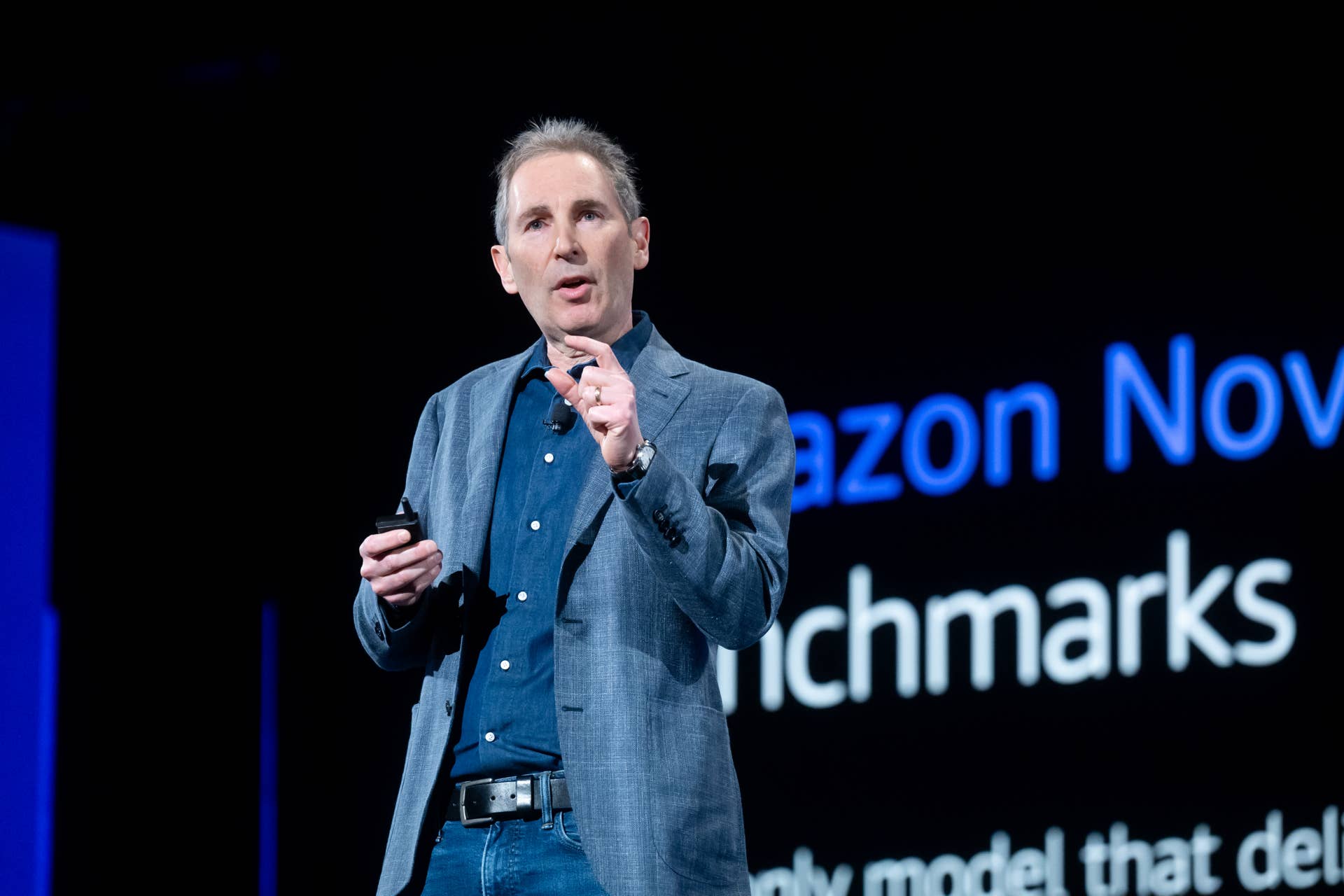
Noah Berger/Getty Images for Amazon Web Services
The key numbers behind BofA’s Amazon call
- Prime Day demand looked resilient, with Adobe showing U.S. online retail spend up 9% during the event window.
- Shopper behavior looked more mixed, as Numerator showed Amazon’s average order value down 11%, hinting at a shift toward essentials.
- BofA said Amazon appears on track to slightly beat Street expectations for 14% North America retail growth.
- Timing remains a risk, with BofA estimating $7 billion to $8 billion of sales may have shifted into Q2.
- AWS added a cloud catalyst after raising prices 20% on select EC2 workloads.
Source: Amazon BofA note shared with TheStreet
Why AWS pricing changes the Amazon debate
Another big reason for BofA’s bullishness was AWS, arguably a bigger catalyst.
According to BofA, Amazon confirmed a 20% price increase on EC2 Capacity Blocks for machine learning workloads, effective July 1. It’s imperative to note that GPU-linked cloud workloads remain in high demand, where capacity remains tight and AI demand still continues to build.
Moreover, the move follows a 15% price increase earlier in January, Business Insider reported, which suggests AWS has room to push pricing in select areas without breaking demand.
Additionally, BofA called the latest increase narrow, but still meaningful, estimating it could add 1 to 2 percentage points to second-half AWS growth.
BofA’s note underscores AWS’s tremendous strength and its ability to offset some of that investment burden through stronger pricing and stronger revenue growth.
The bank also flagged AI model availability, OpenAI-related demand, and Anthropic’s AWS ramp as potential growth drivers.
Amazon stock price targets lean on AWS and AI
- JPMorgan: $330. JPMorgan raised its Amazon target after Q1 2026, according to TheStreet, with AWS, retail strength, and earnings momentum supporting the bull case.
- Mizuho: $325. Mizuho lifted its Amazon target to $325 from $315, Yahoo Finance reported, citing AWS as a key AI infrastructure backbone.
- UBS: $304. UBS raised its target to $304 from $301, Investing.com confirmed, pointing to stronger AWS growth expectations and AI-driven infrastructure demand.
- Morgan Stanley: $300. Morgan Stanley reiterated Amazon as an overweight-rated top AI idea, according to Finviz, saying AWS and retail remain underappreciated GenAI winners.
Where BofA sees pressure on Amazon
BofA is bullish on Amazon, but the bank identified some clear downside risks.
The firm said its estimates and price targets could be up against major duress if we see it under pressure from rising competition, including offline and local retailers that continue to challenge Amazon’s retail share.
The note also pointed to cloud risk.
If Amazon loses market share to cloud rivals with stronger AI technology, AWS growth and investor confidence could come under pressure. Needless to say, AWS is critical to Amazon’s margin profile and long-term earnings story.
Moreover, BofA flagged elevated AWS requirements as a possible margin headwind. At the same time, macroeconomic pressure on consumer spending could hurt retail demand.
For some context, Amazon projected about $200 billion in 2026 capital spending, according to Reuters, up from roughly $131 billion in 2025, as it builds out AI infrastructure for AWS.
Amazon’s Q1 2026 report showed $44.2 billion in property and equipment purchases during the quarter, while trailing-12-month net purchases rose to $147.3 billion.
The firm added that Amazon stock has been highly volatile, and that volatility could increase if economic uncertainty worsens.
Related: Nvidia’s workplace culture sends Big Tech a warning