General Motors (GM) may have retained the top spot in U.S. auto sales for the second quarter, but it still saw a 4.2% year-over-year decline and an especially sharp drop in EV sales.
The automaker pointed to a shrinking EV market and economic uncertainty as key factors for the overall decline. At the same time, GM has failed to take advantage of a surge in U.S. hybrid sales this year, according to Autoblog. The automaker has no mainstream hybrids available in this market.
While GM remains the number-two EV brand in the U.S. following years of massive investment, the latest sales figures put renewed focus on the brand’s strategy, which may not be aligned with current market trends.
GM’s EV momentum dives
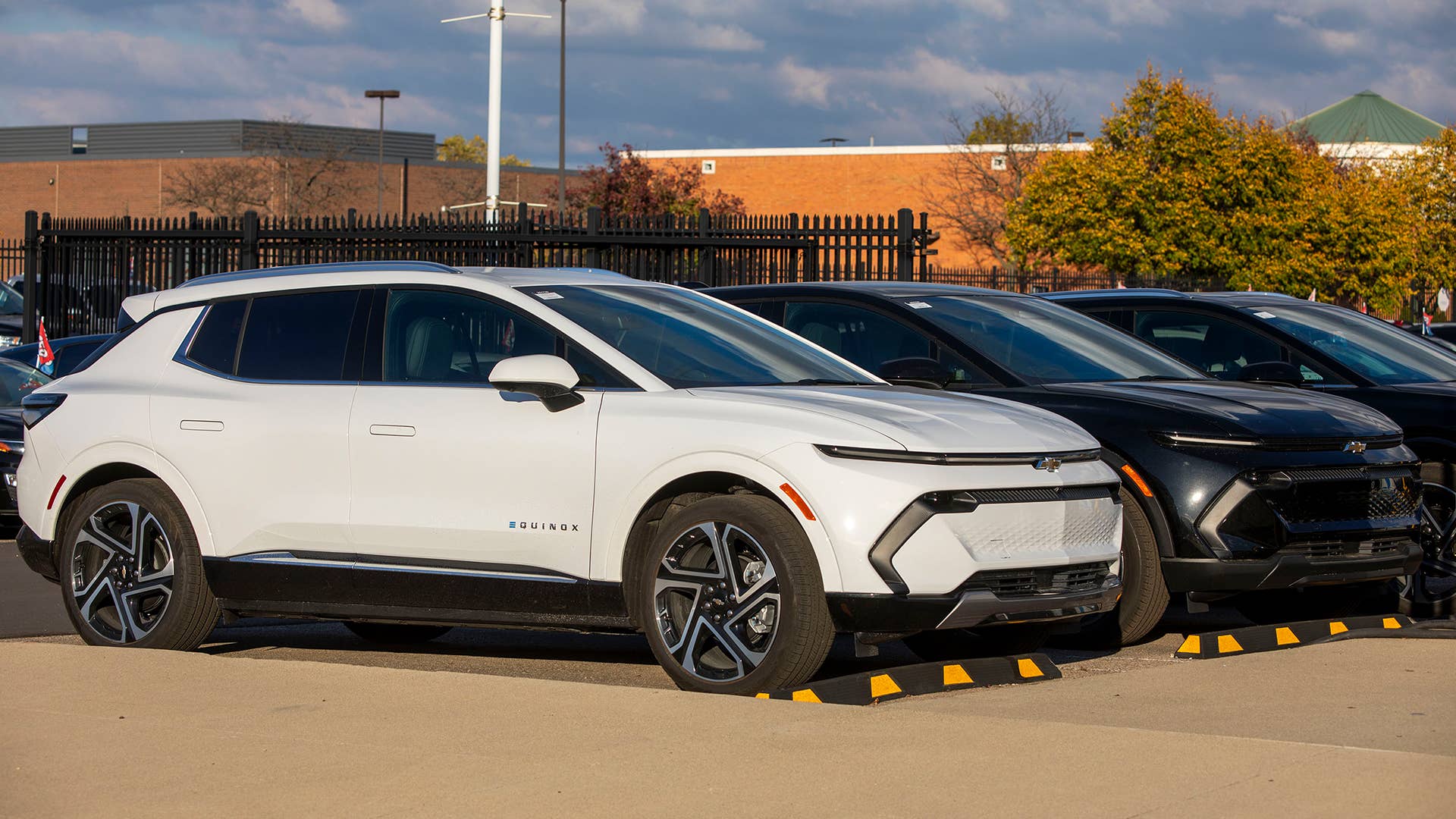
In the second quarter, GM sold only 27,395 EVs in the U.S., a year-over-year decline of 41%. Most GM EVs saw significant decreases, including the affordable Chevrolet Equinox EV, down by 62%.
EV demand faded for many major automakers, in part due to the loss of the federal tax credit, which was still in place a year ago.
Conversely, hybrid sales have improved significantly, especially as gas prices topped $4 per gallon, reports Automotive News. GM’s only hybrid is a low-volume performance model, that being a certain Corvette sports car, so it was unable to compete with Toyota and others in this space.
The lack of hybrids has effectively shut GM out of one of the market’s fastest-growing auto segments.
More Automotive:
- GM raises stakes in battle for America’s most profitable trucks
- U.S. car sales take unexpected turn in tumultuous first half
- The U.S. may never sell 17.6 million cars again
Demand for gas-powered GM trucks and SUVs remained strong, partially offsetting the EV decline.
“Our business is performing well, and customer demand is resilient, especially for our trucks and SUVs,” said GM President of North America Duncan Aldred.
“The depth, breadth and appeal of our vehicle portfolio allows us to lead the market in sales, while maintaining discipline on inventory, pricing and incentives to deliver strong margins.”
Despite many gas models performing well, the absence of competitive hybrids and the EV division’s decline brought down the automaker’s overall performance.
Why investors are paying attention
GM has invested billions into expanding its EV lineup. In June 2021, it promised to increase its EV and AV investments to $35 billion through 2025. But the tide has turned over the last year or so.
The federal tax credit that many consumers relied on fell away in 2025, immediately setting off reduced EV demand. In response, GM said in January 2026 it would take a $6 billion writedown linked to a reduction in EV investment, reports Reuters.
EV profitability relies on scaling successfully, but the numbers suggest GM’s EV business is failing to absorb those enormous investments.
Related: GM forced to make tough decisions as EV market collapses
As consumers increasingly gravitate toward affordable hybrid cars, GM’s product mix is no longer in alignment with brands like Toyota and Honda. Both Japanese automakers have doubled down on hybrids.
Fortunately, GM has a thriving pickup and SUV range across its Chevrolet and GMC brands. These larger gas-powered vehicles continue to return impressive sales and profits, but they’re under growing pressure to balance the automaker’s EV downturn and lack of hybrids.
The auto industry is changing
GM finds itself in the midst of a rapidly evolving global auto industry where committing to just one or two powertrain types may no longer be enough to maintain profitability.
Honda, for example, has pivoted away from an aggressive EV rollout after suffering its first annual loss in nearly 70 years. BMW is launching one of its most crucial SUVs with five powertrain options as demand shifts between gas, hybrid, and electric power.
In the key U.S. market particularly, it’s critical that GM invests in hybrid vehicles. It intends to do this, with Autoblog reporting on the manufacturer’s plans to launch new plug-in hybrid models by 2027.
However, plug-in hybrids are historically much pricier, which still leaves GM vulnerable in segments where cheaper, self-charging hybrids are thriving.
Investors will be keeping a close eye on GM to gauge whether expanding its hybrid lineup comes quickly enough to capitalize on a thriving segment or if the company relies too heavily on an EV segment that has slowed.