Building a nationwide wireless network takes billions of dollars and years of patient investment.
That reality has meant that the U.S. wireless market has been dominated by three players for more than a decade, no matter how many challengers have tried to break in.
Dish Network was the latest company to test that theory. Now its wireless ambitions are over, and T-Mobile is one of the companies best positioned to pick up the pieces.
Dish Wireless files for bankruptcy protection
Dish Wireless and its parent, Dish DBS, filed for Chapter 11 bankruptcy protection on June 30.
The filing came after the company faced $2 billion in senior secured notes that came due July 1, according to court filings on PacerMonitor.
The trigger was a delay in EchoStar’s $23 billion spectrum sale to AT&T, which covers Dish’s valuable 3.45 GHz and 600 MHz airwaves.
Without that cash, EchoStar could not meet its debt payments. The company had also agreed in September 2025 to sell separate spectrum to SpaceX for $17 billion.
EchoStar said the plan already has support from a large share of its creditors. In a statement, DISH stated:
“Holders of more than 88% of DISH DBS’s secured and unsecured notes, who also hold more than $8.8 billion of DISH Wireless debt, have signed the RSA and have agreed to support the Plan.”
Under the plan:
- Dish Wireless will wind down as a network operator.
- EchoStar says its Boost Mobile and Gen Mobile prepaid brands will continue to operate with no disruption for customers, and DISH TV and Sling TV are not part of the bankruptcy at all.
- One casualty of the filing is Project Genesis, the flat rate wireless plan Dish launched in 2022 to compete directly with T-Mobile, AT&T and Verizon.
- Customers were promised a $30-per-month unlimited phone plan and a $20-per-month hotspot plan for life.
- That lifetime turned out to belong to the company, not the customer. Service ends for good on Aug. 31, according to notices sent to subscribers.
Why this matters for T-Mobile
Dish never came close to matching T-Mobile (TMUS), AT&T or Verizon in size. Still, it was created for a reason.
Regulators pushed for a fourth wireless carrier as a condition of approving the T-Mobile and Sprint merger, hoping it would keep prices competitive.
Its exit removes that piece of the pricing puzzle, and analysts see room for wireless prices to steady across the industry as a result.
T-Mobile also picks up a smaller, more indirect benefit. Boost Mobile is shifting to a hybrid network model in which AT&T’s towers, not T-Mobile’s, provide its primary connectivity going forward.
More T-Mobile:
- T-Mobile warns customers that a key service will double in price
- T-Mobile adds new internet plan restriction customers will feel
- T-Mobile’s hiring efforts take an unexpected turn after layoffs
T-Mobile does retain a secondary roaming arrangement with Boost, a holdover from the original 2020 Sprint merger transition deal, so it likely keeps some wholesale revenue from those subscribers regardless of how Dish’s remaining spectrum is divided, though that role is smaller than it once was.
It is also worth noting that AT&T is lined up to buy Dish’s most valuable spectrum licenses, so the biggest spectrum windfall goes to a rival rather than T-Mobile.
Even so, T-Mobile has not slowed down. The company completed a $2 billion network buildout in Florida last year and has absorbed UScellular’s customers and spectrum, adding to its mid-band spectrum lead over both AT&T and Verizon.
T-Mobile executives point to demand from network seekers
T-Mobile leaders have spent recent months telling investors that growth is coming from customers who are actively choosing the company for its network, not just its price.
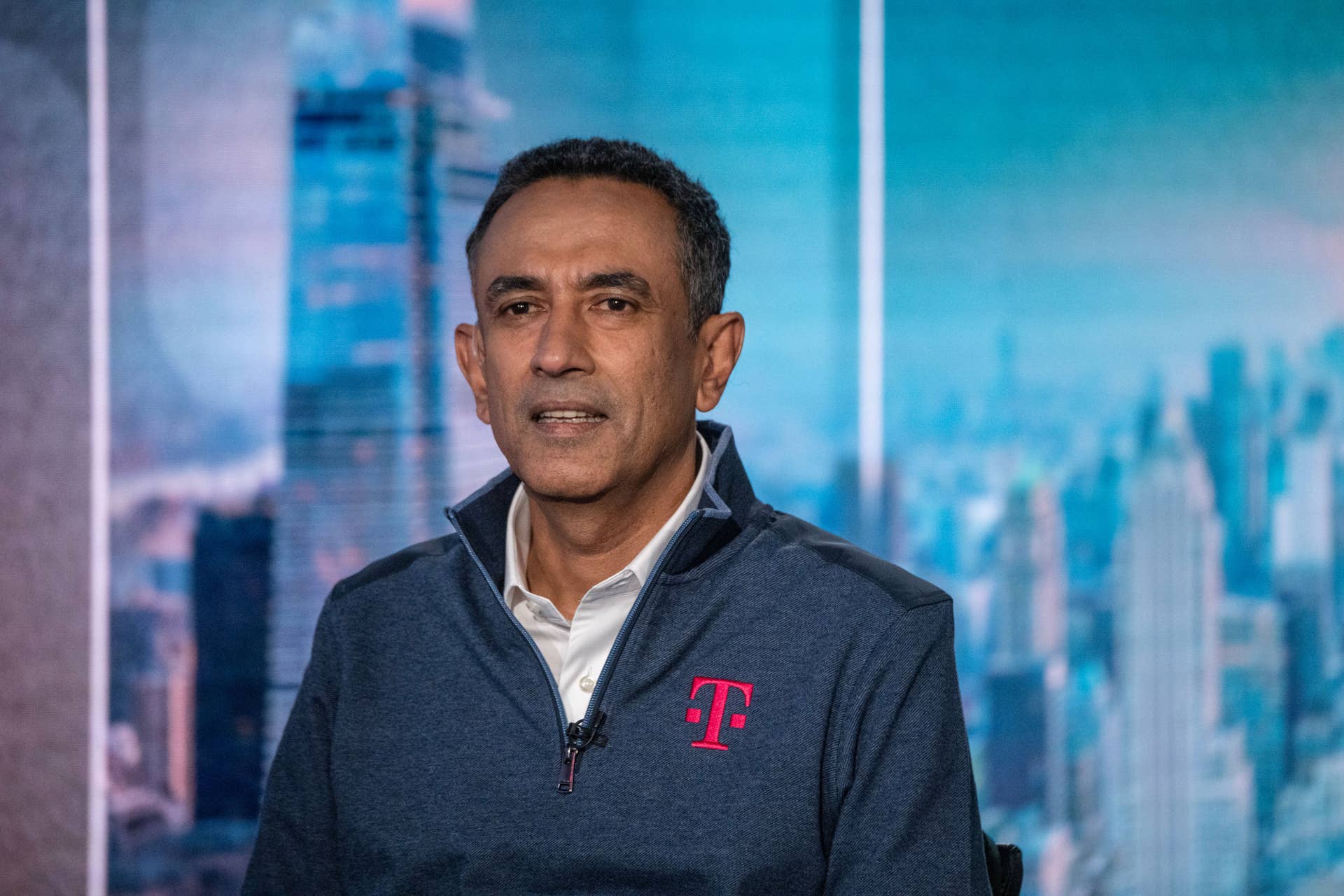
CEO Srinivasan Gopalan told attendees at the J.P. Morgan 54th Annual Global Technology, Media and Communications Conference in May that roughly 20 million families and businesses still use AT&T or Verizon simply because they believe those carriers have the better network.
Gopalan explained:
“Network differentiation happens when you experience it, when our network is demonstrably superior where you work, where you live and where you play.”
CFO Peter Osvaldik echoed that point at the 2026 Evercore Global TMT Conference in June, noting that customers switching to T-Mobile in the first quarter cited network quality more often than ever before.
Related: National wireless carrier shuts down after Chapter 11
He also pointed to porting data as proof that the company is winning higher-value customers, saying port-in customer bills were 20% higher than those of customers who left.
Fewer wireless rivals and a growing reputation for network quality put T-Mobile in a strong spot as competition thins out.
Dish’s bankruptcy will not hand T-Mobile a windfall of spectrum, but it does remove one more disruptive name from the field.
Combined with steady investment in its own network and continued gains among customers chasing better coverage, T-Mobile heads into the second half of 2026 with one less challenger standing in its way.
Related: T-Mobile retires several cheaper wireless plans for customers