TheStreet aims to feature only the best products and services. If you buy something via one of our links, we may earn a commission.
Summer fun is all about trying new things. For some people, that may mean trying a new wardrobe or skincare routine. Others, though, may take a more athletic approach to summertime experimentation. One of the most fun outlets for this task is shopping for a stand-up paddleboard. Paddleboarding has gained popularity very quickly over the past few years, and it’s a fun and easy way to get a workout and keep cool at the same time. Thankfully, retailers like Amazon, Walmart, and Target all sell paddleboards of different shapes and sizes, not to mention price points. If you want your summer to have plenty of waterborne fun, then a stand-up paddleboard should be in your future.
What is a stand-up paddleboard?
For those unaware of the craze, a stand-up paddleboard looks very similar to a standard longboard surfboard. However, while paddleboards share the same basic shape as a longboard, they’re quite a bit larger. Not only are most paddleboards longer than a standard surfboard, but they’re fairly thick as well. However, this increase in size isn’t just for aesthetic value. It has more to do with buoyancy and balance for the user. Stand-up paddleboards are a perfect way to get novices into the water with an activity that’s very easy to learn and to perfect.
The reason why stand-up paddleboards require superior buoyancy and balance is because the user is supposed to stand on top of it. Most paddleboards have a grippy top surface so that your feet don’t slide off unwillingly. Paddleboards often come with their own paddles included. The concept is for you to stand with your feet approximately shoulder-width apart as you paddle your way through the water. It’s a relaxing activity once you get the hang of it. Despite its easy nature, paddleboarding is also a great full-body workout, including the core, shoulders, and legs. It’s a great way to exercise in the summer while staying cool and seeing some cool views. Plus, you can take them practically anywhere, especially if you go for an inflatable model.
There are two primary types of paddleboards. These are inflatable boards and standard non-inflatable boards. Both have their advantages and disadvantages, but you can’t really go wrong choosing either. Deciding to take up stand-up paddleboarding as a hobby is a step in the right direction, no matter which one you buy.
Inflatable stand-up paddleboards
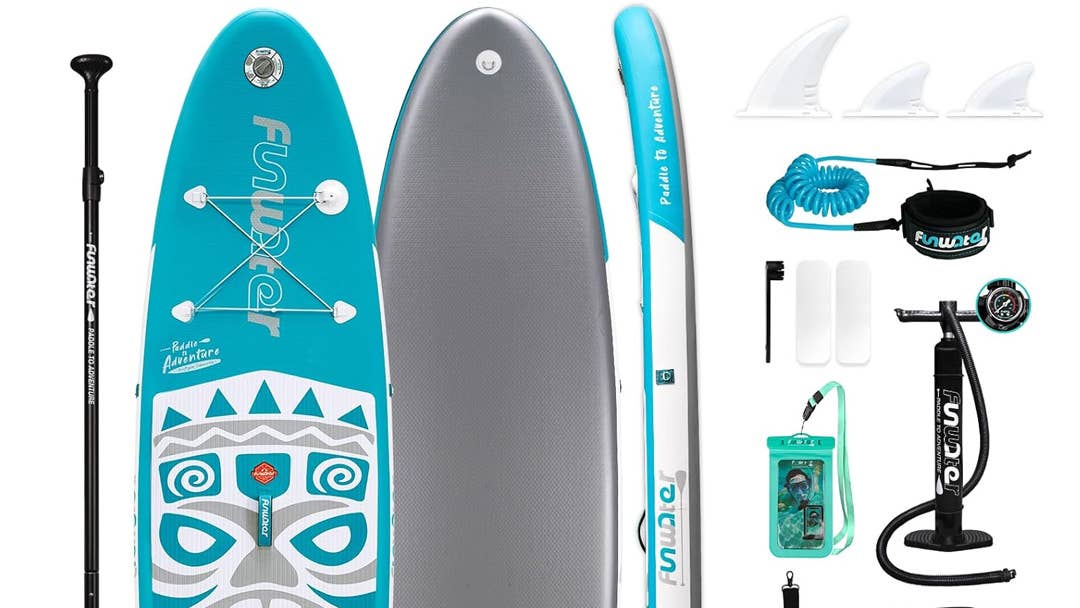
Funwater Inflatable Stand-Up Paddleboard
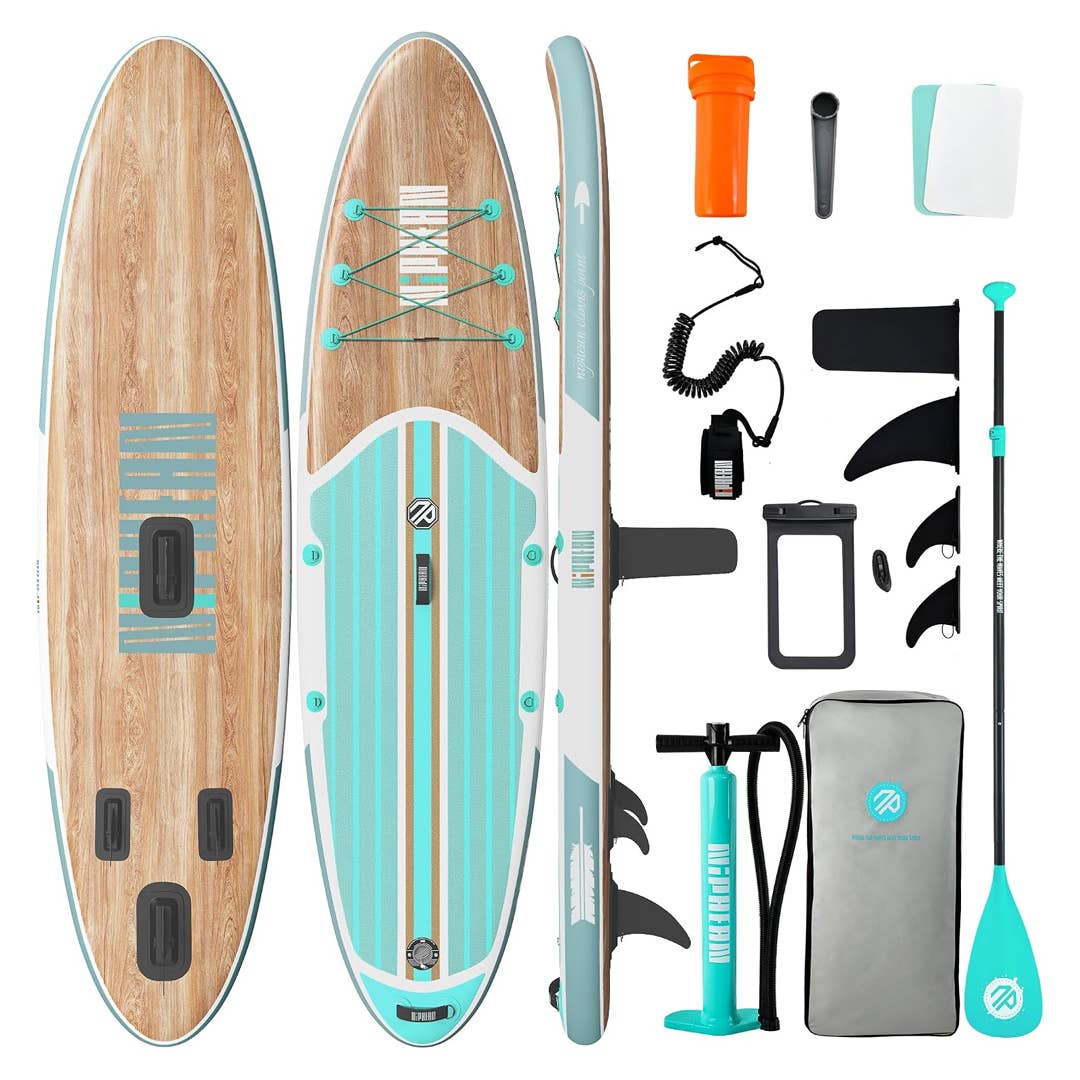
Niphean Inflatable Stand-Up Paddleboard
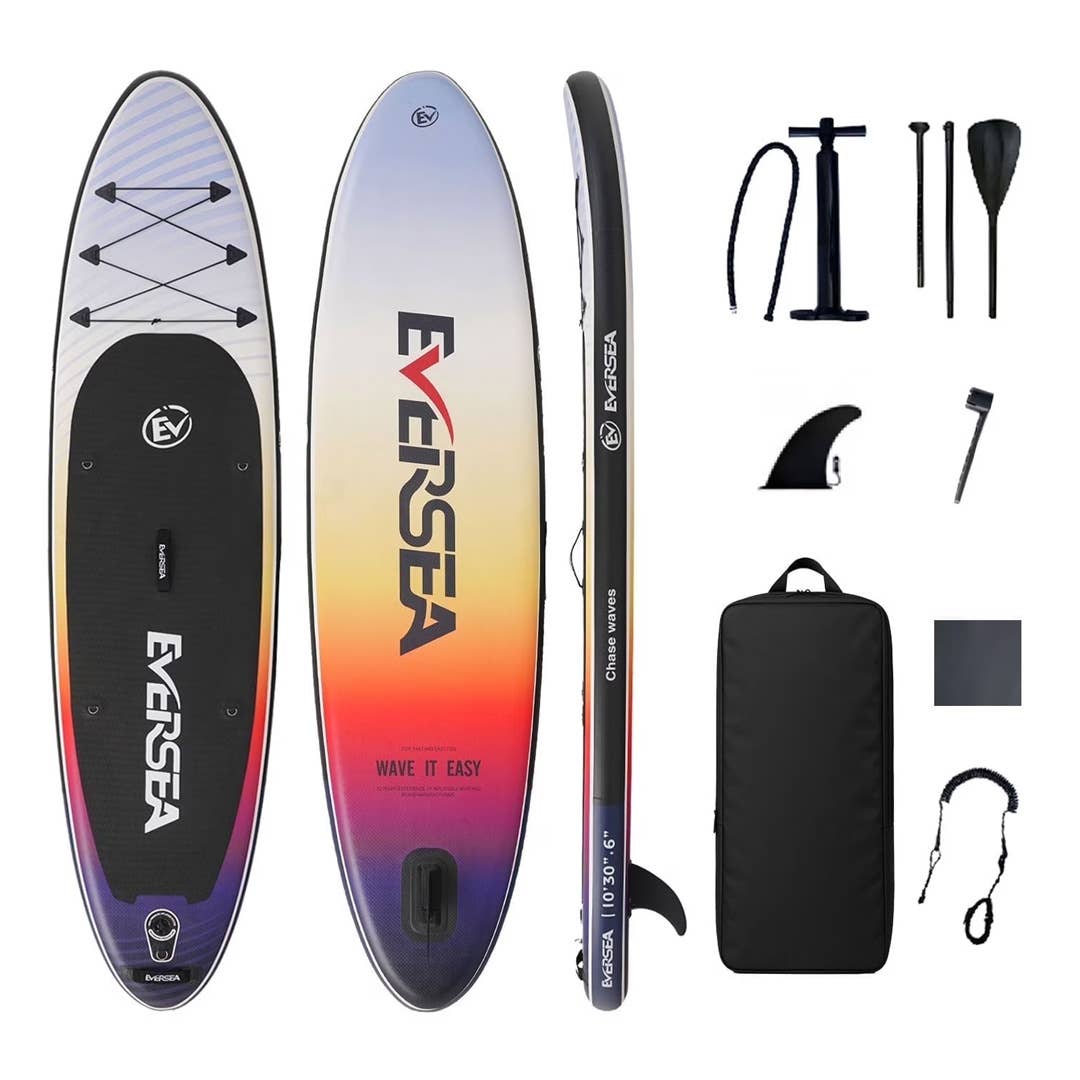
Mseasfree Inflatable Stand-Up Paddleboard
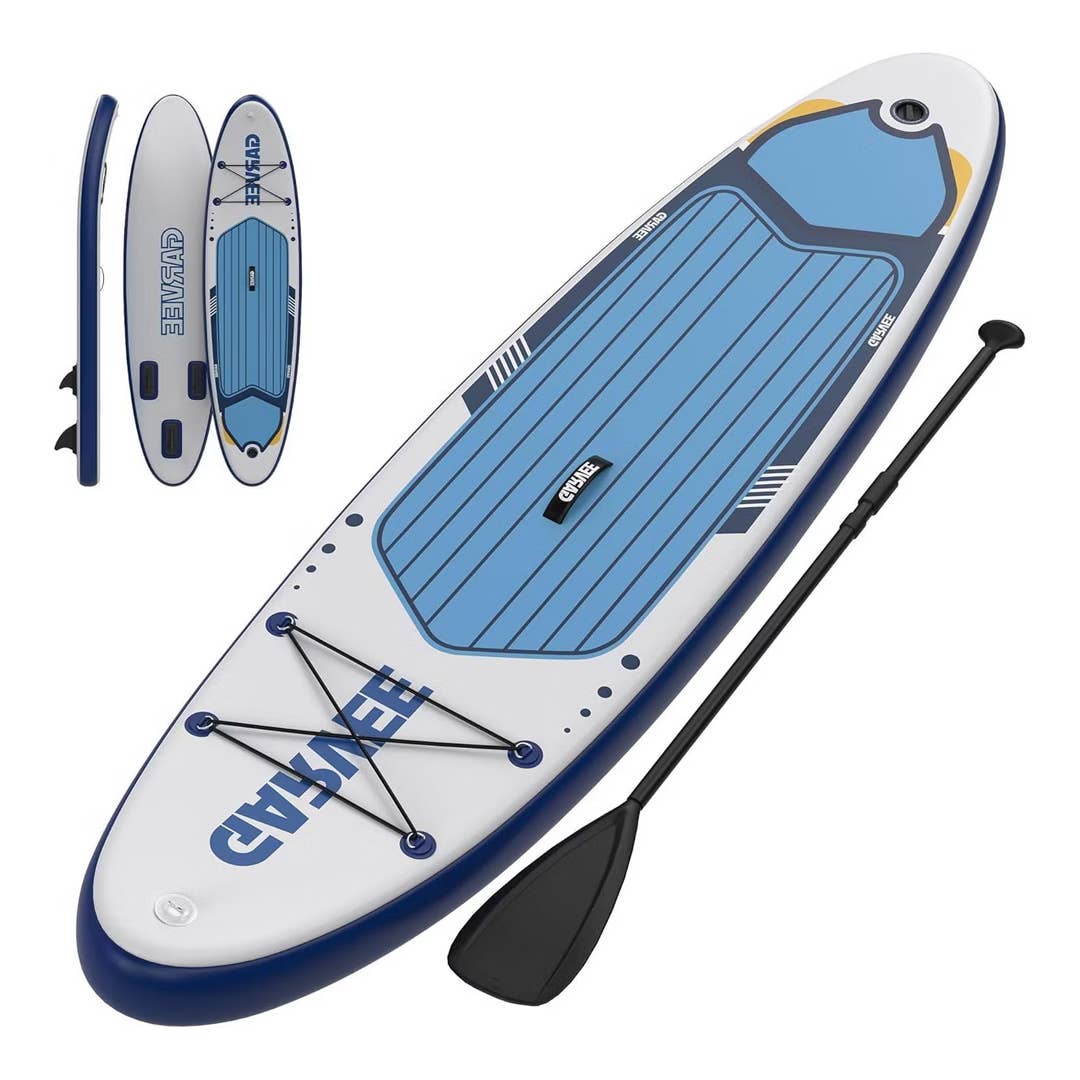
Garvee Extra-Wide Stand-Up Paddleboard
Inflatable paddleboard benefits
Inflatable paddleboards have two primary advantages over their non-inflatable counterparts. The first of these is that inflatable boards are incredibly portable. Most can fold up so small that they fit neatly into a backpack or duffle bag. This makes them ideal for anyone who wants to take their sporting gear on the go. It’s far simpler to bring an inflatable paddleboard with you to the beach or even on a camping trip than to do the same with a standard paddleboard. Not only are these boards physically smaller than their standard cousins, but they’re far lighter as well, making them even easier to transport. Most come with its own backpack, paddles, and instructions and tools for inflating making it even easier. And it avoids the need for a roof rack on your car.
The second benefit of inflatable paddleboards is their damage resistance. While traditional boards are highly susceptible to damage from knocks and dings, inflatable ones are not. Because most inflatable stand-up paddleboards are made from a thick polyurethane bladder, they simply bounce off anything they come in contact with, rather than succumbing to dents, scratches, and other contact-related damage.
Standard stand-up paddleboards
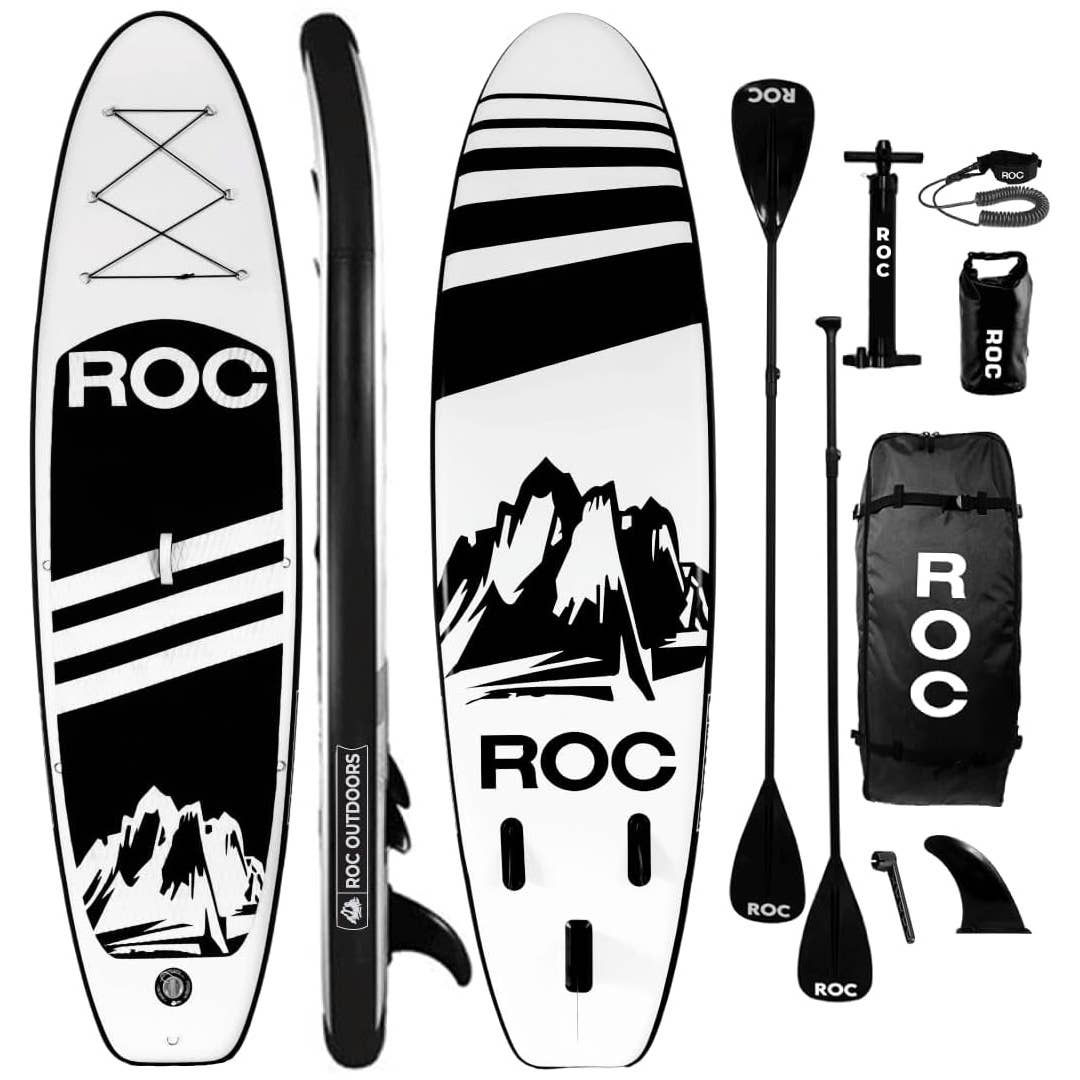
Roc Stand-Up Paddleboard
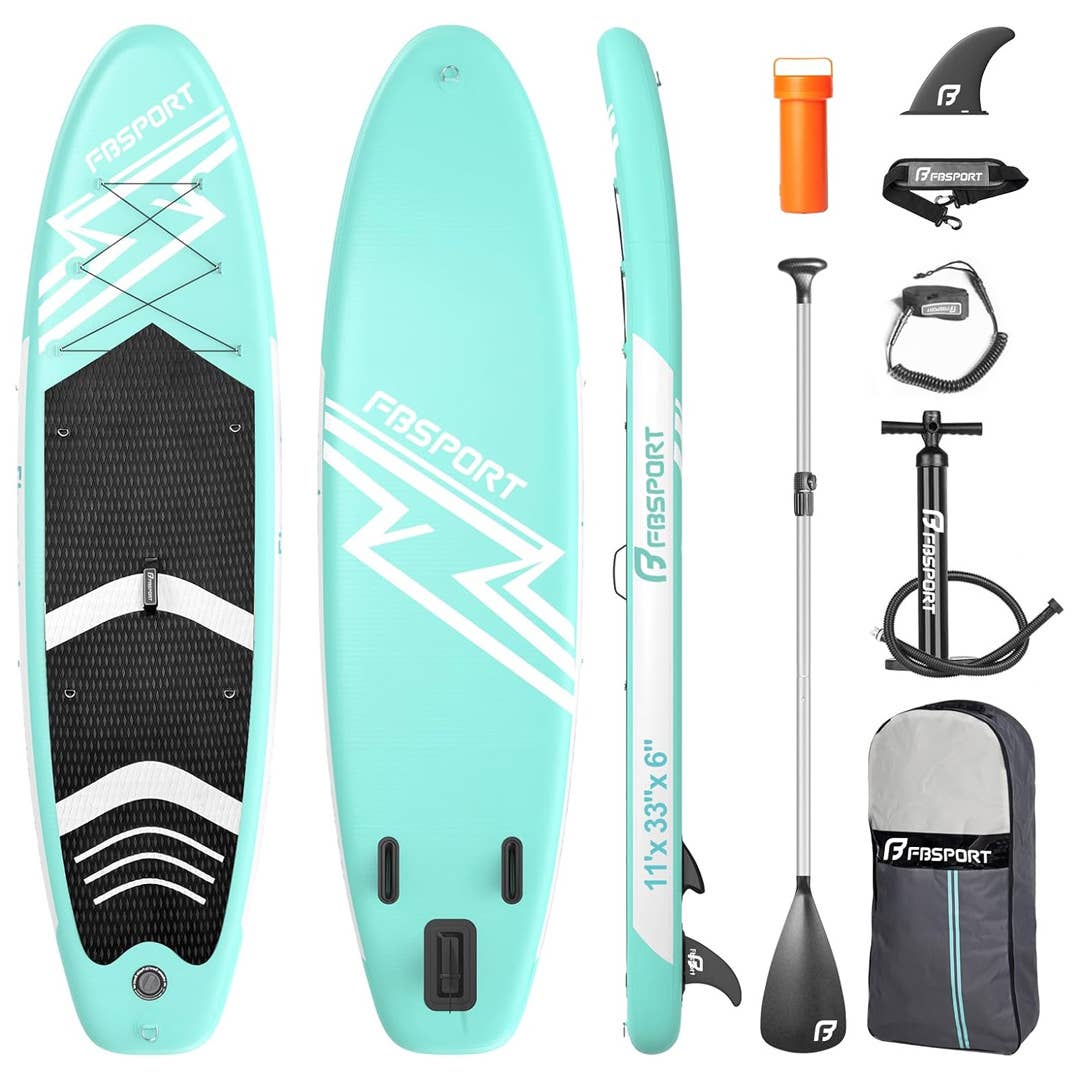
Fbsport Premium Stand-Up Paddleboard
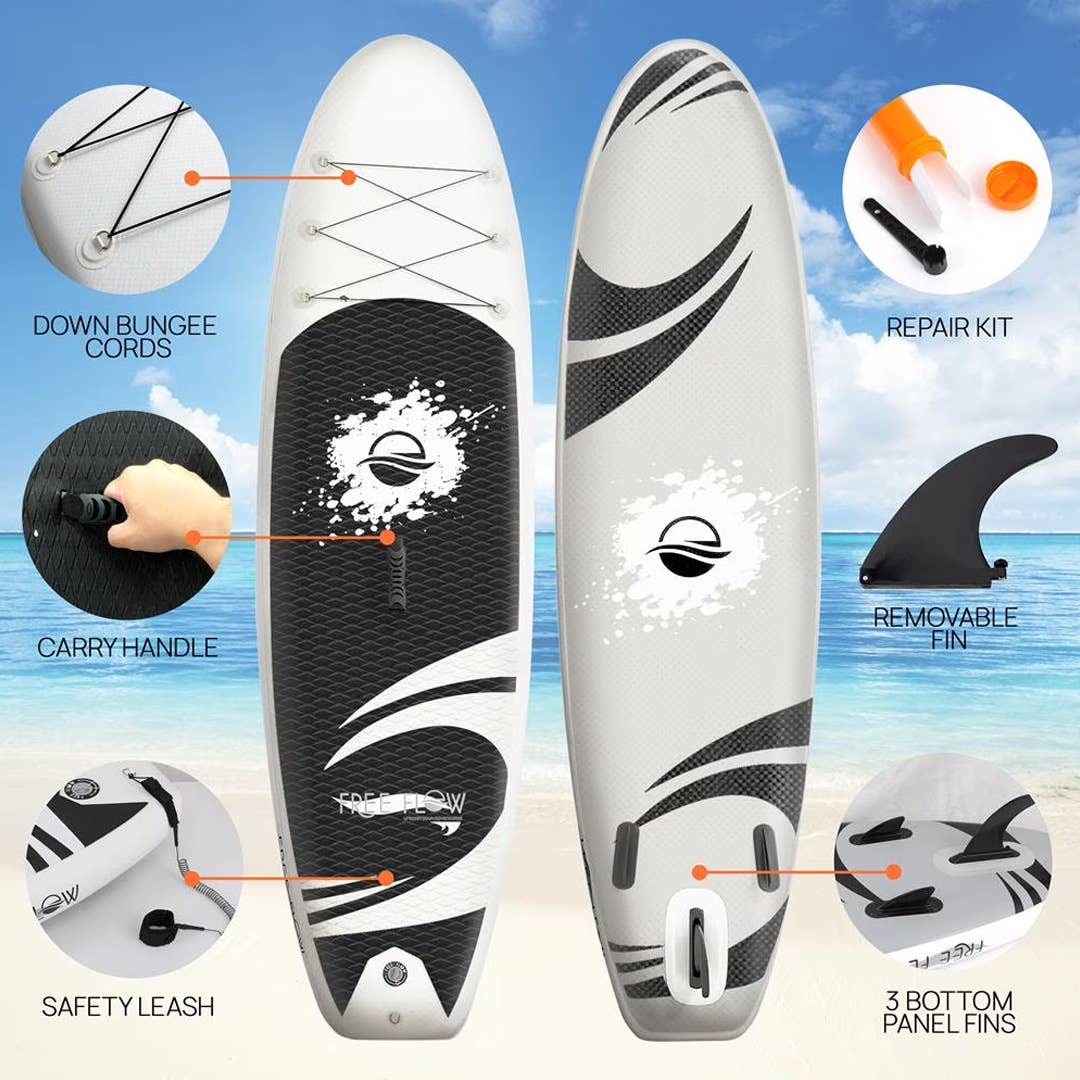
Serenelife Stand-Up Paddleboard
Standard paddleboard benefits
While inflatable stand-up paddleboards have plenty of upside, there’s also a lot to love about standard non-inflatable boards. For starters, traditional stand-up paddleboards require no initial legwork to get them ready to go. While an inflatable model requires that you have either an air compressor or an exceptionally strong set of lungs, a traditional board is grab-and-go. If you’re someone who likes to grab their board on the spur of the moment and be ready to hop in the water almost instantly, then a standard stand-up paddleboard is your best option.
In addition to the quick readiness factor of traditional stand-up paddleboards, there are also performance benefits that you don’t get with an inflatable paddleboard. Standard boards are made from foam and fiberglass, which tend to be heavier than inflatable boards. This means they sit slightly lower in the water and have more weight behind them as they glide through the water. That additional weight allows these boards to be quicker and more stable as they move through the water than inflatable ones.
Which paddelboard is right for you?
If you’re on the hunt for a relaxing summer hobby and plan to paddleboard during vacations or occasionally at your local lake or river, then an inflatable option is for you. For anyone who is wanting to take the sport more seriously and is planning to use it as a way to get in regular exercise, you might want to look into a standard paddleboard. Overall, both are durable and long-lasting, but if you forsee yourself using it daily or even weekly, you can’t go wrong with investing in the one that’s ready to grab-and-go. Considering most cost under $200, it’s a worthwhile investment in your health and well-being without going overboard on budget.
TheStreet Shopping is your guide for shopping insights and advice. We look beyond the price tag to find the best value in home, tech, and wellness gear based on product features and real-world use. Read more about our Editorial Standards and How We Choose Our Shopping Deals.