War trades follow a script. A supply shock hits, prices go vertical, and money that never cared about the underlying market suddenly cares about nothing else.
The entry is the easy part. The hard part is knowing when the story that made you money stops being true.
For three months, one industrial metal owned that script. Missile strikes knocked out two of the Persian Gulf’s largest smelters in late March. The Strait of Hormuz slammed shut, cutting off both finished metal and the raw materials the region’s plants run on.
A market most of Wall Street had written off as oversupplied flipped into deficit almost overnight. Prices ripped to a four-year high by early June, and shares of producers around the world rallied with them.
Then came the peace deal. The strait reopened, the panic premium bled away, and prices slid to their lowest level in more than four months. The question hanging over the market was whether the war left a lasting dent in supply or a temporary one.
On Monday, July 6, one of the most influential commodity desks on Wall Street picked a side. Goldman Sachs (GS) cut its aluminum price forecast, warning that supply from Middle Eastern smelters is “rebounding more quickly than expected,” according to Bloomberg. The call was flagged for investors the same day by Seeking Alpha.
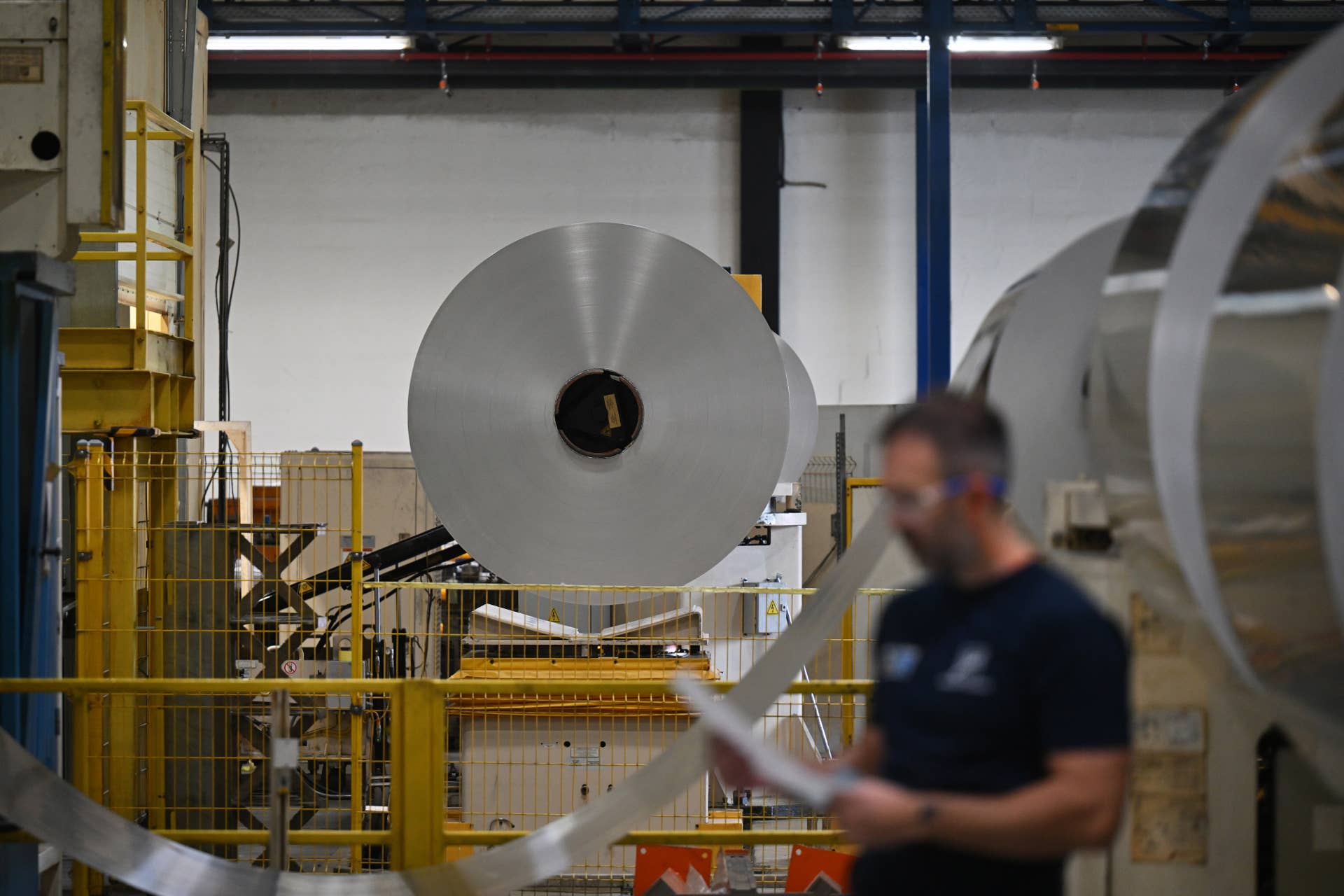
How aluminum became the year’s wildest trade
The Gulf matters more to this market than most investors realized. The region built enormous smelting capacity on cheap natural gas, and it was one of the few places on the planet still adding meaningful new supply.
The late-March strikes hit that base directly. Emirates Global Aluminium declared force majeure after damage at its Al Taweelah plant in Abu Dhabi, warning that full restoration could take up to a year, according to Investing.com. Aluminium Bahrain, known as Alba, cut output as regional shipping seized up.
Goldman had warned in early March that even a one-month halt to Gulf production could push prices toward $3,600 a ton, per the same outlet. The market spent the spring testing that math.
The squeeze showed up everywhere:
- The Persian Gulf accounts for nearly a tenth of global aluminum output, and the Strait of Hormuz closure choked off exports and inbound raw materials alike, according to Trading Economics.
- Goldman’s June 21 research note projected a 720,000-ton global deficit for 2026, up from a 570,000-ton shortfall in its prior forecast, reported ANI.
- The same note assumed Bahrain’s output would not return to pre-conflict levels until mid-2027, with the United Arab Emirates following by the end of that year, per ANI.
That scarcity story is why the metal became the favorite trade of the spring. It is also why Monday’s reversal stings.
What Goldman Sachs sees coming for aluminum prices
The bank’s new warning cuts against the supply assumptions that powered the rally. Gulf smelters are healing faster than its own analysts penciled in just two weeks ago, and that changes the math on every forecast built on a slow recovery.
The whiplash is real. On June 21, Goldman raised its third-quarter aluminum forecast to $3,300 a ton and its 2027 average to $2,950 precisely because Middle East production looked slower to repair than first assumed, reported ANI.
More Wall Street:
- Wall Street’s $200 billion IPO wave threatens sell-off
- J.P. Morgan unleashes $50 billion buyback after stress test
- Bessent doubles down on Main Street over Wall Street
Even then, the bank refused to stay bullish for long. It described the market as “the tale of two supply shocks,” with the Gulf disruption propping up prices near term while a structural wave of new supply from Indonesia and China builds underneath, per ANI.
The scale of that wave is easy to miss. Indonesian output is already up roughly 89% year over year in 2026, and Goldman expects Chinese producers to push past the country’s official capacity cap, per the same note.
Goldman even spelled out in June what a faster Gulf restart would do. The 2027 surplus could swell toward 1.2 million tons, dragging prices closer to $2,750 a ton, per ANI.
Related: Ford CFO sounds the alarm on surging aluminum prices
When I lined that scenario up against Monday’s warning, the through-line was hard to miss. The bank published its faster-restart math two weeks ago as a risk case. The cut on July 6 reads like that risk case graduating into the base case.
Goldman has kept money behind the bearish view too, holding a short position in December 2027 aluminum futures, where its forecast sits furthest below what the market is pricing, per ANI.
Why aluminum rose anyway on Monday
Here is the twist. Prices climbed as much as 1.1% in London on Monday even after the bearish call, according to Bloomberg.
Chinese funds rotated into metal stocks and futures ahead of what they expect to be strong first-half earnings from producers, Minmetals Futures research head Wu Kunjin said, per Bloomberg.
The macro backdrop helped too. Aluminum futures traded back above $3,100 a ton at the time of writing, as soft U.S. jobs data dragged the dollar to a two-week low, “improving the appeal of dollar-denominated commodities,” according to Trading Economics. Chinese factory activity also returned to expansion in June.
Aluminum is not the only place bulls are recalibrating. JPMorgan said a move to $4,000 a ton is taking longer than expected because of Asia’s strong supply response and a drawdown of hidden inventories, reported Bloomberg.
My read is that Monday’s buyers and Goldman are not even having the same argument. The funds are trading the quarter. The bank is trading the calendar, and the calendar says the Gulf comes back while Indonesia and China keep adding metal.
Investors watched this exact pattern play out in crude a few weeks ago. Goldman quietly reset its 2027 oil forecast once the Hormuz panic faded, as TheStreet reported. They also made a big change to its recession call as energy prices cooled, TheStreet highlighted. Aluminum looks like the same trade running a few weeks behind.
What comes next for the aluminum trade
The next few months turn on restart speed, not headlines. Output guidance from Bahrain and the United Arab Emirates, power availability in the Gulf, and monthly production data from Indonesia and China will matter more than any single price print.
Goldman’s June scenarios frame the range. A slower restart keeps 2027 roughly balanced near $3,250 a ton. A faster one points toward $2,750, and Monday’s cut says the bank now leans toward the fast lane.
There is a quieter consumer angle here too. Aluminum is the metal in beverage cans, pickup truck bodies, and home wiring and siding, so a lower price path would eventually ease one of the input costs that fed two years of sticker shock.
For anyone holding producers such as Alcoa (AA) or Century Aluminum (CENX), the calculus has changed. The war premium made every operator look brilliant. From here, the winners will be the low-cost producers that can still make money at $2,750, not just at $3,400.
Related: Goldman Sachs delivers honest verdict on gold’s selloff