For decades, China has primarily been relied upon by global automakers as a manufacturing base and thriving sales market. Now, that relationship is changing rapidly, as some of the world’s largest automakers shift vehicle research and development to the East Asian nation.
Volkswagen (VLKAF), Audi, General Motors (GM), and Renault are now handing over the development of new-generation vehicles — including software and EV platforms — to Chinese engineering teams.
Some of these vehicles are intended for sale in global markets, not just China.
This shift underlines China’s key advantages in tech, electric vehicles, and software. Many legacy carmakers are now thinking differently about where innovation happens in an increasingly competitive market.
China is no longer only about building cars
Historically, China has been considered a low-cost manufacturing hub and a major sales market, but its importance for automakers has expanded far beyond that.
China is now a leader in battery innovation, charging expertise, EV engineering, and software development. It’s also a center for rapid product development, with faster development cycles than have been seen in the West.
“The product definition and technical roadmap are for the first time firmly in the hands of the China team,” said former GM engineer and independent auto analyst Zhu Yulong.
Zhu was referring specifically to the Buick Electra E7, which sold more than 10,000 units in its first sales month in China, InsideEVs notes. This is a rare feat for a foreign automaker in the region, reports Reuters.
More Automotive:
- Mercedes’ China problem just got worse
- Tesla is doing in China what it couldn’t do in the U.S.
- BMW’s biggest market is becoming its biggest headache
This vehicle was developed entirely at GM’s technical center in China, despite the American nameplate.
The Electra’s China-built platform is intended to be used for the next Cadillac Optiq, an EV currently sold in the United States, Autoblog confirms. More commonly, platforms developed in Germany or the U.S. would be adapted for China, not the reverse.
Another example of this change is the Renault Twingo E-Tech, a compact model developed in Shanghai and sold in Europe.
“Legacy automakers are manufacturing companies trying to adapt to a world of tech,” said Pedro Pacheco, vice president of research at Gartner. “They went to the place — China, where they know they’re going to find tech talents.”
In China, the days of merely assembling Western vehicles are long gone. The region now plays a pivotal role in the design and engineering of future vehicles sold around the world.
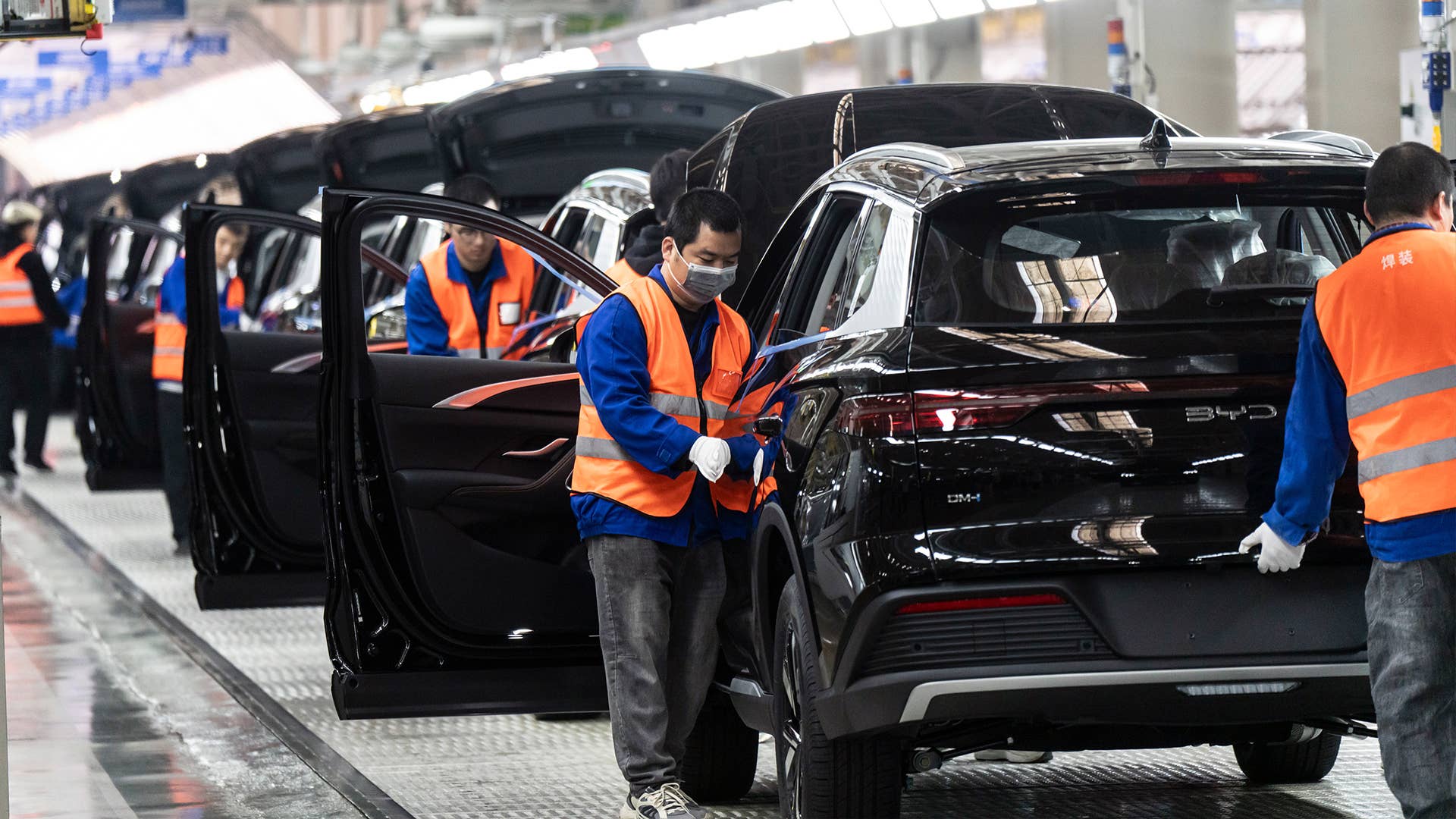
Why legacy automakers are turning to China
China has shown it’s a leader in EV and battery engineering, which is significant as the auto industry gradually electrifies its fleets.
The region also benefits from deep software expertise, an invaluable advantage as vehicles become increasingly reliant on software.
While many legacy automakers have struggled to reliably integrate complex software, Chinese automakers have succeeded at growing their market share with largely software-defined models.
Related: Toyota’s global dominance faces new test
China also boasts the very latest in battery and charging tech.
The aforementioned Buick Electra’s platform boasts a 900-volt supercharging system and plug-in hybrid powertrain, tech not offered on Detroit-developed models from GM.
China’s BYD also offers 1,500-kW flash chargers with lightning-fast EV charging times not available to U.S. customers, reports Autoblog.
Chinese engineering teams are at the heart of EV tech development, which is why legacy brands are increasingly leveraging this advantage for global vehicle programs.
The global auto industry enters a new era
For investors, the gradual shift to China brings with it potential advantages and risks.
On a positive note, automakers like GM can enjoy rapid innovation, lower development costs, and stronger competitiveness in the EV realm. These brands can also tap into a market that excels at prioritizing shorter development cycles.
Relying more heavily on China for product development comes with its risks, though.
The move could raise geopolitical tensions and risk compromising the identity of brands with cars not traditionally developed in China.
Buyers in regions like the U.S. could also be shut out from the best tech. Already, Chinese-owned EV brand Polestar has been banned from selling cars in the U.S. due to security risks posed by the vehicles’ Chinese-developed software.
The global balance of automotive innovation is shifting, and China is increasingly at its center.
Related: China’s new EV numbers just delivered strong message to U.S.