Dollar General has seen growth in a key customer area, driven by the challenging economy.
Citigroup analyst Paul Lejuez asked about those wealthier customers during the chain’s first-quarter earnings call.
“You talked a bit about the trade-in customer in the $100,000-plus range. We hear a lot of companies talk about gaining customers trading down in that income level. I’m curious where you think your customer is coming from,” he asked.
Dollar General CEO Todd Vasos was direct in his answer.
“I would tell you that the trade-in is really coming from the same areas that we’ve seen over the years at an accelerated rate right now. And that’s really from the drug and the grocery side of the business is where we really see the most trade-in. That continues,” he said.
He noted that Dollar General has continued to add customers in the $100,000-plus income range “and that continues as we moved into Q2 at an accelerated rate,” he added.
Now, Dollar General has brought back a retro price point.
Price is not the same thing as value
Consumers increasingly distinguish between the lowest price and the best value, rewarding retailers that deliver both affordability and a positive shopping experience.
“Consumer perceptions of good value and fair prices remain constrained by the lasting effects of recent inflationary shocks and ongoing economic headwinds,” according to a recent Deloitte study.
That report showed, at least partly, why Dollar General has added wealthy customers.
“Value-seeking has the greatest effect on higher-income earners surveyed (those earning $200K or more). They plan to spend 50-60% less in many discretionary categories relative to their peers,” according to Deloitte.
The $1 price point has been a driver for Dollar General.
“From a value perspective, we continue to be pleased with our pricing position, which is within 3 or 4 percentage points of mass retailers as well as our extensive offering of more than 2,000 items across the store at or below the $1 price point,” Vasos said.
More Retail:
- 60-year-old retailer closes over 240 locations across 35 states
- Retail giant exits U.S. fashion after multi-million-dollar scandal
- 79-year-old fast-fashion retailer closes 128 stores
The company has also created a section of the store devoted to the $1 price point.
“As part of our overall approach to this price point, we continue to emphasize and strengthen our Value Valley offering, which is comprised of more than 500 rotating items, all at $1. Of note, this offering once again outperformed the chain average in Q1 with a comp sales increase of 18.4%, driven by broad-based performance across many sections and exceptional performance in health and beauty,” he added.
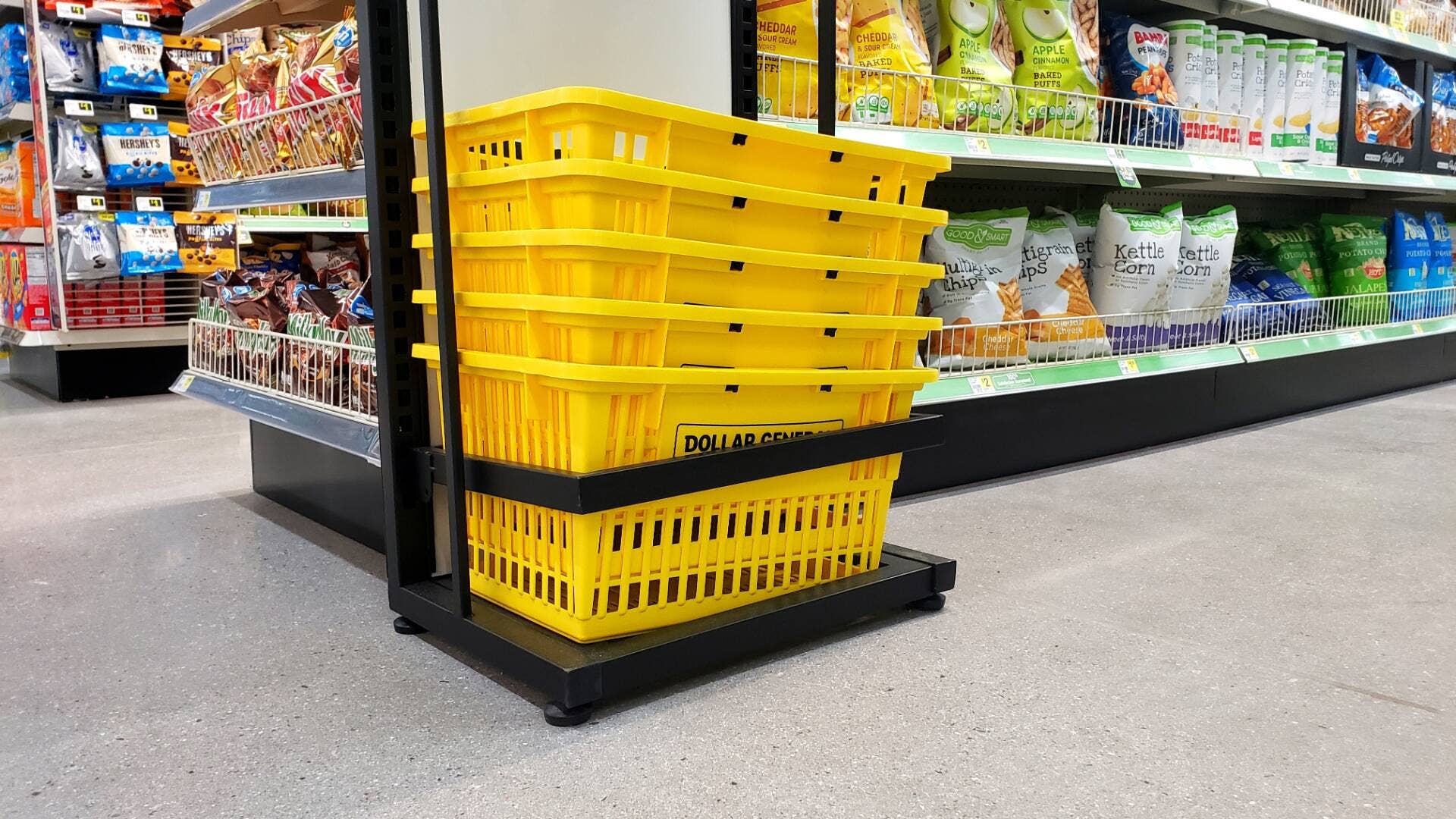
Shutterstock.
Dollar General goes low for back-to-school
Dollar General isn’t relying solely on permanent price positioning to attract higher-income shoppers. Seasonal events like back-to-school provide another opportunity to demonstrate value to families that don’t normally shop discount retailers.
The chain has continued to lean into value for the back-to-school season. That includes offering more than 70 back-to-school items priced at $1 or less.
As a parent who has also covered the retail industry for over 30 years, this is an area that might have brought me into a discount retailer I would otherwise have avoided. Kids lose school supplies and often don’t treat them very well, so it’s an area where many families likely look to save money, even if they are well off.
“Our focus is on offering the essentials customers rely on at affordable prices, including a wide assortment of items at $1 or less, while also making shopping as easy as possible through quick in-store trips and fast, same-day delivery,” according to Dollar General Vice President Steve O’Brien.
Back-to-school is a competitive time
Mark Ryski, the author of multiple books on retail, agrees with Dollar General’s approach.
“Back-to-school is an important selling season for many retailers, and I have little doubt that it will be an especially competitive one this year. Promotional messaging around savings and affordability will land well as consumers’ budgets remain tight,” he posted on RetailWire.
Overall back-to-school shopping spending has dropped since its $41.5 billion peak in 2023 coming in at $38.8 billion in 2024, and rebounding slightly to $39.4 billion in 2025, according to National Retail Federation data.
Back-to-school shoppers are price and value-driven, according to GlobalData Managing Director Neil Saunders.
“What we see in our own data is a back-to-school customer that is shopping around and price comparing more than any time in the past ten years. In other words, unless the prices are actually competitive and the value justified, the headlines won’t translate into much,” he shared on RetailWire.
Back-to-school deals are a way to bring customers into stores they might otherwise not shop in.
“If you use price incentives to get customers into your doors, take that as the opportunity to wow them with the value of a great customer service experience. That will help bring them back, regardless of a sale,” Shep Hyken, a customer-service expert wrote on RetailWire.
Related: Shoppers are fleeing to Costco and Walmart for one reason