Bank of America watches about 38.7 million checking accounts.
That’s not a marketing number. It’s the size of the window the bank has into how ordinary Americans are actually spending their money, week by week.
When Brian Moynihan speaks about the consumer, that’s the data he’s pulling from, and right now that data is telling a complicated story.
On July 14, Bank of America reported second-quarter net income of $9.1 billion, up 27% from a year ago. Earnings per share jumped 34%. BAC stock rose 2% in morning trading.
And on the post-earnings call, Moynihan described an economy that was holding up better than expected even as BofA’s own research team is tracking inflation near its highest level since 2023.
What Bank of America says about the U.S. economy right now
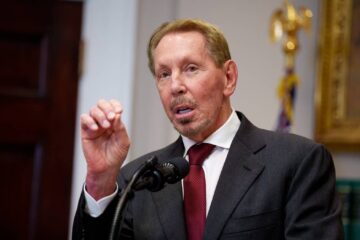
“The U.S. economy has proved more durable than expected, supported by the strong consumer, ongoing AI-driven investments across the board, and easing energy costs,” Moynihan said on the call, according to Yahoo Finance. “Though inflation and tighter monetary policy remain key risks.”
He wasn’t claiming everything is fine. He was saying the economy has absorbed more pressure than most people expected without breaking.
Related: Bank of America warns America now has 2 economies
That’s meaningful context when gas prices have been elevated from the ongoing Iran conflict and investors are still trying to figure out whether consumer spending can hold up in the second half of the year.
Ahead of the earnings call, BofA’s research team raised its 2026 U.S. GDP growth forecast to 2.2%, and expects global growth at 3.2% this year before rising to 3.5% in 2027, CNBC reported.
The inflation problem that a durable economy makes harder
Here’s the tension in BofA’s own research. A resilient consumer is good news for growth. It’s also why inflation won’t come down quickly.
When people keep spending, prices stay up. And when prices stay up, the Fed keeps rates high.
BofA has made this connection explicit: The combination of resilient consumer spending and elevated energy costs is exactly what’s keeping its Fed outlook hawkish, as TheStreet reported.
June’s CPI print came in cooler than expected, with core CPI close to flat month over month. But BofA’s research team noted the soft number mostly just reversed an increase driven by oil prices tied to the Iran conflict. On a trend basis, inflation hasn’t moved much.

Spencer/Getty Images
The Bank of America consumer data behind the economy outlook
Despite the inflation backdrop, the actual spending numbers have stayed strong. Consumer spending grew about 5% year over year in the first half of 2026, then picked up in Q2 to run at 6% or more on a year-over-year basis.
Moynihan said spending was even higher in June and July, which extends the positive read into the current quarter.
The bank’s consumer division generated nearly $3.3 billion in second-quarter profit. BofA’s 39 million checking accounts give it visibility into spending patterns across income levels and geographies that most economic surveys can’t match.
When Moynihan says the consumer is holding up, he’s reading transaction data, not sentiment.
More Economy:
- JPMorgan doubles down on economy, inflation outlook
- Central bankers grow nervous about AI funding
- BofA sees new trends forming in the K-shaped economy
Commercial lending was also broader than the AI buildout alone. CFO Alastair Borthwick said growth came from business banking, commercial banking, and corporate banking alike.
That breadth is a better signal than capex spending concentrated in a few tech companies.
That same resilience is what makes inflation hard to resolve. Consumers who keep spending keep prices up. Businesses that keep borrowing keep demand elevated.
Moynihan said it plainly near the end of the call: “It’s a very good environment. Investors are invested.” He’s right, and he also knows a good spending environment is a hard one for the Fed to justify cutting rates in.
What BofA’s inflation outlook means for rates and the rest of 2026
The Fed picture that emerges from BofA’s research is not a friendly one for borrowers. The bank’s economists are calling for 75 basis points of rate hikes over the next 12 months, nearly double what markets are currently pricing, as TheStreet reported.
Their core PCE tracking at 3.3% year over year is part of the reason behind this projection. That number is close to the highest reading since 2023, and it hasn’t moved meaningfully even as headline inflation has fluctuated with oil prices.
BofA expects yields to stay elevated through the second half of 2026. The Iran conflict is a big part of why. Higher oil costs filter into transport, manufacturing, and food prices, and they keep showing up in the inflation data even when a single monthly print looks soft. The underlying trend hasn’t shifted.
Foreign investors are absorbing some of that pressure. They bought $55.8 billion in U.S. corporate bonds in May, up from $49.4 billion in April, and $91.9 billion in Treasuries in the same month, according to Treasury International Capital data shared with TheStreet. That overseas demand helps keep spreads in check even as the Fed stays hawkish. For now, it’s holding.
Whether it keeps holding as the rate path gets clearer is one of the more important questions for the second half of the year.