For more than a decade, the U.S. government recognized that government subsidies were essential to get consumers interested in purchasing electric vehicles, at least during the early stages when EVs cost significantly more than gas-powered vehicles.
The strategy undoubtedly helped increase EV ownership, because after the $7,500 tax credit for new EVs and the $4,000 credit for used ones expired at the end of September 2025, much of the U.S. demand for EVs expired with it.
U.S. EV market share fell to 5.7% in the fourth quarter of 2025, down from 8.7% a year prior and 10.5%, the all-time high hit during the third quarter, according to CarEdge.
Buyers racing to purchase their vehicles ahead of the expiration of the tax credits pushed demand to that all-time high, further bolstering the case that incentives work.
The state of California recognizes this and is offering buyers considering buying their first electric vehicle thousands of dollars to make it happen.
California EV rebate program offers $3,500 for first-time buyers
This week, California Governor Gavin Newsom signed legislation that offers $3,500 rebates for first-time electric vehicle buyers.
The program applies to new vehicles with a suggested retail price of up to $50,000. There is also a separate rebate of $1,750 for used EVs costing up to $25,000.
According to Reuters, the California Air Resources Board says it will disclose the automakers participating in the program in August.
The new legislation could be a big boon for Tesla if it is participating in the program, as 20% of new car sales in California were EVs last year, and Tesla represented nearly half of those sales.
Governor Gavin Newsom signed the law in order to combat what he says is President Donald Trump’s efforts to hamper the domestic EV industry after his administration signed the law that ended the federal government tax incentive program.
“Donald Trump is doing everything in his power to pollute our air and surrender the clean car industry to China on a silver platter,” Newsom said.
“California is putting its foot on the accelerator. With our new instant rebate program for electric vehicles, we’re making it easier for families to drive clean, breathe clean, and keep more money in their pockets. As California leads the world toward a clean future, our message is clear: no one can stop Californians from choosing vehicles that are better for their wallets and better for the air they breathe.”
The state is dedicating $135.5 million to the program as part of a broader $600 million zero-emission vehicle investment agenda in the state’s 2026-2027 budget. The state says its $135.5 million investment is being matched dollar-for-dollar by participating automakers, bringing the total incentives in the program to $270 million.
California’s new rebate replaced the standalone Clean Vehicle Rebate Program in November 2023, though the state has had other incentive programs since then, Coltura reported.
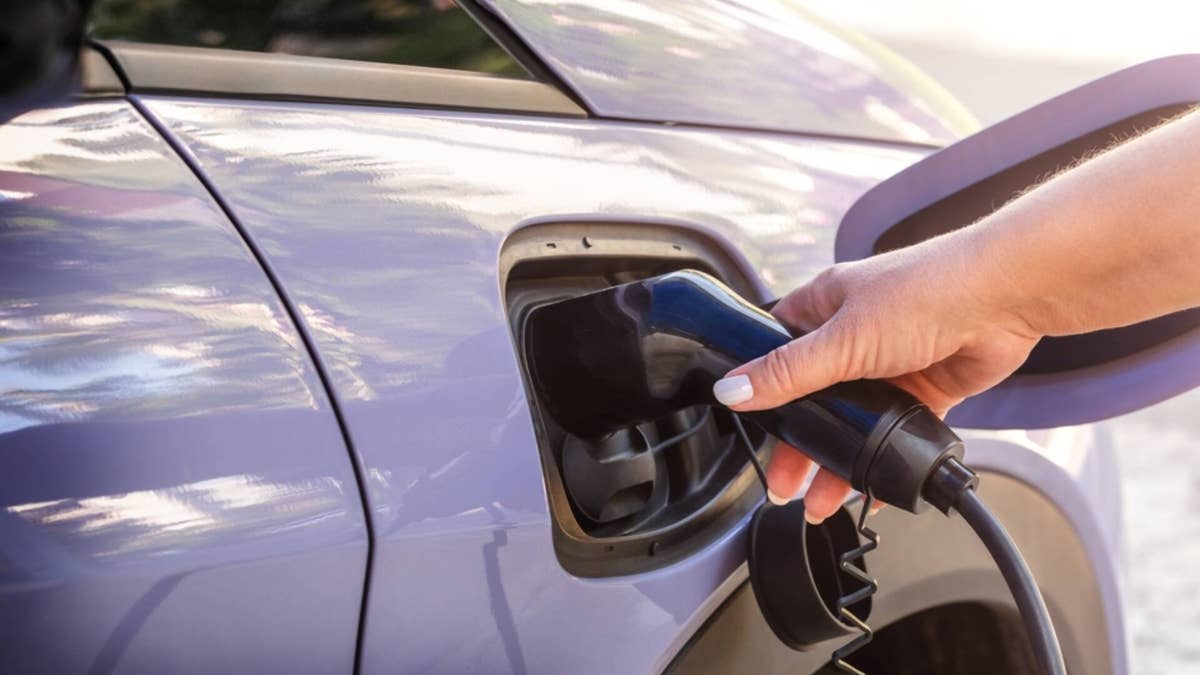
Which states sell EVs the cheapest?
Purchasing and owning an EV is still more expensive than a gas-powered vehicle, so it’s no wonder that there is some hesitancy from most U.S. consumers.
That is where the tax credit was supposed to come in, pushing on-the-fence EV purchasers worried about the added costs.
There was so much demand ahead of the end of the tax credits that J.D.Power data from last year showed U.S. EV transaction prices briefly fell below gasoline vehicles for the first time. As recently as 2023, EVs’ closing costs were $16,000 higher.
But now that the federal tax credit has expired, 17 U.S. states continue to offer state tax incentives ranging from $1,500 in Rhode Island to $7,500 in Oregon and Maine.
However, 40 states impose higher annual registration fees on EVs and some hybrids to offset lost gas tax revenue. Those fees range from $50 in Hawaii and South Dakota to $260 in New Jersey.
California and Alaska ended their EV tax credit programs while Maryland, Montana, New Hampshire, New Jersey, Pennsylvania, Rhode Island, Texas, and Vermont introduced new EV registration fees. Tennessee, Kansas, Indiana, Nebraska, Wisconsin and North Carolina have all increased their fees.
Eleven states offer EV purchase incentives and impose higher registration fees than those applied to gas vehicles.
If you are interested in purchasing an EV in your state, here is a state-by-state breakdown of the available tax credits.
Related: U.S. EV owners face unexpected, added long-term costs