Warren Buffett has been making the same argument about market downturns for decades. He doesn’t dress it up. His position is that bad news in financial markets is good news for investors who are prepared. “Bad news is an investor’s best friend,” he has said, The Motley Fool reported. For anyone who has watched his track record at Berkshire Hathaway, it’s not hard to see where the conviction comes from.
The context makes this worth paying attention to right now. Markets are dealing with tariff uncertainty, the ongoing Iran conflict, rising energy costs, and real questions about whether the enormous spending on AI infrastructure will pay off. Buffett has been watching all of this and saying for months that stocks look expensive relative to what the underlying businesses are actually earning.
What Warren Buffett has said about bear markets and buying opportunities
Buffett’s relationship with market crashes isn’t complicated. He treats them as buying events. “Three times since I’ve taken over Berkshire, it’s gone down more than 50%,” he said in a CNBC interview earlier this year, as TheStreet reported. He didn’t frame those as disasters. He framed them as part of the deal, and as opportunities for investors who weren’t forced to sell at the bottom.
His broader view is that the best conditions for buying and the worst conditions for sentiment are often the same moment. When markets fall and the news cycle turns negative, stocks in companies that haven’t actually deteriorated go on sale. That’s the version of “bad news is an investor’s best friend” that has actually driven his returns over 60 years.
More Warren Buffett:
- Warren Buffett’s $187 billion warning grows louder every day
- Warren Buffett sends 7-word instruction to stock market investors
- Warren Buffett successor triggers massive stock portfolio shakeup
He also said in May that in 60 years of investing, only five were truly “juicy” with opportunity, as TheStreet reported. The rest rewarded patience more than urgency. That framing matters right now, when the temptation to act impulsively in either direction is high.
Why Buffett’s bear market warning feels more relevant right now
The market’s recent run has been exceptional. Six of the last seven full calendar years delivered double-digit returns on the S&P 500. The index is up another 10.2% in 2026 through July 14, above its long-term historical average of roughly 10% annually. That kind of streak eventually corrects, and Buffett has been watching the math build.
The Buffett Indicator, which measures total stock market value against gross domestic product, hit 227% earlier this year, well above the 200% threshold Buffett has called a warning sign, as TheStreet reported. When that number ran high in previous cycles, it preceded periods of below-average returns.
He was asked directly about the current market at a CNBC appearance on July 15. “It’s tough to find values when everybody is preferring gambling,” he said. “There are times when opportunities are just thrown at you so fast you can’t believe it. And then there’s other times when you’re very, very lucky if you find one thing in a couple of years,” as TheStreet reported. Right now, he’s clearly in the patient camp.
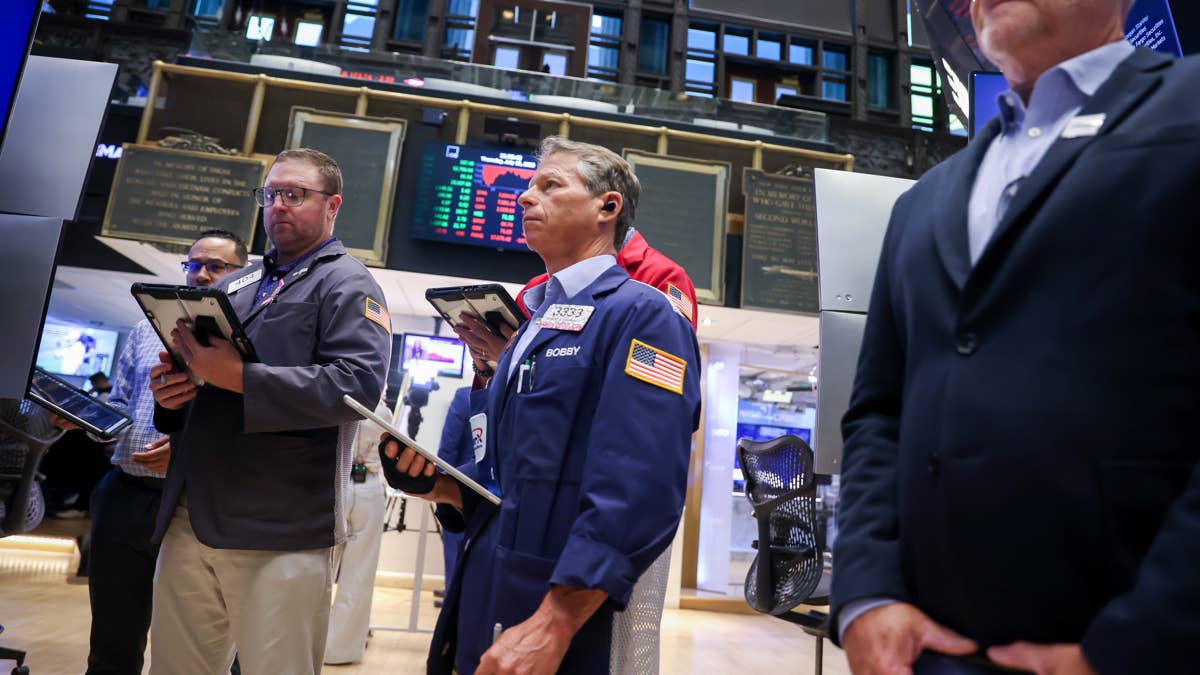
Michael/Getty Images
What Buffett says investors should actually do before a bear market
Buffett’s advice for the period before a downturn is grounded in the same principle he’s applied to his own portfolio. Keep some cash ready. When prices fall on companies you’ve wanted to own, you want to be in a position to act. Investors who go into a bear market fully deployed can watch prices drop but can’t do much about it.
Money you might need in the next five years shouldn’t be in stocks at all, regardless of what the market is doing. That money belongs in certificates of deposit, high-yield savings accounts, or short-duration bonds. What goes into equities should be money you genuinely won’t need for a decade or more. That time horizon is what gives you the ability to ride out a downturn without being forced to sell when prices are at their lowest.
Why long-term investors don’t need to fear the next stock market downturn
Buffett has watched Berkshire’s stock fall by more than half three separate times. His response each time was to stay positioned and, where possible, to buy. Bear markets in US history have typically lasted somewhere between a few months and a couple of years before recovering. The investors who tend to get hurt most aren’t those who held through the drawdown. They’re the ones who sold near the bottom and missed the recovery.
His reminder to investors right now isn’t pessimism. He’s not predicting a crash or telling people to exit the market. He’s doing what he always does: acknowledging that bad times in markets are a feature, not a bug, and that the investors who treat them that way tend to come out ahead of the ones who run from them. That’s been the same message for 60 years, and it hasn’t needed updating yet.
Related: Warren Buffett doubles down on stock market message for 2026