I have seen this painful chapter before in Intel’s Artificial Intelligence (AI) story: cutting 40% of your global workforce, halting factories in Germany and Poland, shutting down your automotive chip division, flattening management from 12 layers to six.
None of those is comfortable. But it’s what radical restructuring looks like when a company is fighting for its industrial life. On July 20, Intel Corporation (INTC) added another chapter.
The company confirmed it is initiating a new round of layoffs targeting its Data Center and AI Group, DCAI, as part of its broader strategy to become “a more focused and efficient company,” according to an Intel spokesperson cited by Seeking Alpha.
The number of affected employees has not been disclosed. Intel indicated the cuts will not alter product commitments or roadmaps.
Intel Corporation (INTC) closed July 20 at $97.06, up 2.13% on the session, according to Yahoo Finance. The stock is up 163.04% year to date and 320.17% over the past year. It also ranks as the sixth-best performer in S&P 500 Year-to-Date returns, according to a Slickcharts report, above AMD.
Wall Street, for now, is reading the pain as progress. Q2 earnings arrive July 23.
Also Read: Intel Corporation Latest News and Stories
Why Intel is cutting the one division that is actually growing
Here is what makes this layoff announcement genuinely counterintuitive. DCAI is Intel’s strongest-performing segment right now.
Revenue for the group reached $5.1 billion in Q1 2026, up 22% year over year, with operating margins expanding to 30.5% and generating $1.5 billion in operating income, according to Intel’s Q1 earnings release.
So why cut a winning division?
The answer is competitive reality. AMD’s EPYC processors are taking data center contracts with superior performance-per-watt efficiency. ARM architecture, championed by Ampere and increasingly adopted by major cloud providers, is redefining server efficiency standards.
More Intel News and Stories:
- Top-rated analyst sets a jaw-dropping Intel stock price target
- Jim Cramer surprises investors with his favorite stock pick
- Cramer’s Intel bet rests on one unproven number
And hyperscalers, including Amazon with Graviton and Trainium, Google with Axion and TPU, and Microsoft with Cobalt and Maia, are building custom in-house silicon that bypasses merchant chips entirely.
Intel cannot simply grow its way to safety. It needs to lower its cost structure enough to price Xeon 6 aggressively against AMD, slow ARM‘s expansion, and make the economic case that off-the-shelf Intel hardware is still cheaper than custom silicon. That requires eliminating overhead, even in a growing business.
“As part of our broader strategy to become a more focused and efficient company, our Data Center Group is aligning its organization to ensure it has the right roles and skills in place to position the business for long-term success,” an Intel spokesperson told Seeking Alpha.
Intel’s CEO Lip-Bu Tan’s painful medicine
The DCAI layoffs are part of a broader transformation that CEO Lip-Bu Tan has driven since taking over from Pat Gelsinger in March 2025.
Tan initially committed to reducing global headcount by 15%, according to Intel’s July 2025 report.
Related: Intel and Google deepen AI ties for chip design
More than 5,000 U.S.-based Intel employees have been let go so far, primarily across California, Oregon, Arizona, and Texas, according to Seeking Alpha reporting. Intel’s total global headcount has been reduced to approximately 81,000.
The structural changes extend well beyond headcount. Tan halted major manufacturing expansions in Germany and Poland. He eliminated Intel’s automotive chip division, according to OregonLive.com.
He dismantled the 12-layer management hierarchy Zinsner described at the BofA conference in June, collapsing it to approximately six layers while reducing the number of vice presidents from 400 to 200, according to a Semicon Alpha report.
Tan also brought in chip designers with Apple and Google backgrounds to reshape product development culture, according to TheStreet.
The pattern is consistent across every decision: eliminate legacy overhead, concentrate resources on the highest-return opportunities, and move faster than a large organization historically could.
The DCAI cuts are this same playbook applied to a division that grew quickly enough to carry inefficiencies that now need to be stripped out before the competitive environment tightens further.
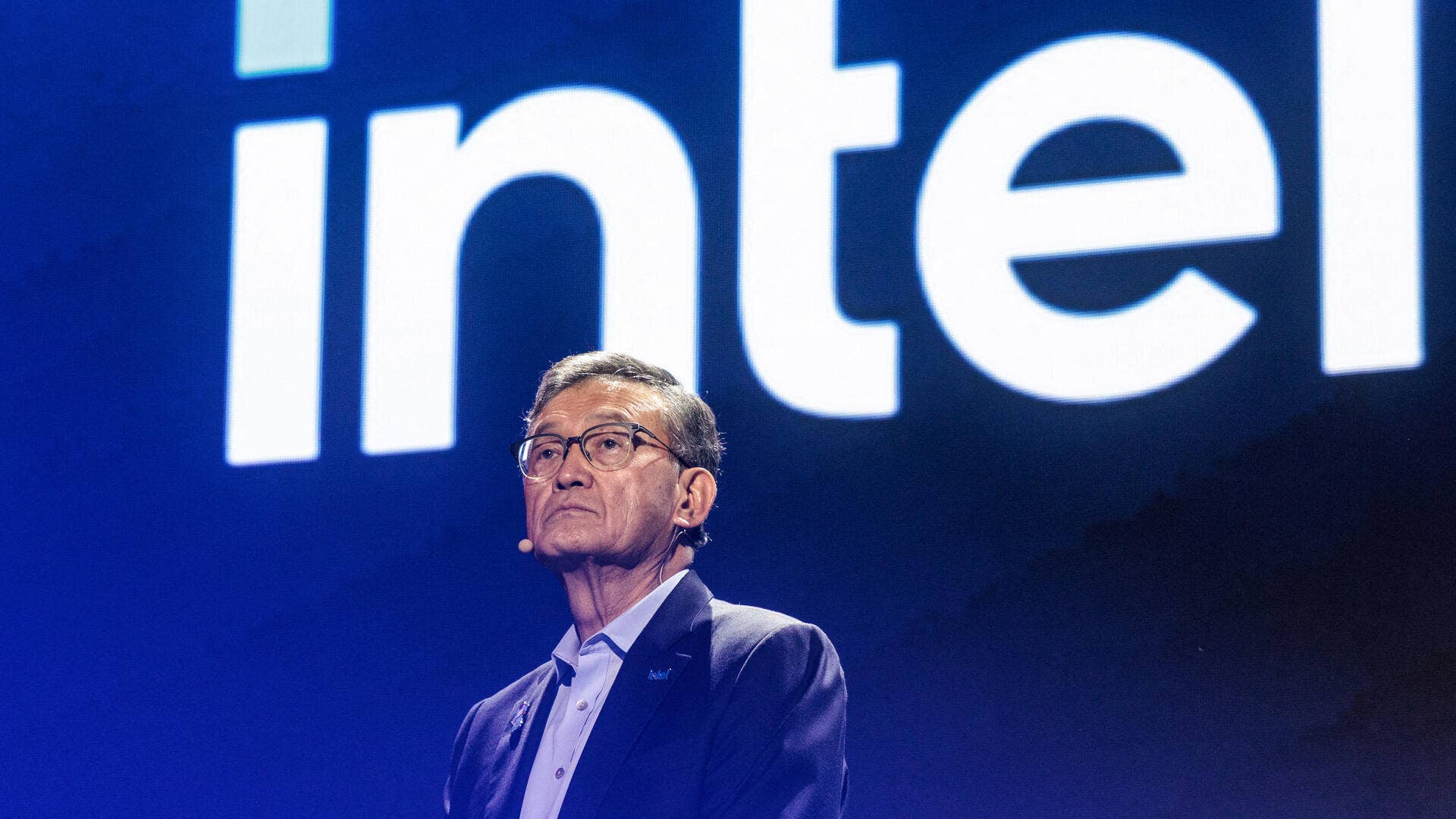
What July 23 earnings need to show for the turnaround thesis to hold
The layoff announcement arrives three days before Intel’s Q2 2026 earnings report. The Zacks Consensus Estimate for Intel’s (INTC) Q2 2026 earnings is $0.21 per share on revenue of $14.42 billion.
This represents a significant turnaround in the bottom line, reflecting an expected 310% year-over-year increase in earnings per share.
Intel guided Q2 revenue of $13.8 billion to $14.8 billion with non-GAAP EPS of $0.20 when it reported Q1 results in April.
Also Read: Intel’s stock split history (& prospects) explained
In TheStreet’s previous coverage, Wedbush analyst Matt Bryson noted in a recent client note that revenue and margins are set to beat expectations by a wide margin, with a similar constructive setup likely carrying into Q3, and maintained a neutral rating with a $95 price target.
The Q1 bar was already high. According to Intel‘s April earnings release, revenue of $13.6 billion was up 7% year over year, non-GAAP EPS of $0.29 dramatically beat the $0.01 consensus estimate, and shares jumped 23.6% the following session.
CEO Tan described a “sixth consecutive quarter of revenue above our expectations.”
The DCAI specifically needs to show continued momentum in Xeon 6 adoption, with early readthrough from the Google Cloud, Nvidia DGX Rubin NVL8, and SambaNova partnerships beginning to appear in customer revenue.
If Q2 delivers a seventh consecutive beat, the layoff announcement this will look like exactly what Tan intends it to be: the necessary discipline that makes a recovery durable rather than temporary.
Related: Does Intel pay dividends? History & future prospects explained