There are only a handful of remaining moments when the whole planet agrees to look at the same thing at the same time. Everything else has been sliced into a thousand feeds, each of us watching something slightly different, alone together.
Live sports are the last reliable exception, and the money knows it. A game cannot be paused, skipped, or spoiled without losing the thing that makes it worth watching in the first place.
That scarcity turned broadcast rights into one of the most inflation-proof assets in media. Leagues keep stretching their schedules, and networks keep paying more.
For most of the past decade, the American leagues set that ceiling. Season-long packages, dozens of games every week, months of inventory to sell.
The working assumption was that no single tournament, crammed into one summer and then gone for four years, could out-earn a sport that shows up every Sunday from September to February.
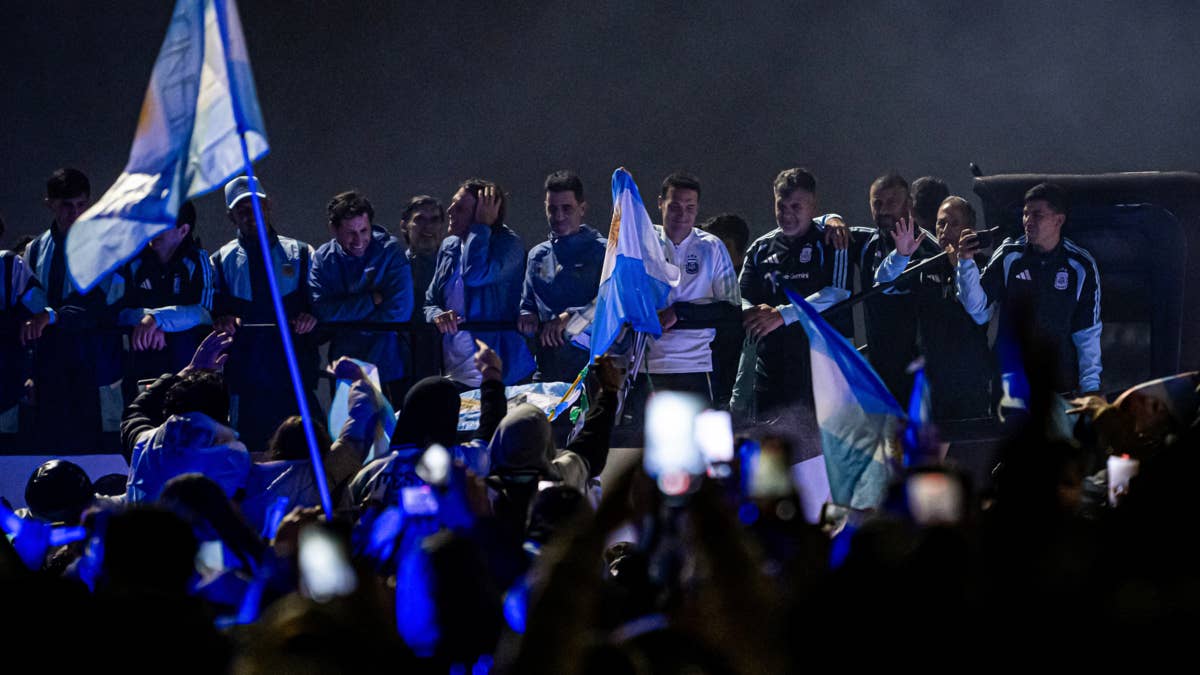
That assumption died on Sunday, July 19, in East Rutherford, New Jersey. Spain beat Argentina 1-0 in extra time on a Ferran Torres goal, and the trophy went to Madrid.
The bigger prize went to the organization that staged the thing. FIFA is “poised to net over $9 billion in revenue for 2026,” according to CNBC, citing the governing body’s own estimates. That makes the 2026 World Cup the most lucrative sporting event in history.
How FIFA turned 48 teams into a record payday
The mechanics are less mysterious than the number suggests. FIFA went from 32 teams to 48, which took the tournament from 64 matches to 104 and stretched it from four weeks to six.
More matches mean more broadcast windows, more gates, more sponsor activations, and more hotel nights. Sixteen host cities across the United States, Canada, and Mexico gave advertisers a genuinely continental audience for the first time.
I ran the tournament figure against FIFA’s own published budget, and the gap is the story. FIFA had penciled in an entire four-year cycle worth roughly $11 billion. One summer delivered most of it.
Here is how the money stacked up:
- FIFA budgeted USD 11,000 million in revenue for the 2023-2026 cycle, calling it “a substantial increase in revenue of USD 4,560 million” over the prior cycle, according to FIFA.
- Member associations have already been told the actual cycle figure lands closer to $15 billion, The Guardian reported.
- The 2026 calendar year alone accounts for more than $9 billion of that total, CNBC noted.
- FIFA takes 15% of the fee from the seller and 15% from the buyer on every secondary-market ticket, according to Sports Illustrated.
- FIFA plans to distribute $2.7 billion to its 211 member associations between 2027 and 2030, CNBC confirmed.
What the $9 billion World Cup number actually counts
This is where reporting gets slippery, and it is worth slowing down. The $9 billion is a calendar-year net revenue estimate for 2026, produced by FIFA, not an audited tournament-only figure signed off by anyone outside the building.
The four-year number is messier still. MarketScale noted that the full 2023-2026 cycle totals close to $13 billion. Reporting relayed by Sports Illustrated puts what FIFA told its own members nearer to $15 billion.
More Entertainment:
- FIFA World Cup spending surge reveals major customer divide
- The World Cup may be about to get a lot bigger
- Why brands are spending billions on 2026 FIFA World Cup
Both cannot be right, and my analysis says the spread is the most interesting thing on the page. A $2 billion disagreement about a nonprofit’s income is not a rounding error. It is a signal that the final accounting has not been settled, and that the number quoted this week may move again.
Treat the $9 billion as directionally solid and precisely soft. That distinction matters if you are a host city that borrowed against a projection.
It’s worth knowing where almost none of it goes. FIFA approved a record $727 million contribution to all 48 participating teams, including a $655 million prize pool, according to Field Level Media. Spain’s title is worth $50 million of that.
I put those two figures side by side, and the ratio is the part nobody puts in a press release. The entire payout to every team that showed up amounts to roughly 8% of what the organization expects to collect this year.
FIFA is a Swiss nonprofit, so the surplus does not go to shareholders. It goes back out to the 211 member associations that also happen to vote on who runs the place. Analyst Kieran Maguire made exactly that point to CNBC, noting that money flowing to small federations tends to flow back as electoral support.
Why World Cup ticket prices did the heavy lifting
The uncomfortable part of this record is who paid for it. Broadcast rights were always going to grow with 40 extra matches. The surprise came from the turnstiles.
Ticket prices ran from $60 at the low end to more than $10,000 at the top, with the average entry above $900. Resale was the accelerant, and FIFA collects on both sides of every resale transaction.
Seats on FIFA’s own last-minute portal hit $32,000 apiece before the platform went dark on Saturday, July 18, before the final, according to Sports Illustrated. Listings on the official resale platform ran into the millions.
Related: FIFA World Cup brings costly surprise for US commuters
The tournament also gave fans plenty to be annoyed about. A first-ever World Cup halftime show stretched the break past 27 minutes and drew open criticism from broadcasters and supporters, CNBC reported. Commercially sponsored hydration breaks became a controversy of their own, as Sports Illustrated noted.
None of it dented demand. That is the finding, and it is the one every ticketing executive in North America wrote down.
That money did not appear from nowhere. It came out of household budgets in 16 cities, and the residual is still visible. More than three-quarters of host city residents said local prices climbed during the tournament, according to a CardRates.com survey reported by TheStreet.
Commuters in New Jersey got hit with a $150 special stadium fare on a route that normally costs a fraction of that. Retailers, meanwhile, spent the spring racing to sell World Cup merchandise into the same wallets.
What FIFA’s record means for the next 4 years
Here is the part that should interest anyone who does not care about soccer at all. FIFA just proved that a live event can extract roughly $86 million per match from a single population without meaningful resistance.
Group-stage occupancy still ran near 99%. Demand did not break at $900, and FIFA now has four years of evidence that it was underpricing.
Every league, promoter, and venue operator on the continent watched that happen. The lesson had nothing to do with soccer. It was about how much headroom sits above the price you are currently charging for a seat.
Dynamic pricing has already crept into concerts, theme parks, and airline seats. What changed this summer is the ceiling, because a $32,000 face value cleared the market instead of collapsing it.
FIFA president Gianni Infantino has already floated expanding the 2030 tournament to 64 teams, CNBC reported.
The trophy went to Spain. The pricing model went everywhere else, and it will be waiting the next time you try to take your kid to a game.
Related: Why the 2026 FIFA World Cup is a billion-dollar retail boom