Five years ago, the Department of Veterans Affairs launched a new medical records system meant to fix a health network running on decades old technology.
The rollout became one of the most cited failures in modern government technology, tied to patient deaths and years of paused deployments.
The project started as a $10 billion contract with Cerner in 2018 and has since pushed toward lifecycle costs as high as $50 billion, according to the Washington Examiner.
Investigators linked the system to more than 150 cases of patient harm at just five medical centers, according to Fierce Healthcare. That history shadows every technology contract the VA signs today.
The Cerner program was not the VA’s first attempt to fix its records systems. It was the fourth try in two decades after three earlier modernization projects collapsed, and VA health care has remained on the Government Accountability Office’s high risk list since 2015.
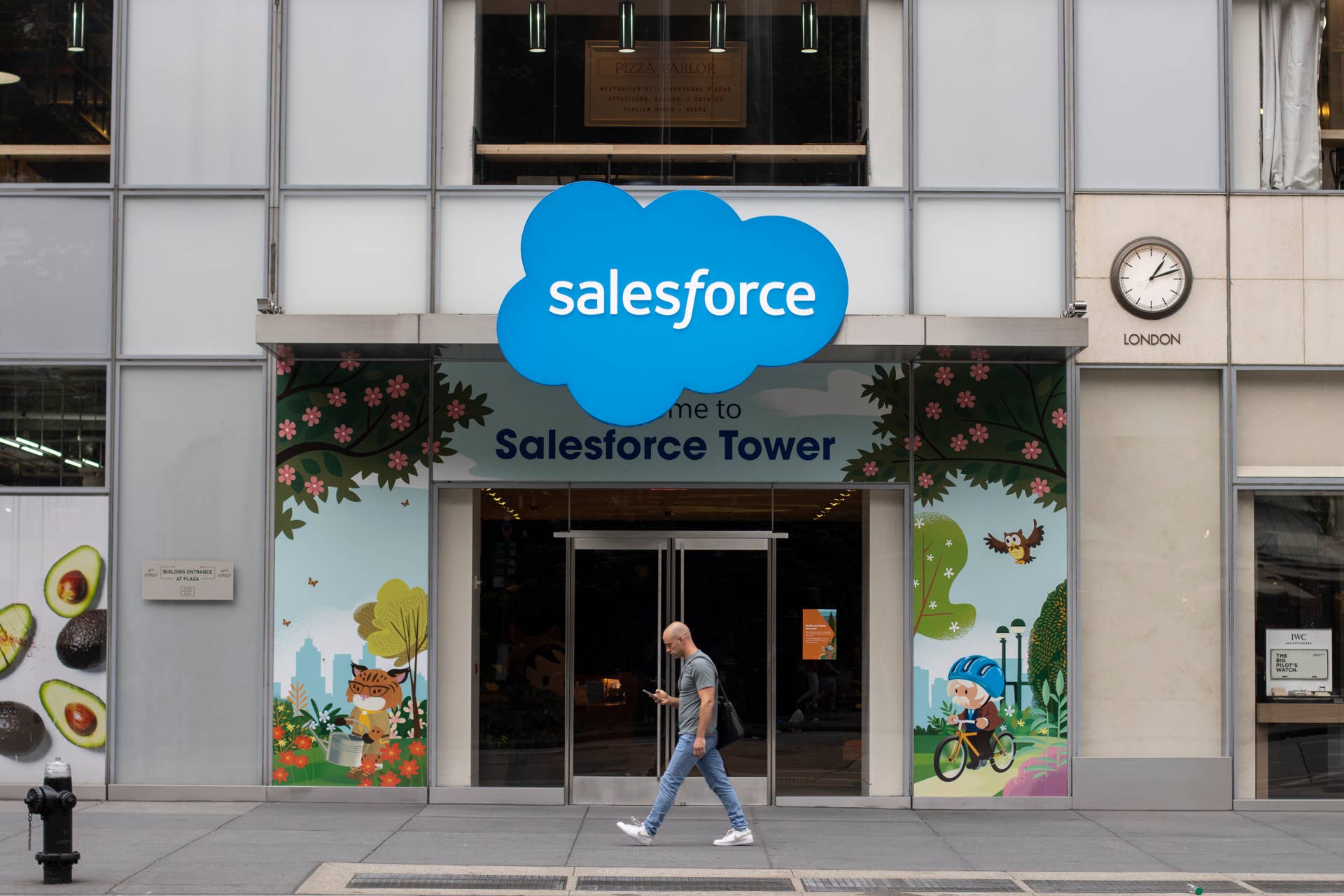
This week, the VA signed another major technology deal, but chose a different vendor and a different approach. Salesforce (CRM) announced Friday, July 24, that it won a contract worth up to $1.6 billion to expand its role across the VA, according to a press release.
Related: Salesforce receives double blow over an AI product
The Agentic Enterprise License Agreement runs for one year with two optional one-year renewals, giving it a three-year ceiling if the VA exercises both extensions.
Unlike the Cerner overhaul, Salesforce is not building a new system from scratch. It is expanding tools the agency has used for more than a decade, building on a relationship that predates this contract by years.
The VA built on a system it already trusted
Salesforce’s Slack platform already runs across more than 150 VA medical and outpatient centers.
The company also operates the VA’s Veterans Crisis Line, the VA Health Connect contact center and the SQUARES eligibility system, a footprint that predates this contract.
Kendall Collins, who leads Salesforce’s government and defense unit, said the goal is to reduce the time employees spend navigating disconnected systems, according to a press release.
That distinction matters because rip and replace projects like Cerner failed partly because clinicians had to learn entirely new workflows overnight.
The 28-day promise is the real test
The VA wants to cut average appointment scheduling time from 28 days to minutes once the system fully deploys, covering more than 40,000 provider services nationwide under its Unified Patient Scheduling initiative.
That is an ambitious claim for an agency whose last major technology bet struggled for years.
A March 2025 Government Accountability Office review found that only 13% of VA staff believed the Cerner system made the agency more efficient, while 58% said it increased patient safety risk, according to Federal News Network.
Salesforce’s contract avoids locking the VA into that kind of fixed commitment. The one-year renewal terms give the agency a formal exit if milestones slip, rather than a decadelong obligation like the one that trapped Cerner.
The scheduling metric also gives investors something Cerner never offered, a single visible number they can track.
Cerner’s quality problems showed up in incident reports and inspector general findings that took months to surface. A missed scheduling target will be obvious almost immediately.
More Salesforce:
- Salesforce receives double blow over an AI product
- Salesforce bets another $1 billion despite AI spending cratering its stock
- Workers just sent AI companies an ultimatum
Wall Street is pricing in more than one contract
CRM shares rose 1.3% Friday morning on the news. The structure of the deal matters, too, since Agentic Enterprise License Agreements tie a portion of revenue to actual agent usage rather than a flat seat count, giving Salesforce room to grow the contract’s value if VA adoption expands.
The same week, the Air Force expanded its use of Salesforce’s Missionforce platform to manage a $13.5 billion vehicle fleet, and ServiceNow shares climbed as federal AI deal flow lifted enterprise software stocks broadly, according to 24/7 Wall St.
Oracle also picked up a separate enterprise software agreement with the Defense Department worth close to $7 billion, The Register reported.
Analysts remain split on Salesforce’s broader AI strategy. Guggenheim upgraded the stock to Buy with a $228 price target earlier this month, while KeyBanc downgraded it to Sector Weight over softer customer checks, according to StocksToTrade.
That split matters because Salesforce is not the only software vendor chasing federal agentic AI budgets.
Oracle, ServiceNow, and Palantir are all pursuing similar agency contracts, and each new award now doubles as evidence in the argument over whether AI spending on enterprise software is durable or overhyped.
A shift away from monolithic government contracts
The Cerner failure became Washington’s cautionary tale for large technology overhauls, and it changed how agencies structure new deals. Vendors already embedded in daily workflows now have an advantage over companies pitching a complete replacement.
That shift explains why the VA, the Air Force and the Pentagon are all signing renewable agreements with incumbents instead of one massive fixed contract.
Whether Salesforce’s approach actually cuts scheduling times, or joins Cerner as a cautionary story of its own, depends on execution the market cannot see yet.
Investors watching Salesforce’s federal expansion should track whether the VA exercises both renewal years, since that decision will say more about the deal’s success than Friday’s stock move ever could.
Related: Salesforce bets another $1 billion despite AI spending cratering its stock