After its record-breaking debut, SpaceX is proving that a blockbuster IPO does not guarantee a smooth ride. The rocket and satellite company has spent much of July shedding value at a pace that caught seasoned traders off guard.
Shares fell again on July 27, marking the 13th decline in the last 16 sessions. The stock closed at $113.50, down more than 1% on the day, according to CNBC. The intraday low on July 27 fell below $109, a fresh record low for the stock.
SpaceX erases a Tesla’s worth of value
The scale of the pullback is hard to miss. SpaceX has now wiped out more than $1.2 trillion in market capitalization since its all-time high of $225.64 hit in June, a figure that roughly matches the entire market value of Tesla, Elon Musk‘s other traded company.
The slide has coincided with renewed scrutiny of Starship after a recent test flight raised new questions on engine reliability during descent.
That comparison lands hard because Tesla has not been strong lately, either. Its shares slipped to near one-year lows after disappointing earnings last week, meaning Musk has effectively watched two of his companies bleed value at once. The combined damage across both stocks is more than $1.2 trillion for July alone.
More SpaceX:
- Elon Musk’s startling claim to SpaceX investors
- Citi sends powerful sign to SpaceX investors
- Beaten-down stock lets you buy SpaceX below market price
SpaceX priced its June IPO at $135 a share and opened its first day of trading at $150, a gain of roughly 19% before shares even changed hands, as TheStreet reported. The stock then climbed to its $225.64 peak within two trading sessions before reversing hard.
At the close of July 27, SpaceX sits close to its all-time intraday low of $109, which is more than 19% below the IPO price. The retreat has turned one of the year’s most celebrated listings into a cautionary tale for IPO investors chasing momentum.
Options traders send mixed signals on SpaceX
Despite the steep decline, the options market is not in panic mode. Some of the flows are getting more balanced between bulls and bears, but the largest single trades on July 27 leaned neutral to bullish, based on Cboe LiveVol data cited by CNBC.
Small speculators have kept buying long shot calls that need the stock to reverse sharply and double in value. The most popular contract by volume on July 27 was a 330 strike call expiring Aug. 1, priced at just 10 cents with roughly a one-third of 1% chance of paying off, according to ThinkOrSwim data, Seeking Alpha reported.
Call volume outpaced puts on the session. Traders bought 106,000 calls compared with 77,000 puts, though the bulk of the $442 million in total premium was tied to puts rather than calls. Four of the five biggest trades by premium were neutral or bullish overall.
One notable trade involved a seller who collected $1.8 million by selling 5,200 of the 100 strike puts expiring Oct. 16, while buying 7,000 of the 85 strike puts with the same expiration. “As an investor, it’s early; as a trader, Wall Street is now punishing the AI stocks for capex,” said Charles Moon, a tech and momentum specialist at Prosper Trading Academy in Chicago, according to CNBC.
That kind of positioning suggests professional money is not betting on an imminent crash.
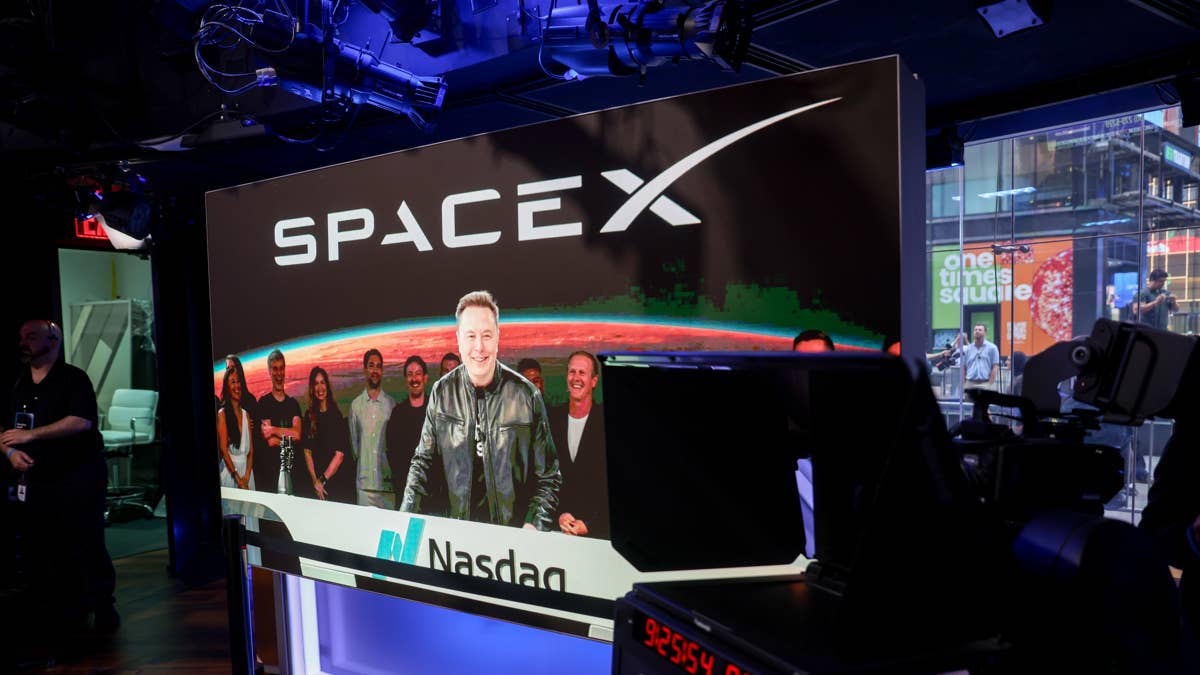
Michael/Getty Images
Earnings and lockup collide in August
SpaceX is due to report its first quarterly earnings as a public company on Aug. 4, and the timing could not be more sensitive. Earnings are typically volatility-reducing events for young stocks, but that pattern may not hold this time around.
Two days after the print, on Aug. 6, insiders will be allowed to sell 20% of their eligible locked-up shares, a pool of up to 911.5 million shares. That falls on the second full trading day following the earnings release, under the standard terms set at the IPO, according to Benzinga.
SpaceX posted a first-quarter net loss of $4.28 billion on $4.69 billion in revenue, numbers that have already left some analysts uneasy about cash burn heading into next week’s report, as TheStreet reported. Short interest sits above 30% of the float, leaving room for a sharp move once results land.
Moon does not expect the lockup itself to trigger a fresh collapse. “I don’t think the lock-up on SpaceX will be as bad as everyone fears,” he said, adding that it is unlikely to help the stock’s cause, either.
Combined with elevated short interest, though, even a modest wave of insider selling could add pressure to a stock already searching for a floor.
Wall Street remains split on SpaceX
Analyst opinion on SpaceX has rarely been this divided. HSBC started coverage at hold with a $115 price target on July 24, valuing each of SpaceX’s businesses separately and still landing below the market price, according to CNBC.
Goldman Sachs takes the opposite view, betting that SpaceX’s expanding AI computing ambitions could eventually rival its rocket and satellite businesses as a valuation driver.
Wall Street’s average 12-month consensus target sits near $236.71, implying more than 105% upside from the current price. The forecast ranges from $62 to $800, indicating a remarkably wide spread.
Cathie Wood‘s ARK Invest has kept buying through the drop, adding roughly $36.1 million worth of shares on July 27 and pushing her July purchases toward $81.8 million. Wood’s conviction stands in contrast to a broader market that is still trying to find a floor.
With earnings and the lockup landing days apart, the next two weeks should settle at least part of the argument.