Mercedes-Benz’s diversified ownership structure could come back to bite the German automaker if a recent bill passed by an influential Senate Committee is enforced by the letter of the law and keeps the luxury automaker from selling its vehicles in the states.
But Mercedes says it still has numerous levers to pull should it have to, and it won’t give up the lucrative U.S. market without a fight.
Last week, the Senate Commerce Committee unanimously passed the Connected Vehicle Security Act of 2026 out of committee. The bill is designed to “protect American automakers and workers from the dire threat of Chinese automobiles by banning them and their connected components on American soil,” according to bill sponsor U.S. Senator Bernie Moreno (R-Ohio).
“China’s auto industry was not built to compete; it was built to destroy American manufacturing, gut the middle class, and undermine our national security,” Moreno said. “For decades, D.C. globalists propped up Chinese businesses — now it’s time for Congress to stop this cancer before it spreads through the American auto market.”
So what does all of that have to do with German-headquartered Mercedes?
Well, the bill would ban sales from automakers with more than 15% ownership by Chinese entities, and nearly 20% of Mercedes-Benz is owned by Chinese entities.
Eric Li Shufu, the founder and chairman of Chinese automaker Geely, owns 9.7% of Mercedes through an investment firm, while the Beijing Automotive Group owns another 9.98%. So if the bill passes as is, Mercedes fans will have to import their G-Wagons in the future.
But Mercedes CEO Ola Kaellenius says his company isn’t going anywhere.
Mercedes CEO vows to stay in U.S. despite anti-China legislation
While the Connected Vehicle Security Act still has many revisions to go through before it potentially becomes a law, Mercedes-Benz CEO Ola Kaellinus used his company’s second-quarter earnings call to reassure investors that the German marque wasn’t leaving the U.S. anytime soon.
Kaellinus was asked during the call about the options the company has to get around the legislation should it pass through Congress and head to President Donald Trump’s desk for his signature.
Kaellinus said he is “watching very closely,” emphasizing that while two of his biggest shareholders are Chinese, “they are by no means acting in consort, nor are they represented on the Board.”
But while those things may be true, the political grandstanding lawmakers are famous for could make those facts a moot point. It’s a reality Kaellinus readily acknowledges.
“Now we are not naive about the geopolitical environment and the current competition between the United States and China,” he said. “So we will see how things develop, what the ultimate wording and interpretation of such acts will be in case they get decided, which is also unknown at this state. If we need to make adjustments to comply with anything, we will make sure that we protect our presence and our business in the U.S.”
But China is presenting more than just geopolitical problems for Mercedes.
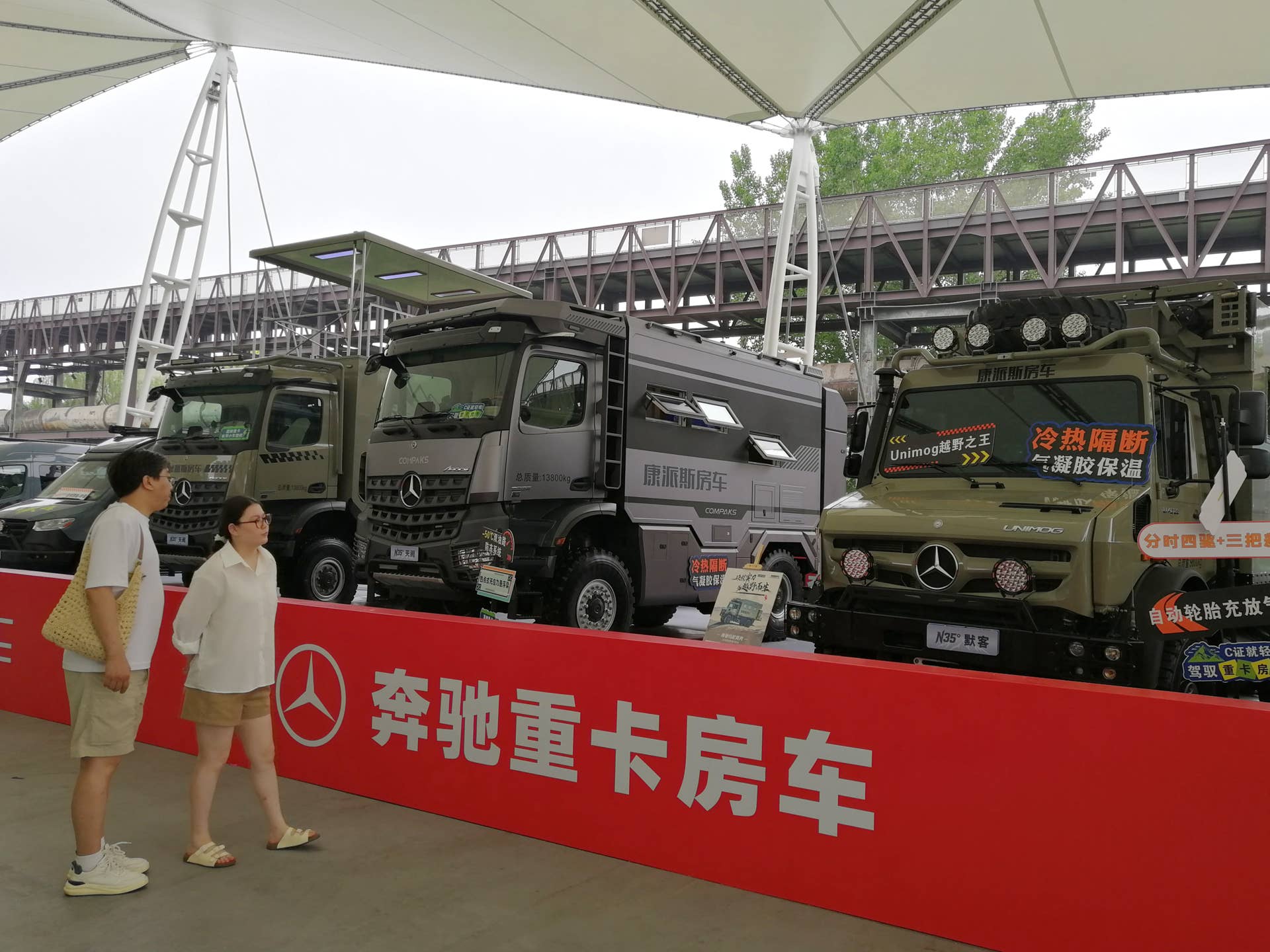
Mercedes reports Chinese market declines
Mercedes-Benz’s issues with China extend well past the U.S.
The luxury automaker sold a total of 417,800 vehicles in the second quarter, led by a 4% increase in Europe and an impressive 13% gain in North America.
Still, the more than 417,000 vehicles the company sold represented an 8% year-over-year decline. The company reported a 27% decline in its Asia business, with that decline being driven by softness in China. Outside of China, Mercedes reported a 5% increase in overall sales.
The company said the China decline was due to “an intensifying competitive environment and the timing of the company’s current product ramp-ups,” Global Banking & Finance Review reported.
A property crisis in China has weakened demand for expensive luxury cars as real estate values drop across the region, Bloomberg noted.
To gain market share, luxury Chinese brands have engaged in a pricing war that Mercedes and other foreign automakers just can’t keep up with.
BMW also recently lowered its outlook for 2026 due to weakness in China.
In addition, slow sales have led to Porsche closing four regional dealerships in China, CarNewsChina confirmed.