Let’s say you’re buying a new house, and you’ve been tracking mortgage rates before closing. And you’re within your rights to be concerned that the rate on a 30-year mortgage has been rising of late.
In fact, the rate has risen from just under 6% at the end of February to 6.66% as of July 30, according to Freddie Mac data.
The effect on, say, a $250,000 mortgage: The monthly principal-and-interest payment has risen 7.2% from $1,497 a month to about $1,606. That’s up $109 a month or $1,308 a year. Or more than $39,000 over the life of a mortgage taken out right now.
And, of course, you may have to worry about health care, car payments, not to mention the costs of children. We’re talking clothes, school supplies and books, Little League and other sports equipment.
Mark Zuckerberg’s growing challenges
Meta Platforms (META), founded by Mark Zuckerberg in his Harvard dorm room, may have it worse.
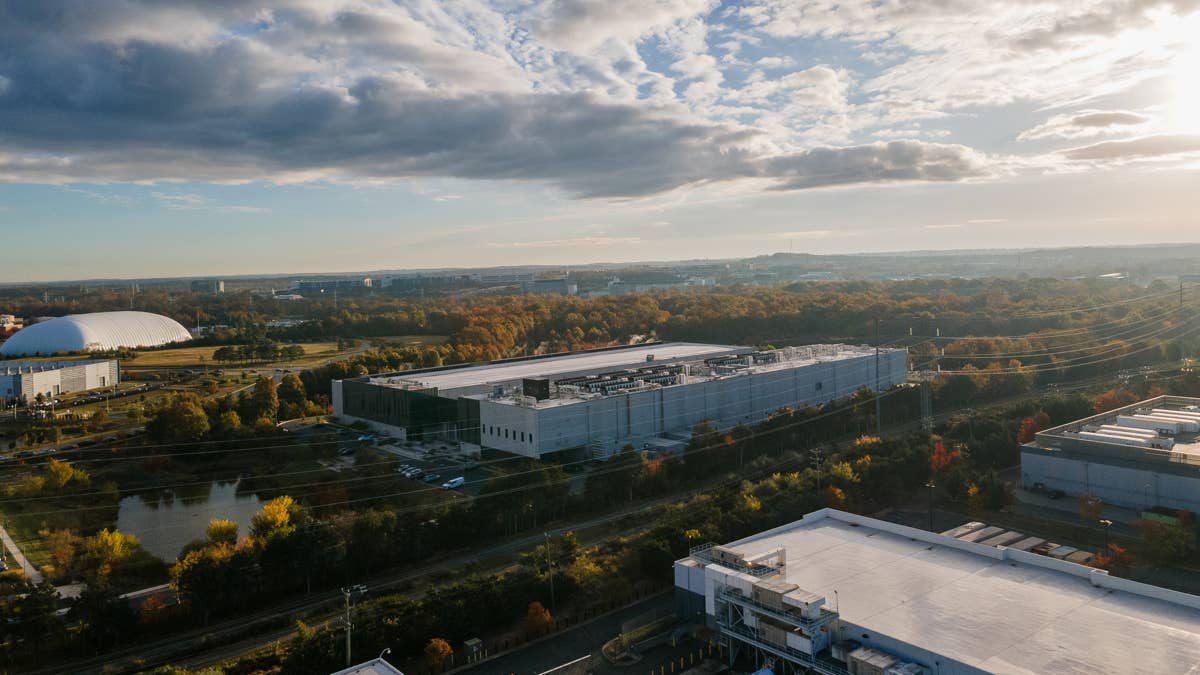
Meta has started to build a giant data center outside El Paso, Texas. The center, expected to cost about $14.3 billion, will require up to one gigawatt power.
A gigawatt is enough to service 750,000 to 1 million homes, perhaps two and a half times as many homes now in the El Paso metro area.
Meta is putting up $2.9 billion of the cost.
Related: Meta, Anthropic drop bombshell news on AI market
Money-management giant BlackRock (BLK) is putting up the remaining $12.3 billion via a new company organized to finance this Meta project.
It’s called Sopaipilla Investor, LLC, and its job has been to sell those $12.3 billion in bonds.
The 22-year issue priced this week. The interest rate: 2.875 percentage points above the current yield on a 10-year Treasury note. That works out to about 7.5%, The Wall Street Journal said.
So, BlackRock’s investment will be paid off by Meta.
Meta’s challenge, part 1
Here’s the first reason Meta’s problems may be worse than your own. The money Meta is using is more expensive than the money you may borrow to buy your new house.
It will be paid off much like your mortgage, too. The terms call for quarterly principal-and-interest payments. That works out to about $285.7 million per quarter. Those are payments Meta will make to Sopaipilla, which pay off the bond investors.
More AI:
- Workers just sent AI companies an ultimatum
- Palantir CEO has a blunt verdict on OpenAI and Anthropic
- Elon Musk pulls no punches with AI rivals as Grok 4.5 debuts
The bond issue is, however, highly rated. Standard & Poor’s Global assigned it an A+ rating, a touch below Meta’s AA- corporate rating. Fitch, another bond-rating agency gave the bond issue a AA- rating.
But Meta expects more data centers to come, maybe more expensive at than the El Paso complex. And that requires financing that doesn’t go on Meta’s balance sheet. Hence the need for BlackRock’s ingenuity.
Meta’s challenge, part 2
Meta, which went public in 2012, is a relative newbie in raising capital through the global bond market. Its first bond issue didn’t come until 2022.
But it raised $55 billion in bond sales just since October.
And, at the end of the second quarter of 2026, long-term debt stood at $83.7 billion. That’s up 42% from a year ago. It’s expected to expand through the end of the year and beyond because of the demands of building out its artificial intelligence capabilities.
The company expects capital spending to be $130 billion to $145 billion for 2026 and, during its earnings call on July 29, wouldn’t project a number for 2027.
It’s as if you suddenly realize you’re expecting twins and need a lot more space but don’t know how much.
Investors are nervous
That is, I concede, an understatement.
The stock fell nearly 8% to $539.03 on July 30, a day after releasing its earnings, and have slid nearly 21% just since July 15.
The shares are down 18% in 2026 and 32% from their 52-week high of $726.95, reached on Aug.15, 2025.
Meta, at least, is not alone. Microsoft (MSFT), Alphabet (GOOGL), Elon Musk‘s Tesla (TSLA) and his Space Exploration Technologies Corp. (SPCX) have all seen their stock prices crash into investor worries that shares prices will be pressured by the AI imperatives.
Microsoft, at least, got a tout from Morningstar after its decent second-quarter report on July 29. The shares soared 15.5% on July 30 to $451.10. Its market capitalization grew by $450 billion, the largest one-day increase by any U.S. business, ever, The Wall Street Journal said.