I’ve noticed on several occasions that when a conversation is around transformational technology, the people closest to it speak about it with quiet, almost unsettling certainty.
And then we have everyone else still debating whether it’s real. It sounded exactly like that on July 30.
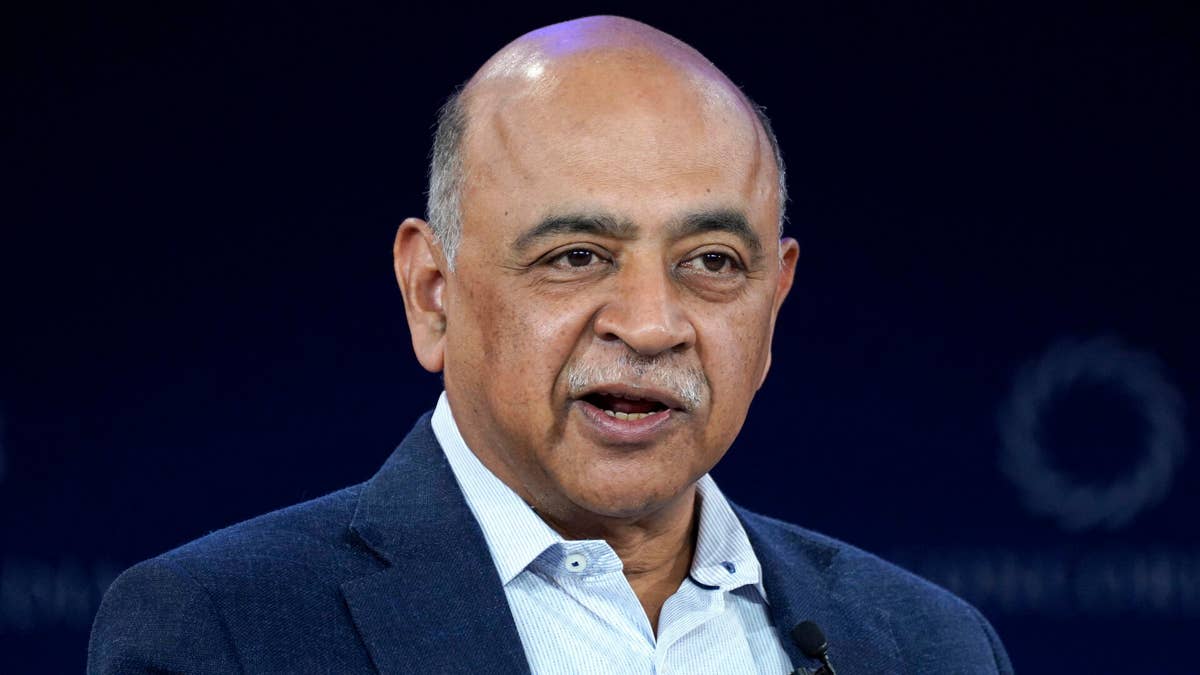
That’s when International Business Machines Corporation (IBM) chairman and CEO, Arvind Krishna, sat down with Jim Cramer on Mad Money and made two statements that should stop any serious investor in their tracks.
- Quantum computing will have “a measurable impact” on IBM’s top and bottom line by 2028 or 2029.
- “By the end of the 2030s, we are now pretty convinced this is a trillion dollars of value.”
That’s absolutely not some random visionary moonshot speech. That is the CEO putting specific timelines and specific dollar figures on a technology that most of Wall Street still treats as science fiction.
And just a reminder, Arvind said it less than three weeks after IBM’s stock suffered its worst single-day decline on record, on July 14, according to TheStreet.
The timing of Krishna’s appearance on Mad Money actually matters here. IBM dropped 25% on July 14 after the company disclosed that some customers had delayed capital spending projects, according to TheStreet.
The stock has recovered about 2% since then. And Krishna came on national television on July 30, with a dual mission — defend the near-term and make the long-term case louder than ever.
Also Read: History of IBM: Company timeline, milestones & facts
Why IBM’s CEO says delayed deals are not dead deals
Let me start with the near-term concern, because it’s the one keeping investors up at night.
IBM’s Q2 earnings spooked the market. Customer delays in capital spending raised two uncomfortable questions.
- Is AI cannibalizing IBM’s software business?
- Are enterprise clients broadly pulling back on technology investment?
Krishna addressed both. “Here’s the good news: about 40% of them have already closed in three to four weeks,” he said, referring to the delayed deals. “That’s a good signal that it is a deferral, not a destruction.”
That’s actually a meaningful data point. If nearly half of delayed projects closed within a month of the earnings announcement, the demand-destruction thesis loses significant force.
More IBM:
- IBM stock just got a powerful new price target from Wall Street
- IBM just answered a $5 billion cybersecurity question
- IBM’s latest Wall Street call hides bigger shift
Krishna also reaffirmed full-year guidance, now expecting constant currency revenue growth in the range of four-to-five percent, and free cash flow to increase by about $1 billion year-over-year, according to an IBM statement.
IBM generated $2.5 billion in free cash flow in Q2 and returned $1.6 billion to shareholders through dividends.
The board approved a quarterly dividend of $1.69 per share — part of an unbroken streak of consecutive quarterly dividends stretching back to 1916, according to the same statement.
The quantum milestone Wall Street is underpricing
Here, I find the IBM story genuinely interesting, and I think the market is making a mistake by focusing entirely on the near-term noise.
On July 30, IBM and startup Algorithmiq unveiled research demonstrating what they described as quantum advantage. That’s a quantum computer solving certain computational problems more efficiently than today’s leading classical computers, while also verifying the results, according to IBM’s announcement.
Related: IBM CEO makes bold AI strategy claim
That verification piece matters enormously. One of the persistent criticisms of quantum advantage claims has been the difficulty of confirming that quantum outputs are actually correct.
IBM also announced separate breakthroughs with the University of Chicago and Israel-based Qedma Quantum Computing.
With the University of Chicago, researchers encoded 70 logical qubits and solved a classically intractable problem in approximately 15 minutes, according to IBM‘s announcement. With Qedma, the company achieved quantum advantage by modeling materials physics beyond the capabilities of state-of-the-art classical supercomputers.
Also Read: IBM Latest News and Stories
Krishna put the practical implications on Mad Money. IBM’s quantum computer uncovered behaviors in materials that researchers had been unable to observe with conventional computing — insights that could eventually lead to better batteries, improved fusion energy, and more advanced medicines.
“A quantum computer can do things better, faster, cheaper, in a way that normal classical computers cannot do at this time,” Arvind said.
The $10 billion investment and the world’s first quantum foundry
In May, IBM signed a letter of intent with the U.S. Department of Commerce to build Anderon. That’s what the company describes as the world’s first pure-play quantum wafer foundry, backed by a $1 billion CHIPS incentive commitment from the Commerce Department and a matching $1 billion from IBM.
The company plans to invest more than $10 billion in quantum computing over the next five years and remains on track to deliver its first large-scale, fault-tolerant quantum computer by 2029, according to IBM.
Related: Does IBM pay dividends? History, yield & payout ratio explained
My read on this is that the combination of a government-backed foundry, published quantum advantage demonstrations, and a CEO willing to put 2028 earnings impact timelines on the record publicly represents a level of institutional commitment that distinguishes IBM from every other quantum computing player.
Rivals like Alphabet (GOOGL) and Rigetti Computing (RGTI) are also racing toward commercialization, but neither has IBM’s manufacturing infrastructure, enterprise relationships, or balance sheet depth.
Why I think the market is mispricing IBM’s quantum timeline
IBM is down 24.16% year-to-date and 12.62% over the past year, according to Yahoo Finance data as of July 30, 2026. The S&P 500 returned 8.65% and 16.89% over those same periods.
At current prices, the market is essentially giving IBM no credit for quantum. The stock is being priced as a software and consulting business with a near-term demand problem. Krishna’s appearance argues that framing misses the second chapter entirely.
Related: Oppenheimer sends warning on IBM after shares crash
If quantum computing delivers even a fraction of the $1 trillion value Krishna described by the late 2030s, and if the 2028 earnings impact timeline holds, investors buying IBM near current lows are potentially acquiring a generational technology platform at a cyclical software discount.
But that’s not a guarantee. Quantum timelines have slipped before, and skeptics pointing to error rates and scalability challenges aren’t wrong to be cautious. But I think Krishna wasn’t speaking in hypotheticals. He was speaking in years and dollars. That’s genuinely a different kind of conversation entirely.