Every founder who builds a business on someone else’s infrastructure carries the same quiet fear.
The supplier who reliably ships your product for years can decide, almost overnight, that its own priorities matter more than yours. That fear has become the daily reality for satellite operators that depend on SpaceX.
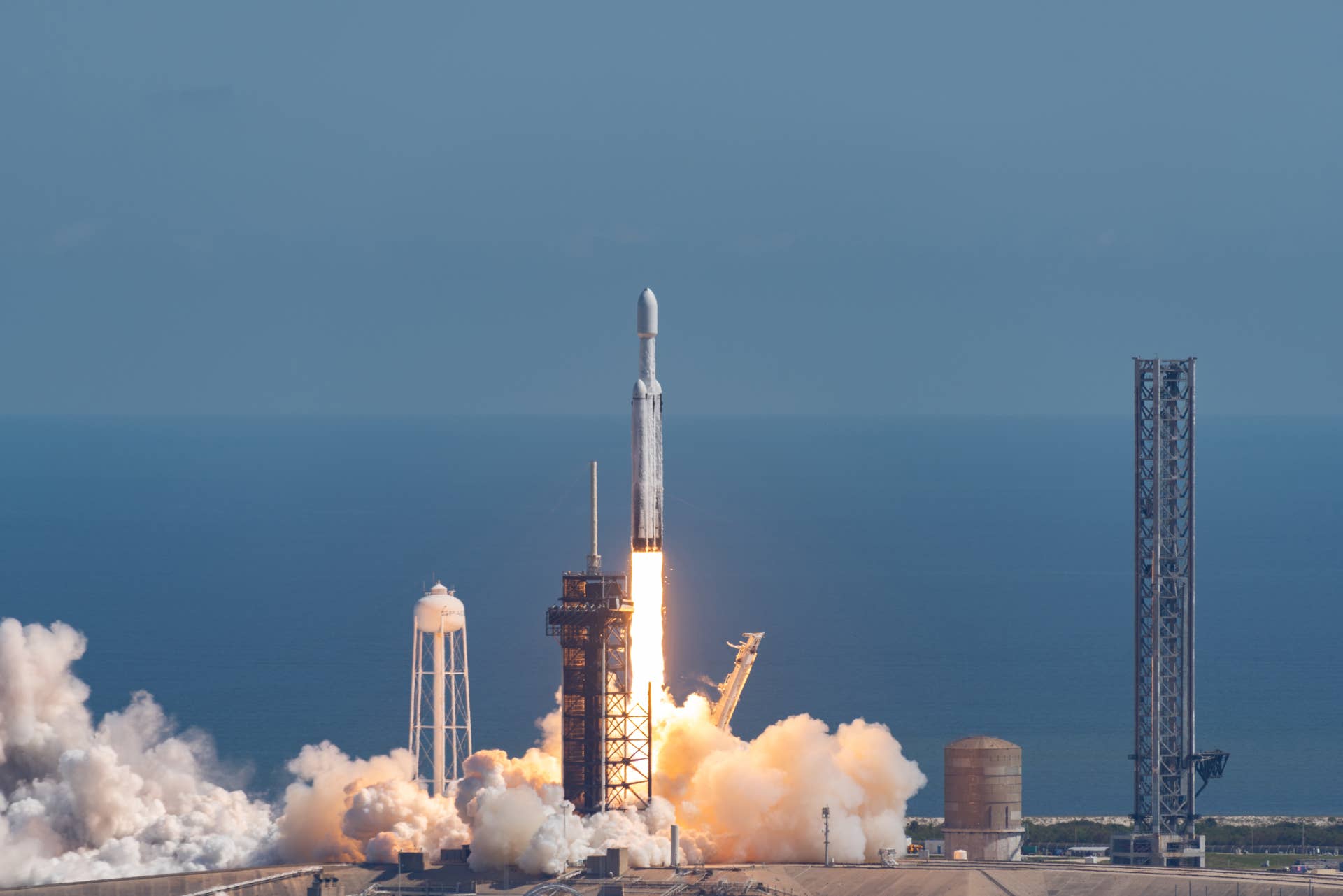
SpaceX is increasingly filling its own Falcon 9 rockets with Starlink satellites, leaving less room for outside customers, according to a Reuters analysis of launch data compiled by astrophysicist Jonathan McDowell.
At least seven spacecraft companies have been told Falcon 9 is fully booked for every kind of mission until 2028 or 2029, Reuters reported, citing eight people familiar with the scheduling.
The SpaceX manifest tells the real story
Starlink’s share of Falcon 9 launches climbed from 54% in 2020 to about 79% so far this year, the Reuters analysis found. That shift did not happen by accident.
It reflects a business that earns more from filling its own constellation than from selling a seat to a competitor.
The math explains the priority. A single Starlink mission can generate tens of millions of dollars more in value for SpaceX than carrying an outside payload, analysts estimate.
Starlink alone accounted for 60% of SpaceX’s revenue last year, according to Space News, bringing in $11.4 billion and making it the company’s most important business by far.
That is precisely the environment Rocket Lab is exploiting. The company agreed in June to acquire satellite operator Iridium Communications for roughly $8 billion, a deal that pairs Rocket Lab’s own rockets with a customer that no longer has to compete for space on somebody else’s launch manifest.
Rivals without a rocket have no fallback
The timing compounds the problem for everyone else. Blue Origin’s New Glenn rocket exploded on its launchpad in May and will stay grounded through the end of the year.
United Launch Alliance’s Vulcan rocket has been sidelined since February over a booster issue, Space News confirmed.
Related: Rocket Lab just landed a $266 million rocket deal
ULA also happens to be the primary launch provider for Amazon’s satellite internet network, meaning Amazon’s own answer to Starlink is stuck behind the same bottleneck squeezing SpaceX’s other customers.
Two of the three companies capable of matching Falcon 9’s capacity are effectively out of commission at the exact moment SpaceX is prioritizing itself.
Rocket Lab turns the shortage into leverage
Rocket Lab is developing its own reusable rocket, Neutron, and already ranks second behind SpaceX in launch cadence. Owning Iridium removes the biggest risk in that strategy: a satellite company that spends billions building hardware, only to discover it cannot buy a ride to orbit.
Iridium CEO Matt Desch told Reuters the merger lets the company launch its next-generation satellites “more cost effectively and faster,” freeing up cash for other parts of the business.
More Space stocks:
- Axon and Rocket Lab rallied while chip stocks sank
- Why Morgan Stanley thinks Rocket Lab is becoming ‘Player 2’
- A European rival to SpaceX is chasing a $2B valuation
Without its own rockets, he suggested, Iridium’s expansion plans would depend on a launch market that increasingly has no room left for it.
Investors reacted almost immediately. Rocket Lab (RKLB) shares climbed about 6% Tuesday to $74.34, 24/7 Wall St noted, while SpaceX shares rose 4% to $119 ahead of the company’s first earnings report as a public company since its record-setting June IPO.
The launch bottleneck is becoming a business model
The deeper lesson extends past rockets. Companies that once treated a dominant supplier as a neutral utility are learning that scale eventually creates a conflict of interest, whether in cloud computing, chip manufacturing, or orbital transportation.
Once a supplier’s own ambitions grow large enough, it stops being neutral.
Rocket Lab’s bet is that owning both the rocket and the payload is now the only durable way to guarantee access to space.
If that logic holds, the next wave of consolidation in the launch industry may look less like traditional M&A and more like companies buying their way out of a bottleneck they cannot control.
Related: A European rival to SpaceX is chasing a $2B valuation