Oil’s latest retreat seemed to suggest that the Middle East crisis was perhaps moving closer to a resolution.
The U.S. delayed planned attacks on Iran, diplomatic signals improved, and traders expected shipping conditions around the Strait of Hormuz to normalize. Naturally, Brent responded by dropping from recent highs as investors unwound some of the risk premium that was built into crude.
However, Goldman Sachs sees the situation differently.
In its latest call on oil prices, it warns the market’s growing confidence might be premature, with the conflict still capable of producing steep moves in either direction.
The big question remains whether oil’s pullback underscores a genuine improvement in supply conditions or just a fragile bet on diplomacy.
Why does Goldman Sachs think oil could stay elevated?
Goldman Sachs still feels Brent crude is likely to trade between $80 and $90 a barrel until the market gets a more decisive answer from the U.S.-Iran conflict.
According to Reuters, the bank believes oil could break that range below if a new nuclear agreement is confirmed. On the flip side, a major escalation or a prolonged disruption to regional exports will likely push Brent to the upper end.
That underscores a market that’s being pulled in opposite directions.
Brent retreated into the low-to-mid $80s after the U.S. delayed planned strikes on Iran and reports indicated progress in managing shipping through the Strait of Hormuz.
However, Goldman feels the drop in prices isn’t reflected in the physical market.
Related: Why a big drop in oil prices did little at the gas pump
The bank forecasts Brent’s current fair value at nearly $80, implying traders are assigning only a modest premium for the risk of further Middle East disruptions. Nevertheless, visible global oil inventories reportedly dropped by 6.3 million barrels per day over the past couple of weeks.
Moreover, the supply details are perhaps even more striking.
Goldman estimates Gulf oil exports dropped to just 36% of prewar levels, down from nearly 80% in early July. Moreover, loaded tanker capacity in the Red Sea has also tanked 22% since the Houthis announced a blockade.
On top of that, Saudi exports are running 2.4 million barrels per day below year-earlier levels, though greater use of Egypt’s SUMED pipeline has softened some of the damage. Similarly, Russian crude and condensate exports also decreased by 1.3 million barrels per day over the past two weeks.
How sharply have oil prices swung over the past 3 months?
According to Reuters, Brent settled at $103.54 a barrel and WTI at $96.60 on May 21 as traders feared that the start-stop U.S.-Iran peace talks would continue, keeping flows through the Strait of Hormuz restricted.
By July 6, Reuters reported that both benchmarks returned to pre-Iran war levels, with Brent at $71.99 and WTI at $68.55, as rising production eased supply concerns.
However, the calm did not last for long.
More Oil & Gas:
- Iran de-escalation just hit energy stocks
- Drivers lose control over gas price squeeze
- Goldman sends a fresh warning to the oil market
Reuters reported that Brent moved above $100 in late July, while WTI approached $90, on the back of renewed attacks and shipping disruptions, which revived fears of another supply shock. By July 31, Brent still closed at $90.12 and WTI at $84.67, gaining 24% and 21%, respectively, during July.
Peace hopes triggered a sharp reversal.
Reuters said Brent dropped 5.2% on August 4 before snapping back to $80.43 on August 5, while WTI reached $76.22.
Both remain roughly 11% above their July pre-war-level closes but over 20% below their May 21 levels.
Why aren’t falling oil prices reaching the pump?
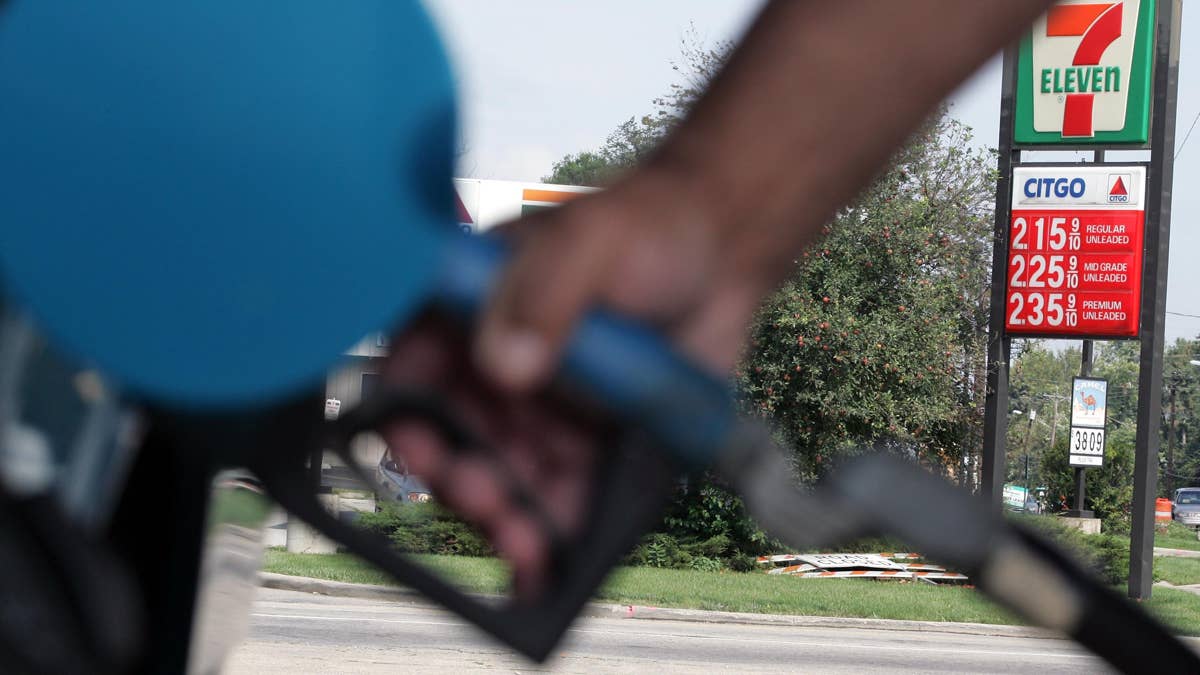
Interestingly, U.S. retail gasoline prices were recently just 10% below their May peak, even though WTI crude had fallen 26% from its 2026 high.
Naturally, that suggests cheaper crude is not translating proportionately into driver relief.
According to Fortune reporting, Exxon and Chevron say the bottleneck has shifted from oil production to refining. Exxon CFO Neil Hansen said:
“The constraint pain point in the energy system is refining.”
Exxon CEO Darren Woods added that he had never seen available refining capacity so low relative to demand, saying it would take a long time for the industry to recover. Exxon estimates that roughly 5 million barrels per day of refining capacity is currently unable to meet global demand.
Moreover, Chevron CEO Mike Wirth delivered a similarly blunt warning
“We’re going to see some upward pressure on product pricing … into the third quarter and perhaps beyond that.”
Chevron identified diesel, jet fuel, and heating oil as three of the tightest parts of the market. According to Reuters, its U.S. refineries processed a record high of more than 1 million barrels per day, while Exxon posted a record Q2 diesel production, suggesting that the majors are already running plants extremely hard.
Why the disconnect matters to consumers
Crude oil is just one part of the component of pump prices.
Refineries need to turn it into gasoline, diesel, and jet fuel. When refinery capacity is damaged, offline, or operating near its limit, finished fuel prices tend to remain elevated even as the raw barrel becomes cheaper.
For perspective, the EIA expects gasoline to average $3.80 per gallon in Q3, down from more than $4.20 in Q2, saying low inventories and heightened refining margins could partially offset the benefit of cheaper crude.
In many ways, that strengthens Goldman’s verdict even more.
The bank warns that physical crude supplies remain tight, while Exxon and Chevron are saying the system that converts crude into usable fuel is also constrained.
Therefore, even if we see Brent fall on hopes of peace, American drivers might not immediately receive the same relief at the pump.
Where do Wall Street’s biggest banks see oil landing?
Major Wall Street banks all agree that today’s high oil prices are unlikely to last.
What they disagree on is whether Middle East oil supplies recover and how far prices eventually fall.
Goldman Sachs expects Brent to end 2026 near $80 and average $75 in 2027.
The core argument is that depleted inventories and ongoing disruption risks will continue restricting prices from returning to their prewar lows. Moreover, its 2027 forecast carries unusually wide risks, ranging from nearly $60 if supplies recover swiftly to more than $130 under fleshed-out Gulf disruptions.
According to Investing, JPMorgan is slightly more cautious over 2027 and is considerably more bearish further out. Its July outlook forecasts Brent is expected to average $86 in Q3, $80 in Q4, and end 2026 near $78.
However, the bank expects prices to move into the low $60s during the second half of 2027 as Gulf production recovers, while the market returns to surplus.
JPMorgan said oil consumption dropped more than expected during the conflict, particularly in China, while commercial inventories dropped a lot less sharply than feared. Moreover, the firm argues that the bulk of lost Gulf production capacity is recoverable, reducing the need for a permanently elevated geopolitical premium.
Citi is perhaps the most clearly bearish of the group.
According to Reuters, its latest published targets put Brent at $75 in Q3, $70 in Q4, and an average of $65 in 2027.
Citi believes sustained oil flows through the Strait of Hormuz will eventually return to near normal, enabling the war premium to unwind and encouraging investors to sell oil rallies.
Furthermore, Bank of America’s latest annual forecast is similar to Citi’s longer-term view. Reuters reported that BofA expects Brent to average $77.50 in 2026 before dropping toward $65 in 2027, on the back of a return of disrupted supplies and the prewar surplus. However, it’s important to note that the forecast was published in March, which makes it much less responsive than other bank calls.
Related: JPMorgan makes surprising S&P 500 call after inflation shock